 info@gorillatrekkinginafrica.com
 +256 787505601
Aruba Dam located within Tsavo National Park
Aruba Dam in Tsavo National Park: Tsavo National Park comprises two distinct areas, Tsavo West and Tsavo East, which together constitute the entirety of Tsavo National Park. The two national parks together encompass over 4% of Kenya’s total area. Tsavo National Park is among the largest national parks in both Africa and the world. Tsavo National Park is characterized by arid, undulating hills adorned with scrub vegetation, situated in the semi-arid region of the Taru Desert, offering an immersive experience in one of Africa’s premier jungles.
Tsavo National Park is a habitat for African species, including the African Big Five: lions, leopards, rhinoceroses, and buffaloes. The wildlife populations are substantial, making animal observation significantly simpler and feasible year-round, particularly during game drives.
Aruba Dam.
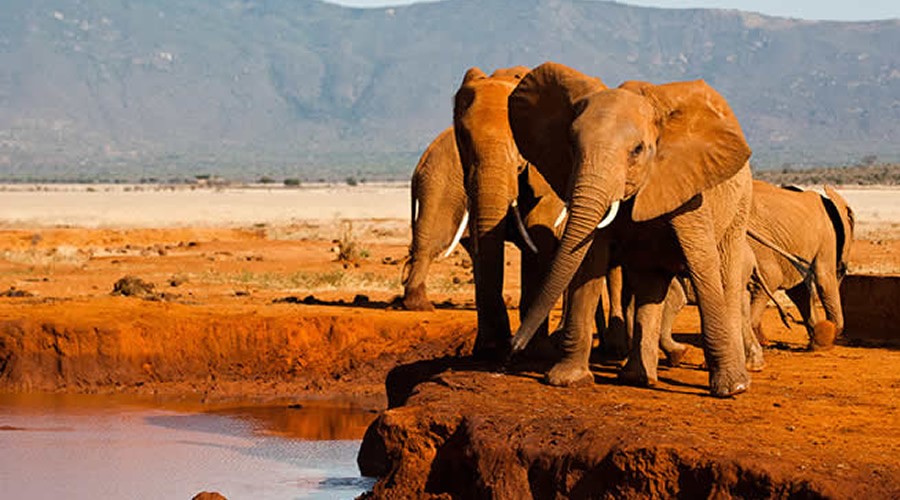
The Aruba Dam is situated on the Voi River, at the southern extremity of Tsavo East National Park, and is less than an hour’s drive from the Mombasa-Nairobi highway and train. The Aruba Dam draws significant populations of various wildlife; one of the park’s frequently observed lion prides inhabits this area. To the East and Southeast, extending to the Bachuma Gate, the expansive grasslands offer an ideal habitat for cheetahs, making sightings more frequent here than in nearly any other location in southern Kenya. The Aruba Dam is an 85-hectare artificial reservoir and the world’s third-largest nature conservation area, constructed by park authorities in 1952 to regulate the seasonal flow of the Voi River, which originates from the Taita Hills in the southwest.

The Aruba Dam is an artificially constructed reservoir created by the Kenya Wildlife Service for water conservation purposes. The Aruba Dam is a designated water catchment area frequented by animals primarily during the dry season. It is believed to have been constructed during the colonial era and features a lodge adjacent to it, along with a jetty extending into the dam. The dam serves as a hippo pool and is an optimal location for observing hippos. Tsavo East National Park is the sole destination where visitors may observe wildlife at close proximity, as many animals congregate here to cool off and hydrate.
The Aruba dam was created by an elderly individual, serving as a vital water source for local fauna, thereby establishing an excellent location for wildlife drives. Numerous woodpeckers, sunbirds, starlings, and pigeons inhabit the vicinity of the Aruba Dam, while the Galana River is home to both the aasai and Somalia ostriches, as well as the Kori bustard, Bateleur, Carmine bee-eater, and the East African specialty, the Vulturine guinea fowl. The Aruba Dam was built to entice various animals and birds.
Activities conducted in Aruba Dam.
Game driving is optimally conducted in the vicinity of the Aruba Dam, where one can observe a diverse array of wildlife, including predators, prey, and aquatic species. Additionally, Tsavo East National Park offers numerous attractions, serving as a congregation point for over 50 different animal species, including more than 170 avian species.
Nature walks.
Guided nature walks are offered in and around Aruba Dam, providing an unforgettable experience as you traverse the park on foot and observe various creatures in their native habitats.
Bird watching
The Aruba Dam hosts a variety of bird species, designed to attract and capture several avian populations, including rare migratory birds seeking sustenance and breeding opportunities. Birdwatching in Aruba can be pursued for several days if one want to study and identify numerous avian species. Additionally, exceptional birding guides has familiarity with the Aruba dam and the avian habitats, ensuring a high success rate. Birdwatching is most optimal during the rainy season when avian species are engaged in nesting and breeding activities.
Best time for visiting Aruba Dam.
Visiting the Aruba Dam is favorable year-round; however, due to the proximity of an airstrip and lodge, certain roads within the park may become impassable during the rainy season. Therefore, the optimal time to visit the Aruba Dam is during the dry season, when vehicular access to all roads is unobstructed. Birdwatching is most effectively conducted during the rainy season in Aruba.