 info@gorillatrekkinginafrica.com
 +256 787505601
Are chimps smarter than gorillas
Are chimps smarter than gorillas, African jungles harbor both gorillas and chimpanzees, two kinds of giant apes. Many tourists often mistakenly confuse gorillas with chimpanzees and vice versa.
Most tourists are primarily interested in discerning the distinctions between chimpanzees and gorillas, particularly in determining which species exhibits greater intelligence. This essay addresses all your inquiries, leaving little room for doubt.
Although they may seem analogous in images or at first glance, these two monkeys are, in reality, distinct species. Consequently, we will outline some distinctions to enable you to separate these two Great Apes proficiently on your next primate safari.
Some parallels are effective for distant identification, while others necessitate closer examination.
Classification.
Despite both gorillas and chimpanzees being categorized as great apes, gorillas belong to the Gorillini tribe and the Gorilla genus, whereas chimpanzees are part of the Hominini tribe and the Pan genus.
While it is indisputable that humans and these animals are closely related, chimpanzees share a greater percentage of DNA with humans (98.6%) compared to gorillas (98.2%).
Body size and muscular strength.
When compared directly, gorillas weigh between 150 to 300 pounds more than chimps and stand 4 to 6 feet tall, whereas chimpanzees measure 3 to 5 feet in height.
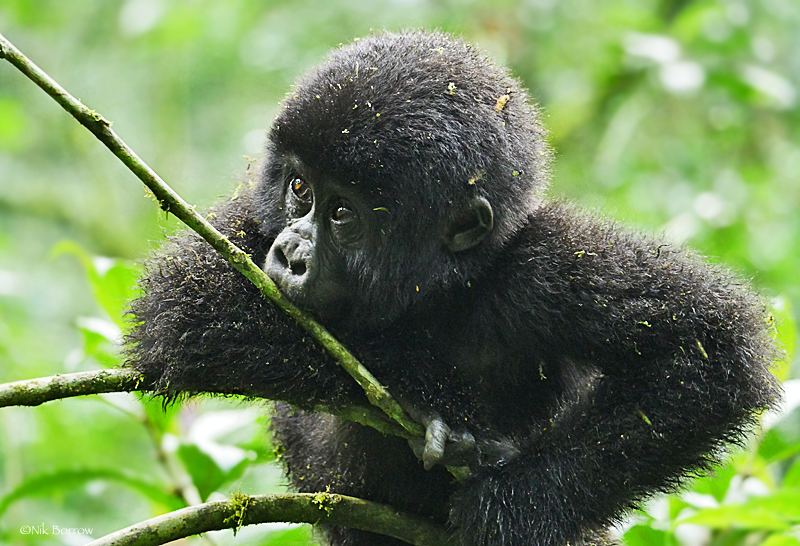
Mountain Gorillas
This also results from their differing levels of strength. Gorillas, consuming 18 to 30 kg of food day, are among the strongest creatures on Earth, contributing to their substantial body bulk.
Gorillas are the largest primates within their phylogenetic lineage, and it is astonishing to discover that they possess tenfold the strength and mass of humans.
Future on the Body
Gorillas possess greater musculature, larger thoracic regions, elongated limbs, and more substantial cranial dimensions. Gorilla ears are little and oriented posteriorly, but chimpanzee ears are more prominent and extend laterally from their heads.
Furthermore, the faces of gorillas are darker than those of chimpanzees, who possess pinker faces.
Nutrition.
Despite both gorillas and chimpanzees being classified as great apes, their dietary habits are noteworthy. Gorillas are predominantly herbivorous, with a diet consisting mainly of leaves, stems, fruits, flowers, tree bark, and bamboo shoots, in contrast to chimpanzees, which are classified as omnivorous.
They consume flowers, fruits, leaves, and occasionally small animals, particularly monkeys. Gorillas do not display this habit; rather, they consume insects to enhance their diet.
Degrees of intelligence.
It is evident that both gorillas and chimpanzees possess intellect; nevertheless, when comparing their IQs, chimpanzees significantly surpass gorillas in terms of cognitive ability.
Your intellect will be astonished by their remarkable intelligence during a Ugandan primate safari, attributed to their closer genetic relationship with humans and their somewhat larger brains in proportion to body weight.
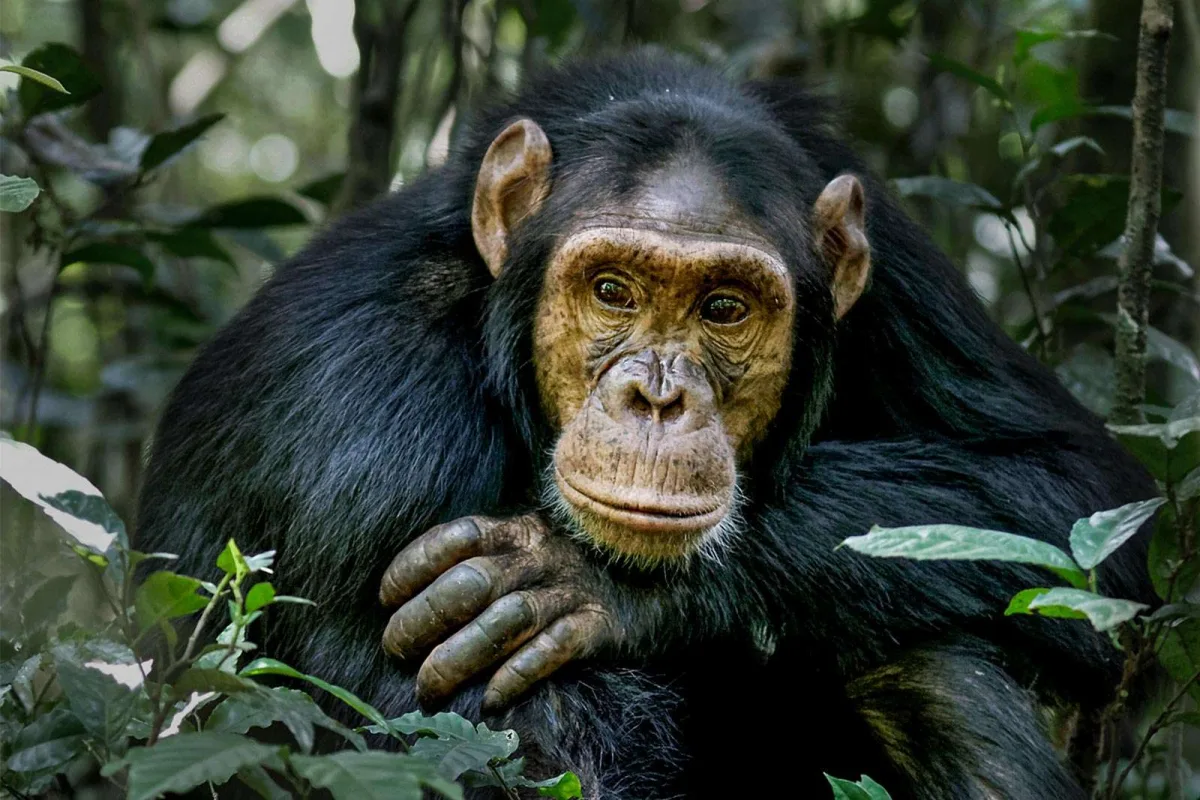
Despite their lower stature, chimpanzees possess larger brains than mountain gorillas, hence rendering them more intelligent than gorillas. This renders chimpanzees more cunning and elusive than mountain gorillas.
Affability
On our primate tours, you will observe that gorillas and chimpanzees are sociable creatures; nevertheless, gorillas are notably friendlier, more gregarious, and more cognizant of your presence.
In contrast, gorillas are grounded, subservient, and somewhat timid, favoring a routine existence.
Life span.
chimps and gorillas exhibit distinct lifespans, with gorillas living longer than chimps.
Chimpanzees in captivity often have a lifespan of 50 to 60 years, although those in the wild average 50 years. In their natural habitat, gorillas generally have a lifespan of 45 to 60 years.
Female chimpanzees commence reproduction between the ages of 13 and 15, whereas female gorillas begin at 10 to 12 years old. Despite having equivalent gestation lengths, female chimpanzees generally produce a greater number of offspring over their lifespan.