 info@gorillatrekkinginafrica.com
 +256 787505601
Animals & Wildlife in Arusha national park
Animals & Wildlife in Arusha national park, Typical animals Observed in Arusha National Park During Your Safari Game Drive: Arusha National Park, located near Arusha town—the safari center of northern Tanzania—is a diverse treasure often overlooked by holidaymakers, offering the opportunity to see a captivating variety of habitats within a few hours.
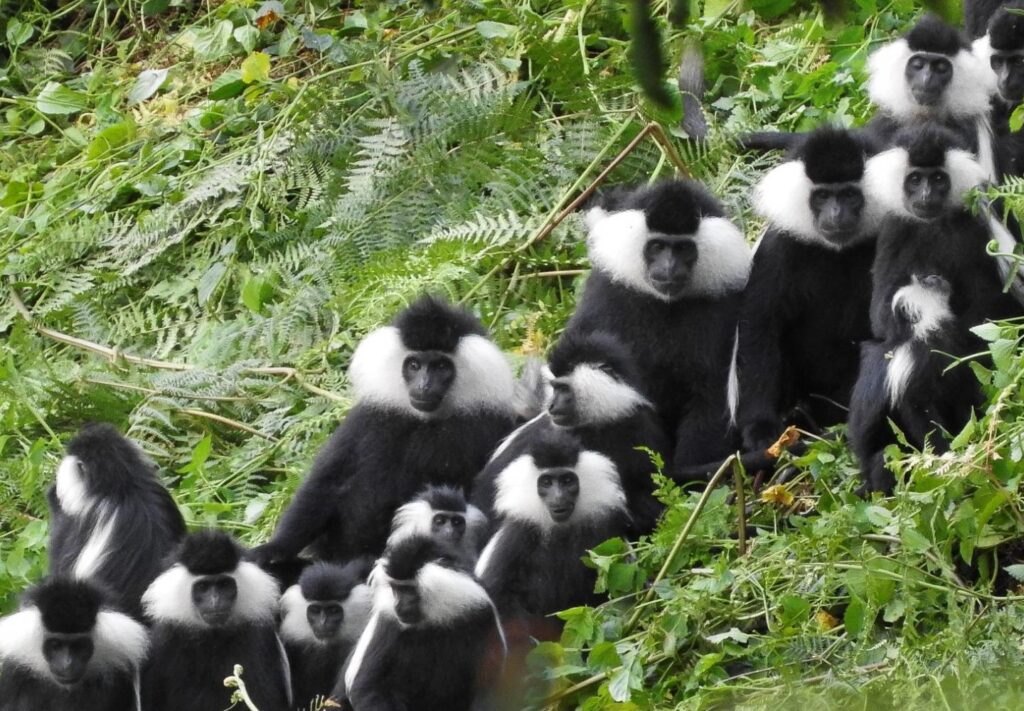
The entrance gate leads into a shadowy montane forest inhabited by inquisitive blue monkeys, among vividly hued turacos and trogons. This is the sole site on the northern safari circuit where one may readily observe the agile black-and-white colobus monkey. The stunning Ngurudoto Crater is situated within the forest. The expansive, marshy basin is encircled by precipitous cliffs that shelter herds of buffalo and warthogs.
Proceeding farther north, the tranquil Momela Lakes, exhibiting various hues of blue and green, are encircled by rolling grassy hills. The lakes host a variety of resident and migratory waterfowl, while shaggy waterbucks display their large, lyre-shaped horns around the aquatic peripheries. Their shallows are intermittently colored pink by several flamingos. Amidst herds of grazing zebras, giraffes traverse the grassy inclines, while couples of wide-eyed dik-diks scurry into the scrubby underbrush resembling elongated hares.
Although lions are seldom observed in Arusha National Park and elephants are infrequent, one can still encounter spotted hyenas and leopards prowling between the early morning and late afternoon. The cloud cover on the eastern horizon is expected to dissipate around twilight and dawn, revealing the majestic snow-capped summits of Kilimanjaro, situated about 50 kilometers (30 miles) distant.
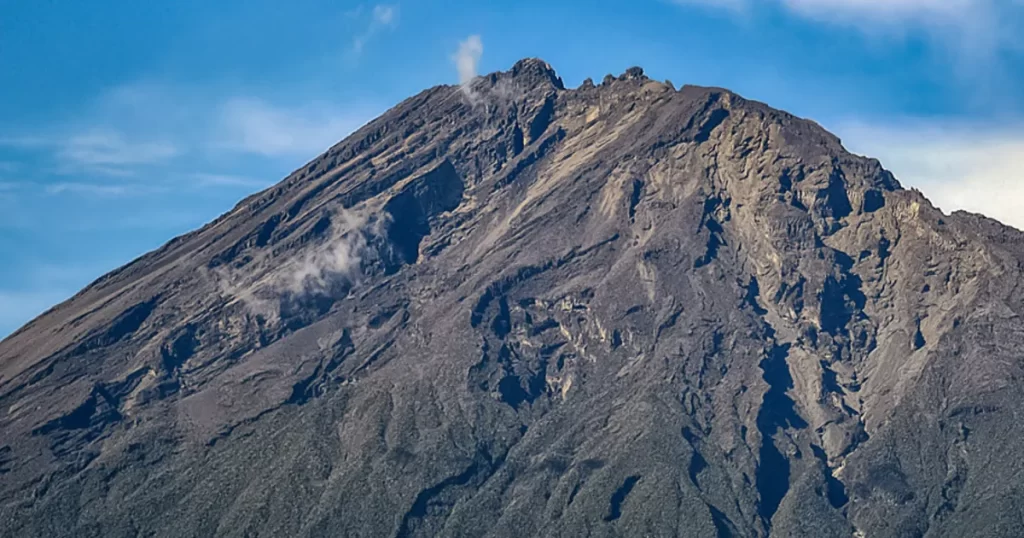
The prominent characteristic of the park’s skyline is Mount Meru, the lesser counterpart of Kilimanjaro, which rises to 4,566 meters (14,990 feet) and ranks as the fifth tallest peak in Africa. Meru, with its peaks and eastern foothills protected within the national park, offers not only spectacular vistas of its renowned neighbor but also serves as a valuable hiking destination in its own right.
Hiking mount Meru commences with a journey through wooded savannah, frequently inhabited by buffalo and giraffes. It subsequently transitions into woodlands adorned with Spanish moss and vibrant red-hot pokers, culminating in an elevated, expansive heath crowned with colossal lobelias. The alpine desert is adorned with perennial flowers, and the hike’s advancement is signaled by klipspringers with slender hooves. Ascending to the rugged summit, Kilimanjaro appears exposed and flushes in the morning sun.
Animals & Wildlife in Arusha national park
Arusha National Park is the sole additional game park in Tanzania’s northern safari circuit. The expected wildlife commonly present in other parks is lacking in this area. Buffaloes are the most commonly observed among the Big 5 animals; lions and rhinoceroses are absent from the park. Its remarkable terrain and unique fauna contribute to its distinctiveness and appeal. The most prevalent species of animal is the alluring black-and-white colobus monkey.
Arusha National Park’s forest is inhabited by various species of monkeys, notably the blue and black colobus monkeys, which are challenging to observe in other game parks in northern Tanzania. With fortune, one might even observe the elusive red duiker. All of them share the smaller Kirk’s dik-dik. The vicinity of the Momella Lakes hosts a significant population of giraffes.
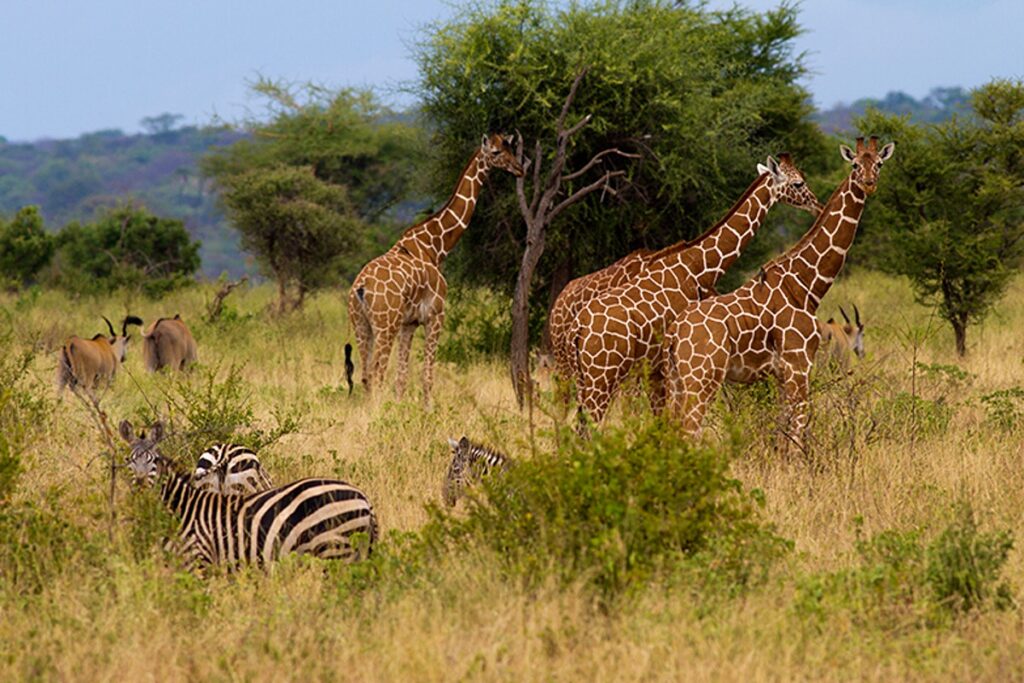
Arusha National Park, albeit diminutive, hosts a diverse array of fauna, including flamingos, buffaloes, zebras, warthogs, giraffes, and the distinctive black-and-white colobus monkeys. Furthermore, although hardly observed, African elephants and leopards inhabit the park. Arusha National Park does not harbor any lions. The avifauna of the woodland is exceptionally diverse, with numerous species more readily observable here than at any other point along the tourist route. The diversity of starling species has a somewhat subtle appeal, whilst the Narina and bar-tailed trogons are likely to be the focal points of any birdwatcher’s excursion.
The park contains three unique vegetation zones that serve as habitats for numerous documented animal species. Reedbucks and waterbucks are observed near aquatic habitats, while elusive bushbucks and duikers inhabit the park’s wooded areas. The ecosystem of Mount Meru is very diversified, including some formidable large species such as leopards and hyenas.
Wide-eyed dik-diks, usually observed in couples, may be seen leaping into the dense underbrush, while overgrown hares sprint on their slender legs. Giraffes amble gently across the expansive grassy plains, while herds of zebras are commonly seen grazing. The initial segment of your expedition will traverse the wooded savannah, where giraffes and buffaloes are frequently sighted. During your ascent of Mount Meru, you will encounter woodlands adorned with Spanish moss and interspersed with large lobelias. The perennial flowers remain in the mountain desert, while the hikers, accompanied by their adeptly hoofed klipspringers, signify their advancement. Mount Kilimanjaro, with its rugged summit adorned with peaks, presents a remarkable vista at daybreak.
The best time to watch Animal & wildlife at Arusha National Park.
The best times for observing animals in the park is from late June to late October, recognized as the dry season. Due to the proximity of most animals to established water sources and the sparse foliage, it is significantly easier to observe these creatures.
Top 9 things to do in Arusha National Park
1. Hike Mount Meru: Tanzania’s Premier Trekking Enigma
Mount Meru, towering at 4,566 meters, is the second-highest summit in Tanzania. Despite frequently being eclipsed by Kilimanjaro, Mount Meru provides a remarkable and less-congested trekking adventure. The ascent often requires 3 to 4 days and is renowned for its abundant biodiversity and picturesque landscapes, ranging from dense highland forests to expansive moorlands and volcanic ridges.
2. Participate in a Walking Safari with a Ranger
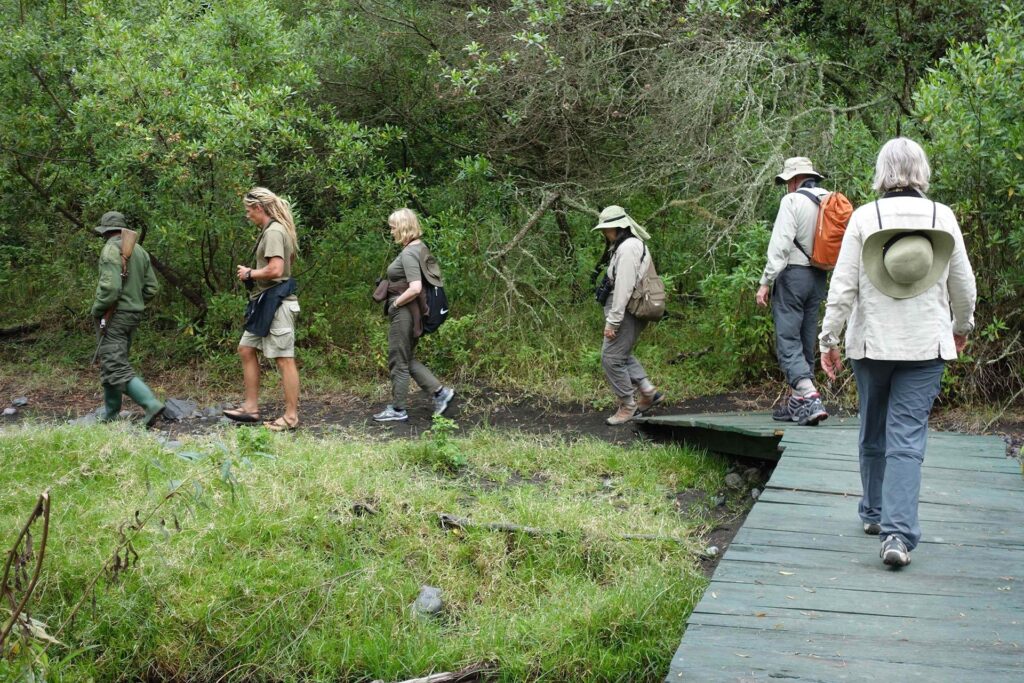
In contrast to the majority of parks in Tanzania, Arusha National Park permits guided walking safaris due to the lack of significant predators such as lions. This unique experience allows participants to traverse the wilderness on foot, accompanied by armed rangers who provide profound insights into the local flora and wildlife.
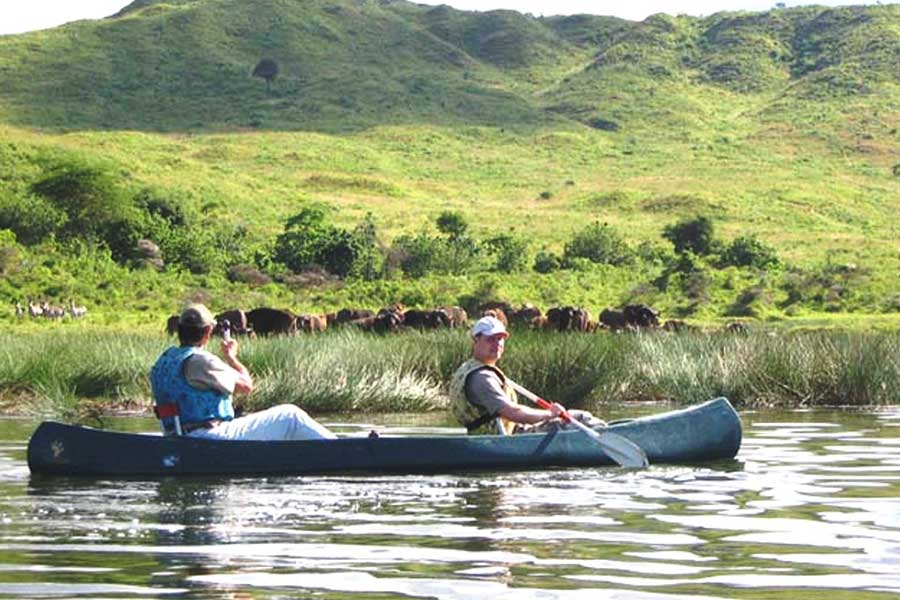
3. Explore the Momella Lakes by Canoe
The Momella Lakes comprise a group of seven alkaline lakes situated within the park. Their mineral-rich waters draw a remarkable variety of avian species, including flamingos, pelicans, herons, and African fish eagles.
A paddling safari in this location is tranquil, ethereal, and abundant in photographic prospects—particularly during the golden hour when the adjacent hills radiate beneath the Tanzanian sun.
4. Discover Ngurdoto Crater: The Small Ngorongoro
Frequently referred to as “Little Ngorongoro,” the Ngurdoto Crater is a remarkable volcanic structure featuring a verdant, wildlife-rich basin. While entry into the crater is prohibited, numerous vantage spots and trails along the rim provide expansive vistas and ample opportunities to observe giraffes, warthogs, and buffalo.
5. Explore a Traditional Maasai Village
To enhance the cultural aspect of your safari, allocate time to visit a neighboring Maasai hamlet. This comprehensive experience enables you to engage with Tanzania’s renowned semi-nomadic communities, acquire knowledge of their customs, and partake in traditional festivities.
6. Engage in Birdwatching at One of East Africa’s Premier Birding Locations
Arusha National Park is an avian enthusiast’s paradise, featuring more than 400 documented species. The richness of indigenous species and migratory birds in this little area is unparalleled.
7. Tour the Park on Horseback
Desire a safari with an unconventional element? Embark on a horseback adventure around the park’s picturesque paths. This low-impact, serene experience enables you to traverse silently among wildlife, allowing you greater coverage than a walking safari while remaining in close proximity to nature.
8. Explore Waterfalls Concealed within the Forest
Beautiful waterfalls, including Tululusia and Meru Waterfalls, are situated among the park’s deep woodlands.
These are ideal for brief hikes and day excursions. The auditory experience of water colliding with boulders, within verdant foliage, constitutes a rejuvenating sanctuary.
9. Enjoy a Local Coffee Tour
Arusha is situated in one of Tanzania’s most fertile coffee cultivation areas. A visit to a nearby coffee farm enhances your experience with a distinctive flavor. You will acquire knowledge of the process from bean to cup, taste freshly roasted coffee, and experience rural Tanzanian life.