 info@gorillatrekkinginafrica.com
 +256 787505601
Animals in Lake Naivasha National Park
The principal Animals in Lake Naivasha National Park comprises the Masai giraffe, hippopotamus, bat-eared fox, Kirk’s dik-dik, bushbuck, spring hare, vervet monkey, white-tailed mongoose, warthog, among others, which can be observed by visitors during a game drive, walking safari, or while cycling or horseback riding through the park.
Animals in Lake Naivasha National Park, At an elevation of 1,890 m (6,200 ft) above sea level, Lake Naivasha in Kenya is a historic freshwater lake located in the Great Rift Valley. The lake’s outlet, Njorwa Gorge, serves as the entrance to Hell’s Gate National Park, which hosts some exceptionally rare breeding pairs of Lammergeyers, commonly referred to as bearded vultures. The park showcases remarkable rock formations, an abundance of vegetation, and wildlife.
The principal animal of Lake Naivasha National Park are as follows;
Animals in Lake Naivasha National Park, Lake Naivasha is home to several types of freshwater fish, including black bass, tilapia, and crayfish, alongside numerous piscivorous avians such as fish eagles, pelicans, kingfishers, and cormorants. It also possesses a substantial population of hippopotamuses. Hippos are often observed silently observing occurrences from the tranquil waters of Lake Naivasha, alongside buffalo, antelope, giraffe, warthogs, and monkeys, all attracted to the region’s rich vegetation.
1. Hippopotamus
Confront one of the most perilous creatures in Africa, both in aquatic and terrestrial environments. Witness males exhibiting their considerable strength with loud, unpleasant yawns. Perceive their presence on the water. The lake is renowned for its population of about 400 hippos. Boat excursions on Lake Naivasha are available from numerous lakefront lodges and campsites, offering an excellent opportunity to observe substantial groups of hippos partially submerged in the water. They emerge at night to graze along the Lakeshore.
Giraffes retreat into the forest, observing as females delicately guide their offspring to fresh grazing areas along the riverbanks. Black-and-white colobus monkeys vocalize from the security of elevated trees. Lake Naivasha, a renowned African lake, has been home to various famous naturalists, conservationists, and filmmakers. Moreover, it hosts 400 unique bird species and about 1500 hippopotamuses. Consequently, Lake Naivasha serves as the optimal location for observing wildlife.
Ephemeral streams, along with the perennial Malewa and Gilgil rivers, supply water to the lake. The lake’s water is rather fresh, despite the absence of a discernible outlet; so, it is presumed that one exists. The lake region is notable for its population of 400 hippos.
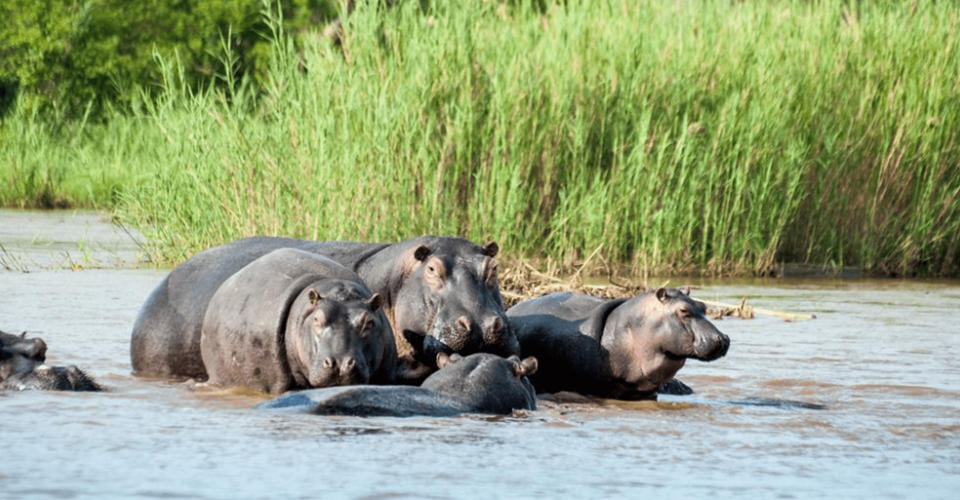
Several lakeside lodges and campers provide boat excursions on Lake Naivasha, presenting an excellent opportunity to observe large hippos submerged in the water. They appear at night to scavenge along the lake’s perimeter. Some Lakeshore resorts and campsites host the nightly phenomenon of these colossal creatures foraging on the lawns. The majority of individuals are astonished by a hippopotamus’s size upon emerging from the water. They are foraging directly outside your tent entrance, enhancing the visual spectacle.
2. Wildebeest
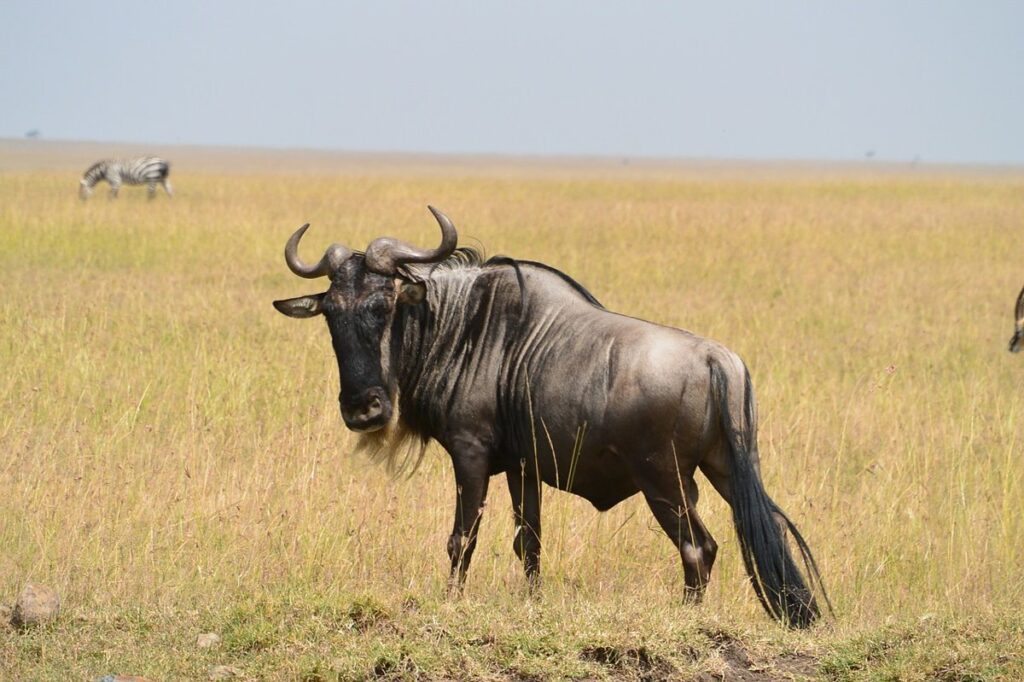
The Great Wildebeest Migration, alternatively referred to as the Gnu Migration, Serengeti Migration, and Masai Mara Migration, is among the few notable terrestrial wildlife migrations that persist today. The event occurs in Africa. This serves as the principal justification for the influx of tourists undertaking migration safaris in Kenya and Tanzania, especially around the mid-year period.
The Migration is one of nature’s most significant paradoxes: although timing is crucial, predicting the animals’ movements is unattainable. The precise timing is indeterminate, although we can be assured that the wildebeest, accompanied by several zebras and antelopes, will traverse the Mara River. Moreover, the wildebeest will migrate to alternative pastures during rainfall; however, precise predictions of rainfall remain elusive.
3. Masai Giraffe
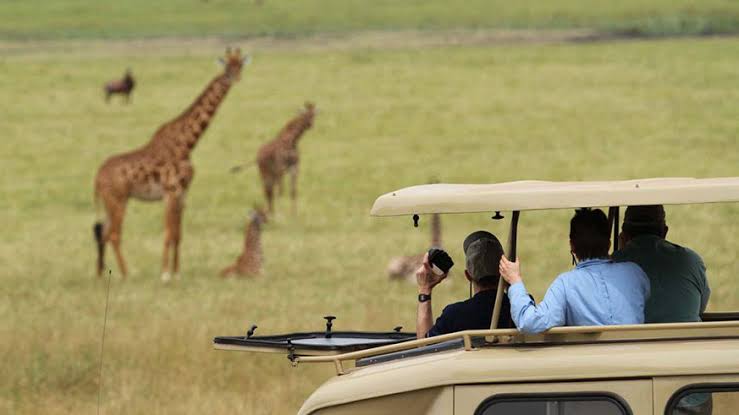
The Masai Giraffe, the tallest of all giraffe species, reaches a height of 19 feet when completely mature, making it the largest mammal in the world. It can be observed by visitors on African safaris in Rwanda, Kenya, and Tanzania.
The Masai Giraffe is characterized by irregular patches and is the largest of all Giraffe species. The Masai Giraffe, recognized as the tallest among all giraffe species, reaches a maximum height of 19 feet, making it the world’s tallest mammal. It is a prominent sight for travelers on safaris in Rwanda, Kenya, and Tanzania. A fully developed female reaches a height of 16 feet, generally shorter than males.
The weight fluctuates; males may reach up to 3,000 pounds, whilst females typically range from 1,300 to 2,000 pounds. Male Masai giraffes possess darker markings compared to females. The alpha male of the herd possesses the darkest patches, which is notable considering he did not originally have that role. This species lacks creamy or white markings below the knees.
The robustness of their hooves and legs elucidates why predators typically endeavor to evade capture; a single kick can prove fatal to a predator. The Masai giraffe is recognized for its agility, achieving a maximum speed of 35 miles per hour. The long-necked species, among the rarest in the world, possess valves that obstruct blood flow to the cranial region when the animal bends to drink water.
The Masai Giraffe demonstrates remarkable social cohesiveness and flourishes in smaller groups. Male aggression is exhibited solely in the context of competing for dominance and reproductive rights. Prior to copulation, there exists minimal to no connection between males and females.
Masai giraffes are exclusively herbivorous, consuming only vegetation such as seasonal fruits, Acacia leaves, branches, and flowers. They may dedicate between 16 and 20 hours daily to nursing. They can forage between the thorns due to their large tongue and lips. The females consume foliage from the lower branches, and the males feed from the upper right branches. The Maasai Giraffes can go several days without water, as they favor grazing in areas where their food contains higher moisture content.
4. Bat-Eared Fox
Animals in Lake Naivasha National Park, Bat-eared foxes typically inhabit groups of two to five individuals. Typically, each group has one adult male and one or two adult females. Females produce two to six offspring known as kits. The mother lactates the offspring for 15 weeks. Young individuals reach complete maturity by around six months. Pairs or groups frequently inhabit proximity to one another, congregating at nightfall for play and mutual grooming.
Bat-eared foxes form lifelong monogamous pairs, although occasionally, two females will copulate with a single male and cohabit a common den. The father is deeply committed to nurturing the child and dedicates much time to caregiving. While the father observes the cubs, the mother is at liberty to search for sustenance, especially insects, which provide a reliable food source.
5. Kirk’s Dik-Dik
The coloration of Kirk’s dik-diks is contingent upon their environment, typically presenting as grayish white on the abdomen and yellowish gray to reddish-brown on the dorsal side. Male specimens possess robust, base-ringed horns, often obscured by a tuft of hair on their forehead.
These antelopes possess striking, large, dark eyes encircled by a white ring. Their eyes are exquisite, yet they provide more than just sight. Preorbital glands are discernible as a black patch beneath the inner corner of each eye. These glands excrete a viscous, adhesive secretion utilized for territorial scent-marking.
Their extended snout is the most recognizable characteristic, serving as an evolutionary cooling system that prevents overheating, even in severe temperatures reaching 40°C (104°F). This also aids in reducing their water requirements.
6. Bushbuck
The predominant activity here is game viewing, optimally experienced in the early morning or on extensive game drives that enable tourists to appreciate the park’s natural splendor and observe wildlife in their native environment. A multitude of animal species can be observed in the park year-round; however, the optimal period for viewing them is during the dry season when water sources are absent in the vicinity. Waterbuck, wildebeest, giraffes, and zebras are among the species to observe. Game can be observed on foot, horseback, by bicycle, or in a safari vehicle.
The bushbuck antelope exhibits geometrically structured white spots or patches on its ears, chin, tail, legs, and neck. The horns of male bushbucks are between 10 and 20 inches in length and extend straight back. Young males acquire tightly coiled horns at 10 months, which mature to form the beginning loop of a spiral.
7. Spring Hare
This peculiar rodent species, like a cross between a kangaroo and a rabbit, has perplexed experts for an extended period. Before acquiring their own family, springhares were first kept with jerboas, then with porcupines, and subsequently with scaly-tailed squirrels.
Utilizing their elongated tails for equilibrium, spring hares at Lake Naivasha exhibit remarkable leaps due to their substantial hind legs. The exceptionally keen claws on their comparatively smaller forelimbs are employed for digging. The springhare possesses a skin flap that may be completely sealed at the base of the ear to prevent sand from entering the inner ear. Springhares frequently inhabit burrows, which they then seal with sand upon entry.
The social behaviors of these atypical hares remain mostly unexplored. Each burrow typically houses a single animal, generally a mother with her offspring, or at most, a pair with their young. Occasionally, assemblages of 30 to 40 individuals are observed congregating in a relatively large concentration, with their burrows potentially interconnected.
Springhares ingest a diverse array of plant stems, roots, sprouts, herbs, and fruits. During periods of severe drought, they have known to traverse 10 to 20 kilometers nightly in pursuit of sustenance and hydration; nevertheless, they generally remain within 25 to 250 meters of their burrows.
8. Vervet Monkey
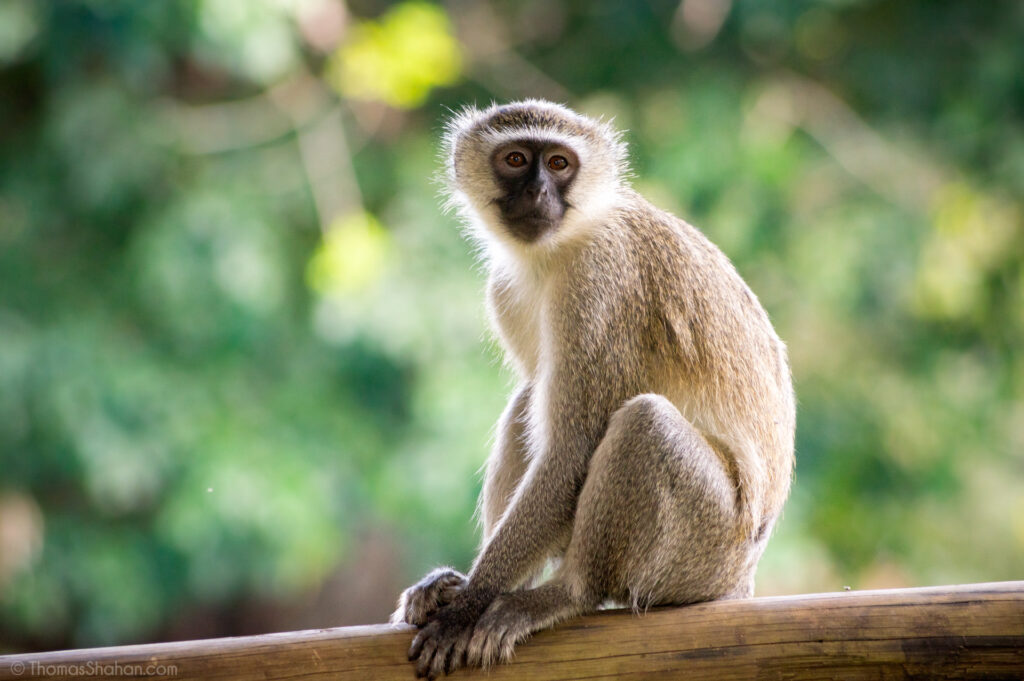
Vervet monkeys can be observed on Crescent Island in Lake Naivasha, Nakuru County, Kenya. Lake Naivasha in Kenya is a freshwater lake renowned for its breathtaking vistas of monkeys, attracting several tourists. Vervets are seasonal breeders, reproducing post-rainy season when food is plentiful. A solitary offspring is delivered following a gestation period of five and a half months. While certain vervet mothers may entrust their children to a willing female, they are ferociously protective of their young.
9. White-tailed Mongoose
White-tailed mongooses primarily lead solitary existences, congregating only in youth or during mating periods. Although white-tailed mongooses may forage collectively in areas abundant with food, they do not exhibit the sociable behavior characteristic of several other mongoose species. Upon seeing other members of their species, they often engage in a brief olfactory exchange by sniffing each other’s nostrils before proceeding, unless there is a mating attraction.
The realms of males and females often intersect, yet both genders possess territorial tendencies. They mark their territories with scent, similar to other mustelids. Territories sometimes contain several dens, and adults may inhabit a single den for a duration of five to fifteen days prior to relocating to another.
10. Antelope
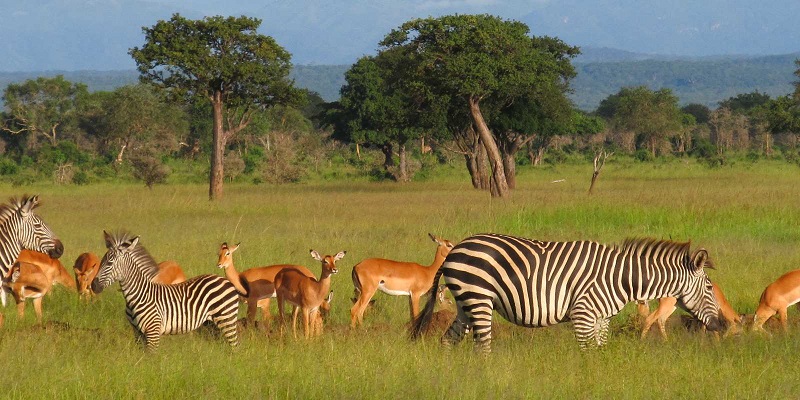
Africa is the sole continent with a greater population of antelope than any other, and numerous people embark on safaris to Lake Naivasha to observe these animals.
However, after participating in a safari, students recognize that the antelope family has more species like as kudu, eland, gemsbok, waterbuck, nyala, impala, and springbok, each with distinct characteristics and preferred habitats.
The elongated necks of gerenuk enable them to reach branches inaccessible to other animals.
Klipspringers are adept rock climbers exhibiting remarkable dexterity. They engage in this behavior to evade predation. The most elegant antelope species choose safety in numbers, particularly around Lake Naivasha, although their grazing locations and methods vary.
Frequently Asked Questions
Which animals inhabit Lake Naivasha?
Lake Naivasha Park boasts a diverse array of animals. Travelers can observe a diverse array of exotic fauna, including giraffes, zebras, buffaloes, hippos, and numerous others. These species can be observed on a game drive, strolling safari, bicycle trip, or horseback riding.
What exists in Lake Naivasha?
Hippos and flamingos are notable for their enormous populations in Lake Naivasha. It is highly probable that you will observe one of the approximately 1,500 hippos in the area. The lake is a paradise for birdwatchers, with around 400 distinct avian species.
Are there hippopotamuses in Lake Naivasha?
The region is rich in avian species, such as pelicans, eagles, and kingfishers. The lake is home to numerous hippos.
When is the best time to visit Lake Naivasha?
Travel to Lake Naivasha is permitted year-round. However, the optimal period is from June to October. The weather will be warm due to the summer season, although it remains the optimal period for travel.