 info@gorillatrekkinginafrica.com
 +256 787505601
Aberdare National Park
Aberdare National Park, situated in Central Kenya east of the East African Rift Valley, is about 767 square kilometers and extends across the elevated regions of the Aberdare Mountain ranges. To the east, it is encompassed by the Aberdare Salient. The park, situated at an elevation of 18.29 meters above sea level, is classified as a landscape park despite its comparatively low altitude. A safari in Aberdare National Park, Kenya, is exhilarating and highly gratifying because to the numerous tourist attractions present, which contribute to its frequent visitation by tourists from across the world.

The topography exhibits a diverse array of landscapes, characterized by deep ravines along the slopes of the eastern and western forested regions of the Alps. This park is home to Black Rhinos, baboons, Sykes monkeys, white and black Colobus monkeys, and leopards. The bamboo forests here harbor several uncommon species, including the lion, golden cat, and bongos, elusive forest antelopes that inhabit these regions. On the lush slopes of the Aberdare hills, a venerable Mugumo (fig) tree stands, its age evident; its rich history is best recounted by the local inhabitants.
The Kenyan Mau Mau independence rebels not only created fissures in the trunk of this tree but also utilized these gaps as a covert post office for transmitting messages to their agents.A fig tree stands in front of the Kimathi Post Office, named after Dedan Kimathi, the Field Marshal and founder of the Mau Mau tribe. The Aberdare National Park is renowned for its ancient caves that functioned as refuges for freedom fighters during the Guerrilla Revolution against British colonial rule.
This park encompasses several intriguing features, including Kinangop Peak, Ol Donyo Lesatima Peak, moorlands, bamboo thickets, deep ravines, Gura Falls, rugged terrains, Karuru Falls, rivers, Chania Falls, streams, and Magura Falls.
Aberdare National Park encompasses diverse habitats that support an array of fauna, including herds of African elephants, large forest hogs, leopards, buffaloes, reedbucks, black rhinoceroses, hyenas, bongo antelopes, warthogs, genet cats, wild dogs, elands, Colobus monkeys, red duikers, baboons, Sykes monkeys, among others, alongside a multitude of avian species inhabiting the area. The Kikuyu people, being one of the nearest populations to the park, see these ranges as abodes of their deities and consider them part of their homeland. This region, originally designated as Nyandarua, derives its name from the indigenous language, signifying “drying hide,” due to the multitude of characteristic folds seen in the landscape. Some early colonial inhabitants designated these ranges as the White Highlands, owing to the substantial influx of European immigrants in the 1920s, a nomenclature subsequently embraced by the British at that era. The Kenya Aberdare mountains were dubbed in 1884 in honor of Lord Aberdare, the then-president of the Royal Geographic Society and an early explorer of the region.
History of Aberdare National Park
Established in May 1950, the Aberdare National Game Park was created to safeguard the Aberdare Mountains and the adjacent fauna through the formation of a national park. It is not merely a park; it is a convergence of nature and history. Initially referred to as Nyandarua (the drying hide), it was esteemed as one of the deities by the Kikuyu and is thought to be the provider of a dwelling for the deities. In 1884, explorer Joseph Thompson nicknamed the range in tribute to Lord Aderdare, President of the Royal Geographical Society, due to the unique contours of its silhouette.
The region, referred to as the ‘White Highlands’ due to the influx of European laborers in the early 20th century, also became infamous for the extravagant behavior of the ‘Happy Valley set’ in the Wanjohi valley around that time.
In the 1950s, the dense woodlands and bamboo thickets frequently served as battlegrounds for confrontations between British soldiers and Mau freedom fighters.
The headquarters of Dedan Kimathi, the leader of the Mau revolt in the 1950s, is one of the most renowned sites in the region. While on her safari vacation in Aberdare National Park, Elizabeth II ascended to the throne as Queen of the United Kingdom. This park was the location where Hunter J.A. eliminated the rogue elephant from the Aberdare Forest that was traversing the vicinity.
Attractions in Aberdare National Park
Wildlife in Aberdare National Park
Aberdare National Park hosts a significant population of rhinoceroses and other endangered wildlife species, rendering it one of the most exquisite national parks in Kenya.
Aberdare National Park hosts a diverse array of wildlife species, including buffaloes, elephants, lions, bongo antelopes, bushbucks, bush pigs, warthogs, reedbucks, serval cats, elands, black rhinos, golden cats, striped jackals, leopards, spotted genets, hyenas, giant forest hogs, and black and white colobus monkeys, as well as Sykes monkeys, among others.
This forest is inhabited by many antelope species, including Waterbucks, Duikers, the uncommon Suni, Bushbucks, eland, and zebras, along with a colony of forest elephants.
The elevated moorlands of the Aberdare highlands host several elephants and servals, with a prominent section of Aberdare National Park serving as a migration corridor for elephants. Aberdare National Park hosts various nocturnal species, such the big forest hog and the large spotted genet, which inhabit the area during the night.
Birds in Aberdare National Park
Aberdare National Park, housing over 250 avian species, is an essential site for ornithologists, offering opportunities to traverse the rainforest and bamboo forest while observing birds extensively. Your location may afford you the opportunity to see birds during your stay. From November through April, birdwatchers can observe several avian species, as this period encompasses the nesting season and the arrival of migrating birds due to the plentiful food supply in the park. A pair of binoculars, a singular item, and a modicum of adventure are all that is required for an engaging and thrilling birdwatching experience in Aberdare National Park.
Aberdare National Park is home to numerous avian species, including the scarlet-tufted malachite sunbird, mustached green tinker bird, African paradise flycatcher, bar-tailed trogon, cinnamon-chested bee-eater, Jackson’s francolin, crimson-winged finch, African hawk, crowned eagle, African green pigeon, Abyssinian ground hornbill, African thrush, and Baglafecht weaver. Crowned hornbill, Hartlaub’s turaco, Greater blue-eared starling. White-faced Whistling Duck, Egyptian Goose, African Black Duck, Helmeted Guineafowl, Jackson’s Francolin, Little Grebe. Columba guinea, Lemon Dove, Dusky Turtle Dove, African Green-Pigeon, Hartlaub’s Turaco. Blue-headed Coucal, Pied Cuckoo, African Emerald Cuckoo, Abyssinian Nightjar. Buff-spotted Flufftail, Gray Crowned Crane, Blacksmith Lapwing, African Jacana, Marabou Stork, Yellow-billed Stork, Long-tailed Cormorant, Great White Pelican, Black-headed Heron, Purple Heron, Great Egret, Little Egret, Squacco Heron, Black-crowned Night Heron, African Sacred Ibis, African Spoonbill, Secretary Bird, Black-winged Kite, African Harrier-Hawk, Black-chested Snake Eagle, Martial Eagle, Black Kite, Verreaux’s Eagle Owl, Speckled Mousebird, Bar-tailed Trogon, Malachite Kingfisher, Giant Kingfisher, Pied Kingfisher. Rufous-crowned Roller, Yellow-romped Tinkerbird, Green-backed Honeyguide, Mountain Gray Woodpecker, Lesser Kestrel, Red-fronted Parrot, African Black-headed Oriole, African Paradise-Flycatcher, Black-collared Apalis, Yellow-breasted Apalis, Aberdare Cisticola, Mountain Yellow-Warbler, Lesser Striped Swallow, among others.
Flora Coverage in Aberdare National Park
The flora of Aberdare National Park captivates with its remarkable environment, encompassing many vegetation types such as moorland, dense woods, bamboo groves, and rhododendrons.
This plant type hosts a diverse array of wildlife species, particularly at lower altitudes, including Rhinos, Elephants, Giant Forest Hogs, Civet Cats, Duikers, Leopards, Antelopes, Giraffes, Buffaloes, Hyenas, Olive Baboons, and other monkey species.
Aberdare Mountain Range
Aberdare National Park, situated in the southern region of the country, features picturesque mountain ranges adorned with moorland, bamboo forests, and rainforests, rendering the park exquisite and ideal for hiking.
Aberdare National Park encompasses numerous mountain ranges, with Mount Santima being the highest peak, succeeded by Mount Kinangop, Table Mountain, Martini Hill, Elephants, and Mount Chebuswa.The Aberdare mountain ranges were designated by Joseph Thomas in 1884 in honor of Lord Aberdare, the inaugural explorer of these mountains.
The Aberdare mountain ranges are home to several varieties of primates and birds, alongside rainforests, dense bamboo forests, and moorland that support fauna like as antelopes, various monkeys, and numerous bird species.
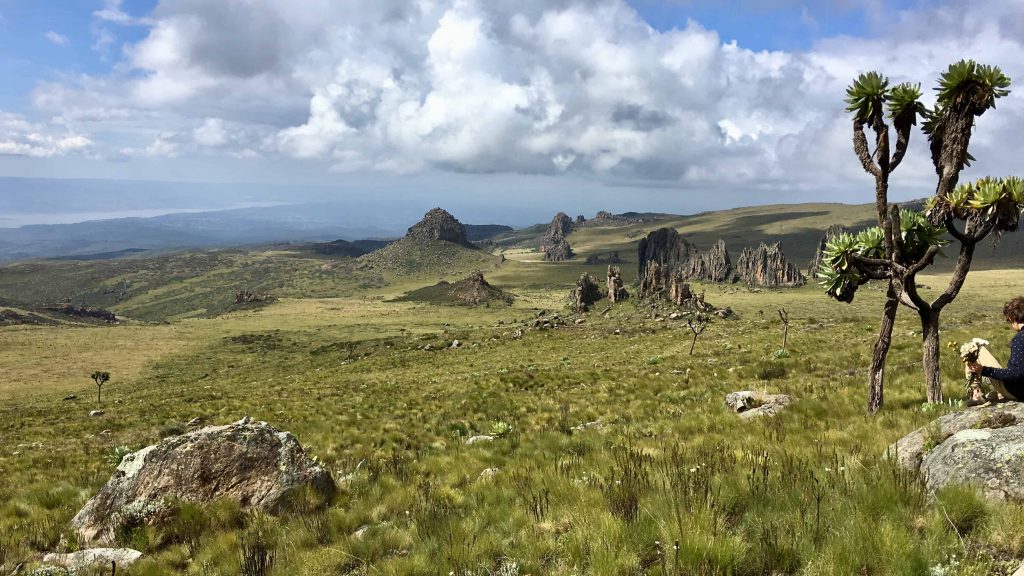
The Aberdare Range in Kenya holds significance for the indigenous Kikuyu people, who designate it as Nyandarua, meaning “drying hide,” in reference to the unique contours of its appearance. On the western flank of the ranges, a precipice descends sharply into the Kinangop plateau. The eastern slopes of the range are more gradual than those on the west, and both Lake Naivasha and the Mau Escarpment are visible from the summit of the range.
Waterfalls inside Aberdare National Park
In Aberdare National Park, one of the park’s defining characteristics is the beautiful waterfalls cascading from cloud-covered heights into the ravines. The Karuru waterfall, regarded as the park’s principal waterfall, is one of its most magnificent cascades. The Karuru Waterfalls comprise three tiers: the top tier has a height of 117 meters, the second tier is 26 meters, and the third tier reaches 130 meters.
Alongside the Gura waterfall, situated opposite the Karuru waterfall, the Magura waterfall, which flows over the expansive entrance of the Queen’s Cave, is another remarkable waterfall within Aberdares National Park. The splendid waters of Aberdares National Park are reachable through the Mutubio West Gate, located roughly 8 kilometers from the Waterfall viewpoint point, offering a stunning vista of the falls. The trek to the waterfall requires approximately 20 minutes across the woodland. While traversing the jungle, one will observe the waterfalls.
Cultural and Historical Sites
Aberdare National Park is a site of considerable cultural and historical value, rendering it an ideal destination for cultural safaris in Kenya, as it encompasses numerous cultural and historical monuments for visitation.
The refuge of Mau chief Dedan Kimathi
This hideout is a noteworthy location as it served as a refuge for Dedan Kimathi, the leader of the Mau-Mau uprising, during Kenya’s war for independence. This hideout is situated between Honi Campsite and Elephant Ridge, a mountain range utilized as a base by Dedan and his associates.
Historically, the Mau-Mau fighters were traveling to Burma to participate in the Second World War. During their time in Burma, they acquired skills in utilizing jungle welfare ropes.
Fig tree
A colossal Mugumo fig tree holds considerable significance in Aberdares National Park, located on the foothills of the Aberdare Range. This tree is ancient and has a captivating history best recounted by the local populations surrounding the park.
The Kenyan Mau Mau warriors carved cracks in the trunk of this tree during their rebellion, utilizing it as a covert post office to transmit messages via agents throughout the Mau Mau uprising. This tree is named Kimathi Post Office in tribute to Dedan Kimathi, the leader of the Mau Mau insurrection. The park is renowned for the ancient caves that served as hideouts for freedom fighters opposing British colonial rule during the last Guerrilla War.
The Kikuyu indigenous community
The Aberdare National Park is home to villages of the Kikuyu people, who hold the belief that the Aberdare Mountains are one of the abodes of Ngai, their deity. Initially referred to as Nyandarua, meaning dried hide, by the natives due to the numerous distinctive folds seen in the area.
Best time for visiting Aberdare National Park
Aberdare National Park is accessible year-round; however, the optimal visiting period is during the dry season, specifically from June to September and December to February.
This period of the year experiences reduced precipitation in the park. Consequently, the access roads to Aberdare National Park will be traversable during this season, and the hiking trails will exhibit reduced mud compared to the rainy season, when they become muddy and treacherous.
A park with short grass will be conspicuous during the dry season, facilitating clear visibility of wild creatures during this time.
Climatic Conditions and Meteorological Patterns of Aberdare National Park
The weather is typically characterized as the atmospheric conditions at a specific area and moment, encompassing temperature, cloud cover, humidity, sunlight, wind, precipitation, and various other elements.
The climate of Aberdare National Park is characterized and elucidated as follows; In Aberdare National Park, six parameters are evaluated to ascertain the weather conditions: air temperature, air pressure, humidity, type and extent of cloud cover, type and quantity of precipitation, and wind speed and direction. These parameters are evaluated to ascertain the meteorological conditions in any specific location, such as Aberdare National Park.
The Aberdares have a significant altitude range, spanning from 1,952 to 3,894 meters (6,404 to 12,776 feet). In Aberdare National Park, the temperature is anticipated to decrease by around 6.5°C for every 1,000 meters (or 3.5°F for every 1,000 feet) of elevation, resulting in a diverse array of meteorological conditions. The climate is typically cool and foggy. The southeast portions of the country receive up to 3,000 millimeters of precipitation annually, leading to a consistent heavy rainfall pattern throughout the year. This region’s proximity to the equator results in a rather consistent temperature year-round. It is essential to choose warm and waterproof attire to remain insulated and dry.
The Aberdare National Park experiences two distinct seasons throughout the year.
Arid season (June to September)
Despite the arid season at Aberdare National Park, significant rainfall persists during this period. During this season, temperatures fluctuate from 150°F to 590°F in the afternoons, dropping to slightly over freezing in the early mornings, as it represents the coldest period of the year.
June and July. Abundant sunshine prevails, however precipitation may occur at any hour of the day. In the afternoon, the mean temperature is 150 degrees Celsius/590 degrees Fahrenheit. It is advisable to choose thick and waterproof attire to maintain warmth during winter.
August and September. Precipitation has a modest rise in August, while temperatures exhibit a minor increase in September. Afternoon temperatures may ascend to 160°C/610°F.
Rain Season (October to May)
Although the wet season extends from October to May, a drier interval occurs between December and February, distinguishing the ‘short rains’ from the ‘long rains.’ There are frequently overcast days, and there are occasions of prolonged, heavy rainfall.
October and November. Precipitation is often brief in duration, with an increase often occurring in October. The afternoon temperature will be approximately 170 degrees Celsius or 630 degrees Fahrenheit.
December, January, and February. In the short rains, there exists a phase characterized by reduced precipitation compared to the lengthy rains. Although the time is challenging to ascertain, there will nonetheless be several rainy days ahead. At this time of year, afternoon temperatures frequently approach 180°C/640°F, marking the warmest period of the year.
March, April, and May. April is characterized by the ‘long rains,’ making it the month with the highest precipitation. The weather is typically damp, however it does not persist for the entire day. The tracks may become slick and challenging to traverse as a consequence. In the early mornings, the temperature is slightly elevated, averaging 50°C/410°F.
Aberdare National Park Campsite Entry Fees
For guests seeking a camping experience during a safari in Aberdare National Park, Kenya.
The public campsites in Aberdare National Park include Reedbuck, Shamata, Wandaris, and others, each providing various amenities for tourists.
Accommodations within Aberdare National Park
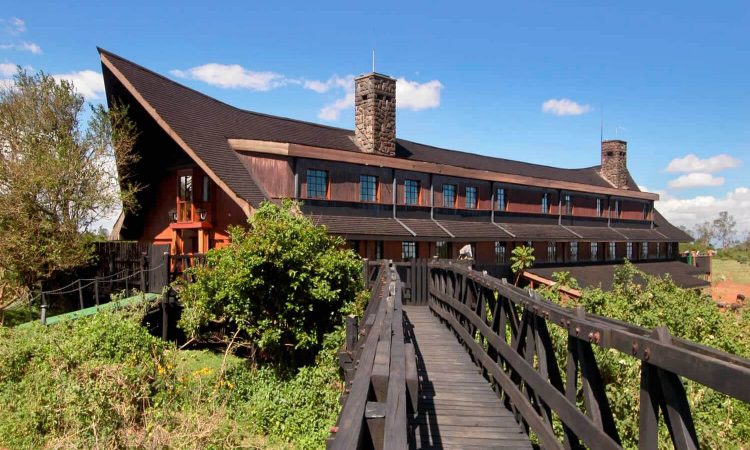
Aberdare National Park offers a diverse array of hotels for your safari stay, should you desire. The park offers a diverse selection of lodges, encompassing luxury, midrange, and economy accommodations.
These encompass The Ark, Aberdare Country Club, Treetops Lodge, Aberdare Cottages and Fishing Lodge, Tusk Camp Banda, several campsites, and Sapper Hut, among others.
Accessing Aberdare National Park
Tourists can reach Aberdare through multiple entrance gates, including Treetops gate, Rhino gate, Ark gate, Kiandogoro gate, Shamata gate, Ruhuruini gate, Mutubio gate, and Wanderis gate.
Aberdare National Park is located in central Kenya, north of Nairobi, and is accessible by both air and road transit due to its central position in the country.
Via Road:
The journey from Nairobi to the national park, covering a distance of 160 km by road, typically requires roughly 2 to 3 hours. Accessing the airport in Nairobi necessitates a flight, followed by a road connection via the Nairobi Jomo Kenyatta International Airport, where one must traverse a tarmacked road. It features several gates, including Shamata or Rhino Gate, accessible from Nyahururu, and Mutubio Gate, accessible from Naivasha.
Via Air Transport:
Regarding air transport, you will reserve regular or charter flights from Wilson Airport, situated in southern Nairobi, to the airstrips at Mweiga and Nanyuki, then connecting to the park headquarters via road. The park is accessible via several domestic airlines, including Airkenya and Safarilink, which provide flights to and from the region. Domestic flights to Aberdare National Park can be reserved via a reputable Kenya tour operator.