 info@gorillatrekkinginafrica.com

Self Drive In Tarangire National Park
Self Drive In Tarangire National Park , Tarangire National Park is one of Tanzania’s most spectacular yet under-visited gems. Covering approximately 2,850 square kilometres in the Manyara Region of northern Tanzania, the park is renowned for its enormous elephant herds, ancient baobab trees, and the life-giving Tarangire River that flows year-round through its heart. The river acts as a magnet for wildlife during the dry season, making Tarangire a premier destination for game viewing.
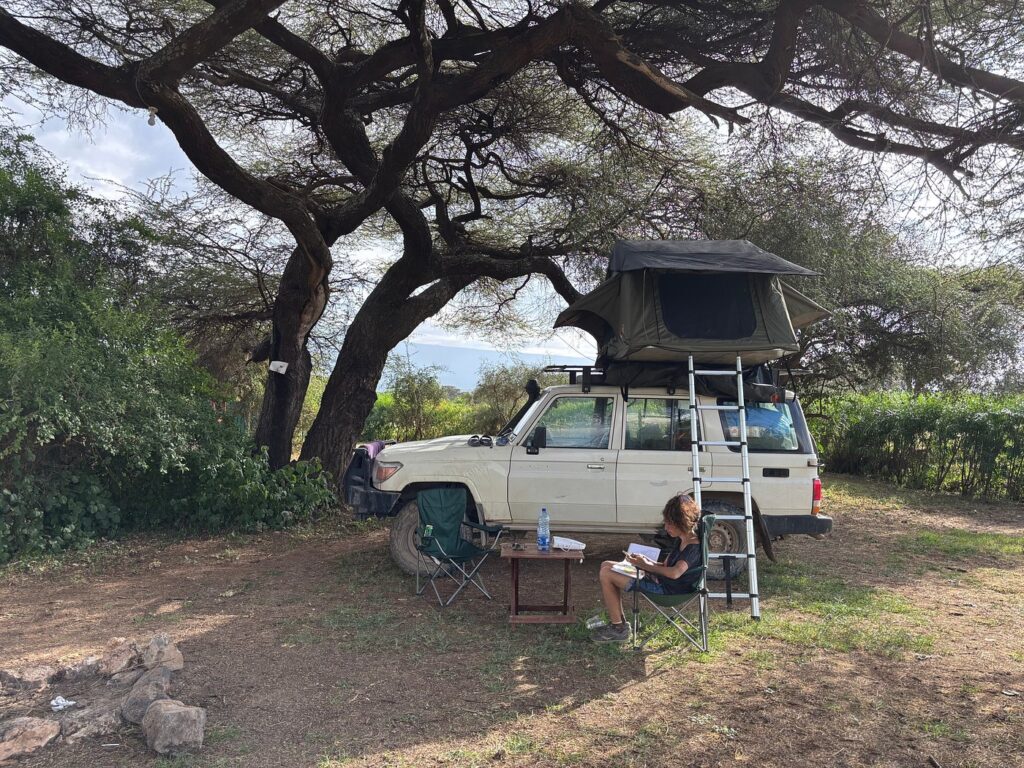
Unlike the more famous Serengeti, Tarangire retains a wonderfully off-the-beaten-track character. Driving yourself through its diverse habitats — acacia savannah, seasonal marshes, open grasslands, and dense bush — offers an intimacy with nature that group tours rarely match. You set your own pace, linger at sightings, and explore remote tracks where other vehicles seldom venture.
This comprehensive guide covers everything you need for a successful self-drive safari in Tarangire: park regulations, vehicle requirements, gate procedures, the best game-viewing circuits, where to camp, seasonal highlights, and practical safety tips.
Why Choose a Self-Drive Safari in Tarangire?
Self-driving in Tarangire offers unique advantages that make it an increasingly popular choice for independent travellers:
Freedom and Flexibility
- Set your own schedule — enter at sunrise, stay until sunset
- Spend as long as you like at any sighting without group pressure
- Explore lesser-used tracks and remote areas of the park
- Adjust your route based on what rangers and other drivers report
Cost Savings
- Eliminate the high cost of a hired guide vehicle and driver
- Choose your own accommodation tier from budget camping to mid-range lodges
- Self-cater at designated camping areas to reduce food expenses
Personal Fulfilment
- Navigate with map and compass — a deeply satisfying challenge
- Practice wildlife photography at your own pace and angle
- Create a personal wildlife journal and trip diary
3. Park Essentials & Entry Requirements
3.1 Park Fees (2026–2027)
All fees are payable via the TANAPA (Tanzania National Parks) online system or at the gate. Payment is cashless — Visa/Mastercard or TANAPA prepaid card required.
| Category | Fee (USD) | Notes |
| Non-resident adult (24 hrs) | $53.90 | Per person per day |
| Non-resident child (5–15 yrs) | $26.95 | Under 5 free |
| East African resident adult | $26.95 | Valid residency proof required |
| East African child | $13.48 | |
| Vehicle (< 8 seats) | $40.00 | Per vehicle per entry |
| Vehicle (8+ seats) | $150.00 | Minibuses and trucks |
| Camping — public site | $35.00 / person | Per night |
| Camping — special site | $50.00 / person | Remote exclusive sites |
| Rescue fee (mandatory) | $25.00 | Per person, per trip |
Gate Hours & Entry Points
Tarangire has two main entry gates:
Kwa Kuchinja Gate (Main Gate) — Most Commonly Used
- Location: 118 km south-west of Arusha on the Arusha–Dodoma highway (B144)
- Opening hours: 06:00 – 18:00 daily
- Vehicle inspection, fee payment, and park entry permits issued here
- Ranger briefing available (recommended for first-time self-drivers)
Boundary Hill Gate (Northern Entry)
- Location: Accessible via Makuyuni Junction — used for the northern wilderness circuit
- Opening hours: 06:00 – 18:00 daily
- Less busy; good access to the Silale Swamp circuit
Important: You must exit the park by 19:00. Night driving is strictly prohibited unless on a dedicated night game drive arrangement with an authorised operator.
Vehicle Requirements for Self-Drive
Minimum Vehicle Specifications
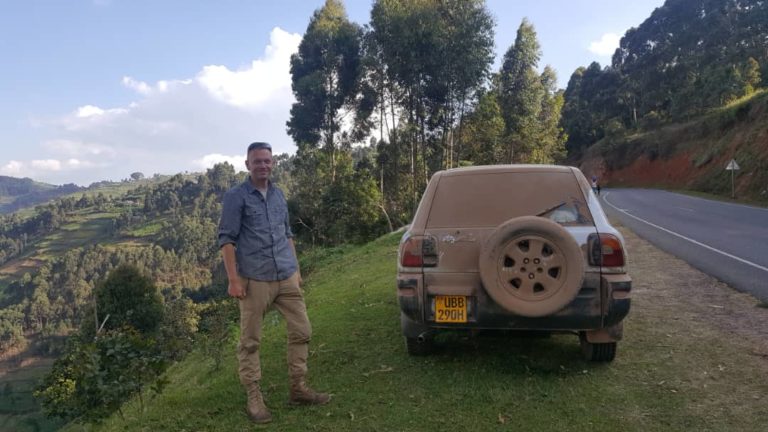
TANAPA regulations and practical road conditions in Tarangire demand a capable, well-prepared vehicle. The park’s tracks range from firm gravel to deeply rutted black-cotton soil that becomes treacherously slippery in the rains.
| Requirement | Details |
| Drive type | 4WD (four-wheel drive) mandatory — 2WD vehicles will be turned away at the gate |
| Ground clearance | Minimum 200 mm — tracks have deep ruts and embedded rocks |
| Tyres | All-terrain (AT) or mud-terrain tyres in good condition; check tread depth |
| Spare tyres | TWO full-size spare tyres mandatory — flat tyres are common on gravel tracks |
| Fuel range | Full tank before entry; no fuel available inside the park |
| Engine | Diesel preferred; petrol engines acceptable if in good mechanical condition |
| Roof hatch/pop-up | Highly recommended for standing wildlife photography |
| Recovery kit | Hi-lift jack, tow rope/strap, sand boards or traction mats |
Recommended Vehicles
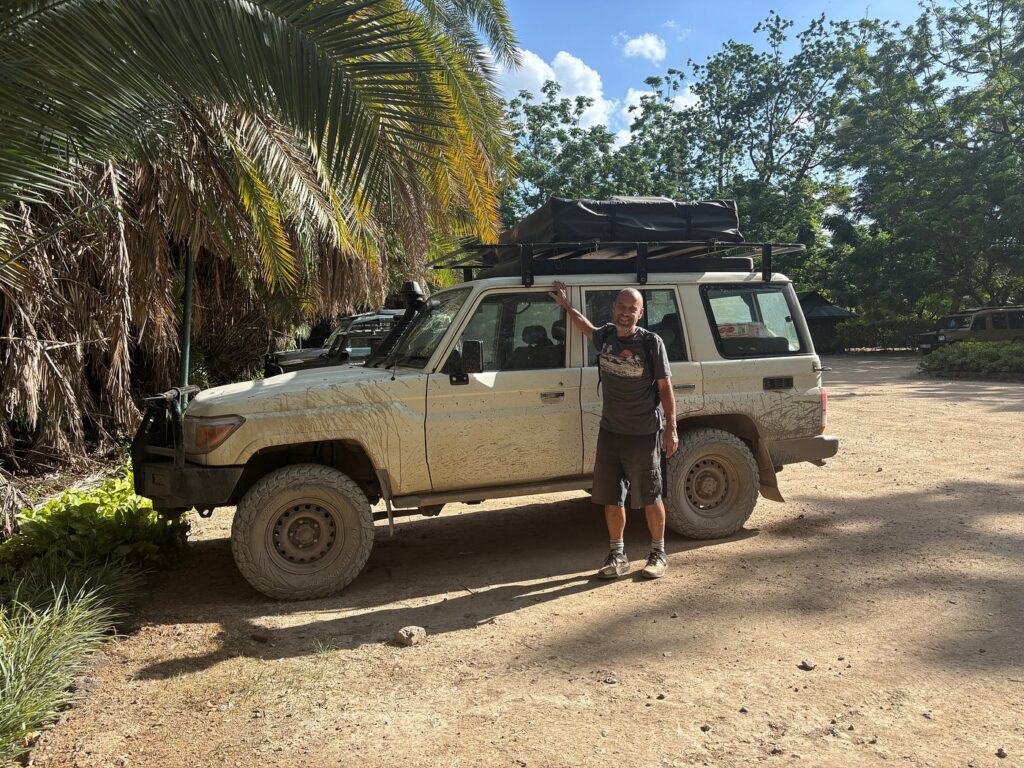
- Toyota Land Cruiser 70/80/200 Series — the gold standard for African safari
- Toyota Land Cruiser Prado (120 or 150 Series) — excellent balance of comfort and capability
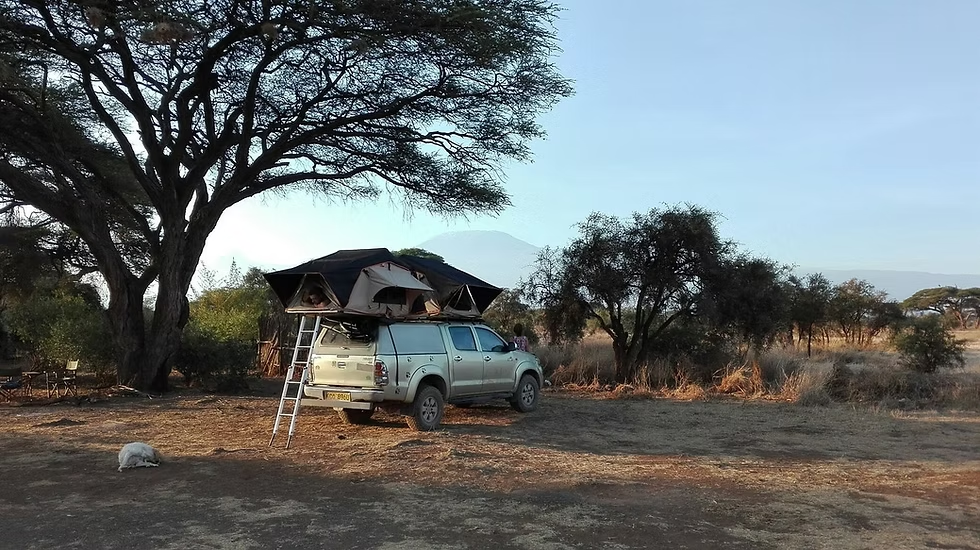
- Toyota Hilux (double cab, 4WD) — popular, affordable, widely available for hire in Arusha
- Land Rover Defender or Discovery — capable, though spare parts harder to source locally
- Nissan Patrol or Mitsubishi Pajero — reliable alternatives
Avoid SUVs marketed as ‘all-wheel drive’ (AWD) that lack a true low-range transfer case — they are not suitable for the park’s black cotton soil and steep river crossings.
What to Pack for a Self-Drive Safari
Vehicle Kit
- Two full-size spare tyres (same brand and tread pattern as road tyres)
- Hydraulic floor jack AND a hi-lift jack
- Tow rope (min. 5-tonne rated) and shackles
- Traction boards (e.g., MAXTRAX or sand ladders) x 2
- Folding shovel / spade
- Jerry can with at least 20 litres of fuel
- 5-litre water container for radiator top-up
- Comprehensive vehicle toolkit (spanners, screwdrivers, zip ties, duct tape)
- Jump-start cables / portable jump pack
- Vehicle first-aid kit (Elastoplast, bandages, antiseptic, tourniquet)
- Fire extinguisher (1 kg dry powder, mounted inside cabin)
Personal & Camp Essentials
- High-SPF sunscreen (30–50+) and UV-protective hat
- Insect repellent (DEET-based 30–50%) — tsetse flies are present
- Malaria prophylaxis (consult your doctor 4–6 weeks before travel)
- Long-sleeved shirts and trousers (muted earth tones — avoid blue, attracts tsetse flies)
- Binoculars (8×42 or 10×42 minimum) — essential for distant wildlife identification
- Detailed paper map of Tarangire (buy in Arusha or download offline maps)
- Compass and/or GPS device
- Camera with zoom lens (200–600mm recommended)
- Sufficient cash for tips, gate fees (card backup), and emergencies
- Satellite communicator (e.g., Garmin inReach) — no mobile signal in most of the park
Self-Drive Game-Viewing Circuits
Tarangire’s road network comprises approximately 200 km of tracks, ranging from well-graded main roads to remote seasonal tracks. Below are the key circuits, arranged from easiest to most challenging.
The River Circuit (Easy — Half Day)
Distance: ~45 km round trip | Time: 4–5 hours | Difficulty: Low
The most accessible and consistently productive game-viewing route in Tarangire. The track follows the Tarangire River south from the main gate through dense acacia woodland, passing several major water holes and the iconic baobab-studded plains. This is where elephant concentrations are highest during the dry season.
Key Stops:
- Tarangire River Viewpoint — superb panoramic views of the river valley
- Silale Swamp (northern end) — hippos, crocodiles, waterbuck, impala
- Engikaret Water Hole — favourite elephant and buffalo gathering point
- Baobab Valley Picnic Site — designated stop, stunning scenery
Wildlife Highlights:
- Elephants (often 200–500 individuals in the dry season)
- Wildebeest, zebra, impala, Grant’s gazelle
- Lions, leopards (particularly active near river thickets)
- Vervet monkeys, baboons, mongoose
Silale Swamp Circuit (Moderate — Full Day)
Distance: ~80 km | Time: 6–8 hours | Difficulty: Moderate
Silale is one of Tarangire’s most wildlife-rich areas, centred on a permanent swamp that sustains large concentrations of water-dependent species throughout the year. The circuit weaves through extensive Acacia tortilis woodland before opening into the marshland edges.
Key Stops:
- Silale Swamp main viewpoint — hippo pods, pink flamingos, yellow-billed storks
- Lemiyon Area — dense baobab woodland with excellent leopard sightings
- Guiyando Track — remote single-lane track through thick bush (4WD essential)
Wildlife Highlights:
- Greater kudu (Tarangire holds Tanzania’s highest kudu density)
- Fringe-eared oryx — rarely seen elsewhere in northern Tanzania
- Eland — largest antelope; frequently seen in large herds
- Waterbuck, warthog, topi
- African wild dog (occasional sightings on the Lemiyon plains)
Larmakau Circuit — Southern Wilderness (Challenging — Full Day or Overnight)
Distance: ~120 km | Time: 7–10 hours | Difficulty: High
The southern reaches of Tarangire are the least visited and most rewarding for experienced self-drivers. The landscape transitions from open savannah to dense Combretum bush and seasonal drainage lines. Wildlife here is more skittish and sightings feel genuinely wild. Black cotton soil tracks become impassable after heavy rain.
Key Stops:
- Larmakau River Crossing — seasonal ford; assess depth before crossing
- Kitibong Hill — elevated viewpoint over the southern plains
- Lake Burunge viewpoint (park boundary) — flamingos and pelicans
Wildlife Highlights:
- Gerenuk (giraffe-necked antelope) — Tarangire is one of its strongholds
- Cheetah — more commonly sighted in the southern open plains
- Striped hyena (nocturnal; occasionally spotted at dusk)
- Ostrich, secretary bird, kori bustard
Poacher’s Hide Loop (Northern Wilderness — Expert)
Distance: ~60 km | Time: 5–7 hours | Difficulty: Very High
Accessible from Boundary Hill Gate, this remote circuit passes through undisturbed miombo woodland and open floodplains. The tracks are unmarked on most maps and require an experienced navigator. Sightings of roan antelope, sable antelope, and African buffalo in massive herds distinguish this circuit.
Seasonal Game-Viewing Guide
| Season | Months | Conditions | Best For |
| Dry Season | Jun – Oct | Firm tracks, dust, hot days. River is low. | Elephants at the river; maximum wildlife concentration. Best game viewing overall. |
| Short Rains | Nov – Dec | Light, unpredictable showers. Tracks passable. | Green landscape, migrating birds arrive. Fewer tourists. |
| Long Rains | Mar – May | Heavy rain. Black cotton tracks extremely dangerous. | NOT recommended for self-drive. Some lodges close. |
| Dry Shoulder | Jan – Feb | Hot, partially dry. Some tracks recovering. | Calving wildebeest and zebra; bird watching excellent. |
Peak Recommendation: June to October is the undisputed best period for self-drive safaris in Tarangire. Water sources dwindle to the Tarangire River and permanent swamps, forcing wildlife — particularly elephants — to congregate in extraordinary numbers. Up to 3,000 elephants have been recorded in the park during October.
Wildlife of Tarangire National Park
The Elephants of Tarangire
Tarangire hosts one of Africa’s largest elephant populations, with estimates of 3,000–4,000 individuals using the ecosystem. Elephant clans follow ancient migration corridors between the park and adjacent community lands, guided by matriarchs with generational knowledge of water and food sources.
During the dry season, the Tarangire River becomes the central gathering point. It is not uncommon to encounter herds of 300–500 elephants at river crossings, drinking, mud-bathing, and socialising — one of Africa’s great wildlife spectacles. Self-drivers have the unique advantage of positioning their vehicle at the bank without the noise and disruption of multiple tour vehicles.
The Big Five in Tarangire
- Elephant — outstanding; highest density in northern Tanzania
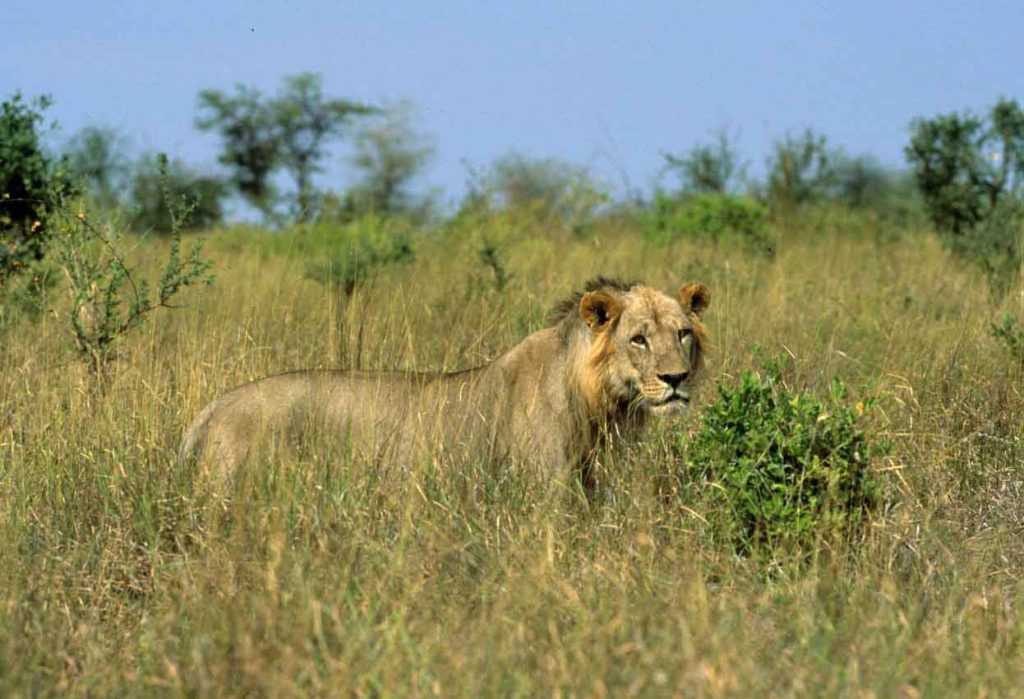
- Lion — present throughout; particularly active near Silale Swamp
- Leopard — found in riverine thickets; best spotted at dawn and dusk
- Buffalo — massive herds in the north; frequently 500–800 individuals
- Rhino — no longer present in Tarangire; visit Ngorongoro Crater for rhino
Rare & Endemic Species
Tarangire is the single best location in Tanzania — and arguably in all of East Africa — for seeing several rare, localised species:
- Fringe-eared oryx (Oryx beisa callotis) — endangered subspecies; sightings on Lemiyon plains
- Greater kudu (Tragelaphus strepsiceros) — magnificent spiral-horned antelope; Tarangire is their stronghold
- Gerenuk (Litocranius walleri) — the ‘giraffe gazelle’; seen standing bipedally to browse acacia foliage
- Ashy starling (Lamprotornis unicolor) — Tanzania endemic; found in the baobab belt
- Yellow-collared lovebird — brilliantly coloured; endemic to central Tanzania
Birding in Tarangire
Tarangire is a birder’s paradise, with over 550 species recorded. It is one of the best parks in Tanzania for raptors, waterbirds, and East African endemics. Key species include:
- Martial eagle, bateleur, African fish eagle
- Lilac-breasted roller, superb starling, Von der Decken’s hornbill
- Yellow-throated sandgrouse (large flocks near water in the dry season)
- Rufous-tailed weaver — Tanzania and Kenya endemic
- African skimmer at Silale Swamp (November–March)
Camping & Accommodation Inside Tarangire
Public Camping Sites
| Site | Location | Facilities | Booking |
| Tarangire Public Campsite 1 | Near main gate | Long-drop toilets, fire pit, water (not always potable) | TANAPA online or at gate |
| Tarangire Public Campsite 2 | Central park area | Basic pit latrines, fire clearing | TANAPA online |
| Silale Public Campsite | Silale Swamp | Pit latrines, fire pit — very remote | TANAPA online (limited availability) |
Special Campsites (Exclusive-Use)
Special campsites are remote, exclusive sites — no facilities whatsoever. You must be fully self-sufficient with a tent, sleeping kit, water, food, cooking equipment, and a portable toilet. A park ranger escort is required and must be arranged through TANAPA in advance.
- Larmakau Special Campsite — southern wilderness; outstanding star-gazing
- Kitibong Special Campsite — elevated position with panoramic views
- Boundary Hill Special Campsite — northern zone near miombo woodland
Mid-Range & Luxury Options
- Tarangire Safari Lodge — overlooking the Tarangire River; beautiful sunset views ($180–250/night)
- Oliver’s Camp — exclusive tented camp in a private wildlife management area ($450–600/night)
- Sanctuary Swala Camp — boutique luxury in a private concession ($500–700/night)
- Maramboi Tented Camp — on Lake Manyara/Tarangire migration corridor ($200–350/night)
Park Rules & Safety Guidelines
TANAPA Rules for Self-Drivers
- Stay on designated tracks at all times — off-road driving is strictly prohibited
- Maximum speed: 40 km/h on gravel roads; 25 km/h near water sources
- Do not exit your vehicle except at designated picnic and viewpoint areas
- Maintain a minimum 30-metre distance from predators (lions, cheetahs, leopards)
- Switch off your engine if elephants approach within 50 metres
- No honking, revving, or sudden movements near wildlife
- Strictly no littering — pack all waste out of the park
- No smoking outside of vehicle
- No firearms, drones, or unmanned aerial vehicles (UAVs)
- Report any poaching activity, injured animals, or breakdowns to the nearest ranger post
Wildlife Safety
Tarangire’s animals are wild and unpredictable. Follow these guidelines to ensure your safety:
Elephants
- Never position yourself between a cow elephant and her calf
- If an elephant makes a mock charge, remain still and do not accelerate away rapidly
- Watch for pinned-back ears and raised trunk — signs of genuine aggression
- Keep your engine running in heavy elephant areas for quick departure
Lions & Big Cats
- Never open doors or windows widely when lions are present
- Do not make eye contact with a lion at close range
- Avoid parking in long grass — cats may be concealed beneath your vehicle
Buffaloes
- Old solitary buffalo bulls (dagga boys) are notoriously aggressive — keep distance
- Never get between a herd and a water source
Vehicle Breakdown Procedures
- Stay with your vehicle — do not walk in the bush alone
- Use your satellite communicator or the park emergency frequency: VHF Channel 5
- Contact TANAPA Emergency Line: +255 27 250 3471
- Your mandatory rescue fee ($25/person) covers recovery assistance
- Carry the phone numbers of your car hire company and nearest gate
Getting to Tarangire National Park
From Arusha
Arusha is the main base for hiring a self-drive vehicle and accessing Tarangire. The park gate is approximately 118 km from Arusha, taking 1.5–2 hours under normal traffic conditions.
Route: Arusha → Tarangire
- From Arusha city centre, take the A104 heading south-west toward Makuyuni Junction
- At Makuyuni Junction, turn left (south) onto the B144 toward Dodoma
- After approximately 40 km on the B144, watch for the Tarangire National Park signpost
- The Kwa Kuchinja (main) gate is 7 km off the B144 on a well-graded dirt road
Road condition: The A104 and B144 are tarmac. The 7 km spur road to the gate is graded gravel — suitable for 2WD as far as the gate, but 4WD required beyond.
From Dar es Salaam
Long-haul route: ~630 km via A104 (Morogoro–Arusha highway). Allow 7–8 hours driving. The route passes through Chalinze, Segera, and Same. Fuel is available at Chalinze, Segera, and Same. Top up before turning off at Makuyuni Junction.
Car Hire in Arusha
Arusha has numerous reputable car hire companies specialising in safari-equipped 4WD vehicles. Book well in advance for peak season (July–September).
| Vehicle Type | Approx. Daily Rate (USD) | Included |
| Toyota Hilux 4WD (basic) | $80 – $120 | Insurance, 2 spare tyres, basic toolkit |
| Land Cruiser Prado (standard) | $130 – $180 | Insurance, roof hatch, 2 spares, GPS |
| Land Cruiser 70 (hardtop) | $150 – $200 | Full recovery kit, roof rack, 2 spares |
| Land Cruiser 78 (troopie) | $160 – $220 | Extended roof, extra seats, full kit |
| Land Cruiser 200 (luxury) | $200 – $280 | Full luxury fit-out, fridge, GPS, comms |
Sample Self-Drive Itineraries
Two-Day Tarangire Self-Drive
Day 1 — River Circuit & Baobab Valley
06:00 — Depart Arusha; arrive Kwa Kuchinja Gate by 08:00. Complete entry formalities, pay fees, and collect your permit. Drive the main river circuit heading south-west toward Engikaret Water Hole. Mid-morning game viewing along the Tarangire River. Lunch at Baobab Valley Picnic Site. Afternoon loop via Silale Swamp northern edge. Return to gate by 17:30. Camp at Tarangire Public Campsite 1. Total driving: ~65 km in park.
Day 2 — Lemiyon Track & Departure
06:00 — Early start for the Lemiyon woodland circuit, renowned for greater kudu, fringe-eared oryx, and giraffe. Morning game drive until 11:00. Exit park by 12:00. Drive back to Arusha or continue to Lake Manyara/Ngorongoro. Total park driving: ~50 km.
Four-Day Tarangire Exploration
Day 1 — Arrival & River Circuit
Arrive afternoon; set up camp. Afternoon river circuit drive from 15:00–18:00 — golden-hour elephant photographs.
Day 2 — Silale Swamp Full Day
Full-day circuit of the Silale Swamp. Packed lunch eaten in vehicle. Expect hippos, enormous buffalo herds, and the park’s richest birdlife.
Day 3 — Southern Wilderness (Larmakau)
Full-day advanced circuit into the deep south. Early 05:30 departure to maximise time. Carry extra water and a full tool kit. Return before 18:30.
Day 4 — Morning Game Drive & Departure
Final 3-hour morning drive along the river. Exit by 11:00. Drive to Arusha or connect with next destination.
1Practical Tips for a Successful Self-Drive
Navigation
- Download Maps.me or OsmAnd with offline Tanzania maps before departure — these show park tracks
- Purchase the ‘Tracks4Africa’ GPS layer for detailed off-road navigation in Tarangire
- Always carry a printed TANAPA park map — available at the gate (free) or Arusha bookshops
- Track your route on a Garmin inReach or similar device to retrace if lost
- Ask rangers at the gate for current track conditions and recent wildlife sightings
Photography
- Best light: 06:00–09:00 and 16:00–18:30 — the golden hours
- Position vehicle with sun behind you and at a low angle when possible
- Switch off engine to reduce vibration for long-lens photography
- Use a beanbag lens rest on the vehicle window for sharp telephoto shots
- Wear muted clothing and remain still — animals are more relaxed with quiet, motionless vehicles
Health & Medical
- Malaria is endemic — take prophylaxis and use DEET repellent consistently
- Tsetse fly bites are painful and can (rarely) transmit sleeping sickness — wear long sleeves and avoid blue clothing
- Nearest hospital: Arusha Lutheran Medical Centre (ALMC), Arusha — +255 27 254 8530
- Carry a comprehensive first-aid kit and know basic wound treatment
- Stay hydrated — minimum 3 litres of water per person per day in the dry season heat
Fuelling Strategy
- Fill your tank completely in Arusha before departure
- The nearest fuel station to the gate is at Makuyuni Junction (~7 km from main gate turnoff)
- No fuel is available inside the park — carry a 20-litre spare jerry can
- A full day of game driving within the park uses approximately 8–12 litres depending on your vehicle
Sample Budget for a 2-Person, 3-Day Self-Drive
| Expense | Cost (USD) | Notes |
| Park entry fee (2 adults × 3 days) | $323.40 | $53.90 × 2 × 3 |
| Vehicle entry fee (3 days) | $120.00 | $40 × 3 days |
| Rescue fee (2 persons) | $50.00 | Mandatory |
| Camping — public site (3 nights × 2 persons) | $210.00 | $35 × 2 × 3 |
| 4WD Hilux hire (3 days, incl. insurance) | $300.00 | ~$100/day |
| Fuel (300 km driving) | $75.00 | ~25L diesel @ $1.50/L |
| Food & water (self-catering) | $90.00 | $15/person/day |
| Arusha hotel (2 nights) | $100.00 | Mid-range, shared room |
| Miscellaneous (tips, snacks, comms) | $60.00 | |
| TOTAL ESTIMATED COST | $1,328.40 | ~$664 per person |
Conclusion
A self-drive safari in Tarangire National Park is one of East Africa’s great independent travel adventures. The park rewards those willing to venture beyond the guided-tour circuit with extraordinary wildlife sightings, stunning baobab landscapes, and an authenticity that is increasingly rare in popular safari destinations.
Come prepared with the right vehicle, the right knowledge, and the right mindset — patient, flexible, and attuned to the rhythms of the bush — and Tarangire will deliver memories that last a lifetime. The sight of 500 elephants crossing the Tarangire River at sunset, with the setting sun catching the dust of a thousand hooves, is something no guided vehicle can replicate.
Drive safely. Respect the wildlife. Leave no trace. And enjoy every magnificent kilometre of this remarkable park.