 info@gorillatrekkinginafrica.com

Tarangire National Park Gates
Tarangire National Park Gates, Tarangire National Park is one of Tanzania’s most spectacular and underrated wildlife destinations, located in the Manyara Region of northern Tanzania. Covering approximately 2,850 square kilometres, it is the sixth-largest national park in the country and forms part of the greater Tarangire-Manyara ecosystem — one of the largest wildlife ecosystems in East Africa.
The park takes its name from the Tarangire River, the only permanent water source in the area, which serves as a critical lifeline for wildlife during the dry season (June to October). This seasonal concentration of animals along the river makes Tarangire one of Africa’s most dramatic wildlife spectacles, rivalling even the Serengeti in terms of animal density during peak dry months.
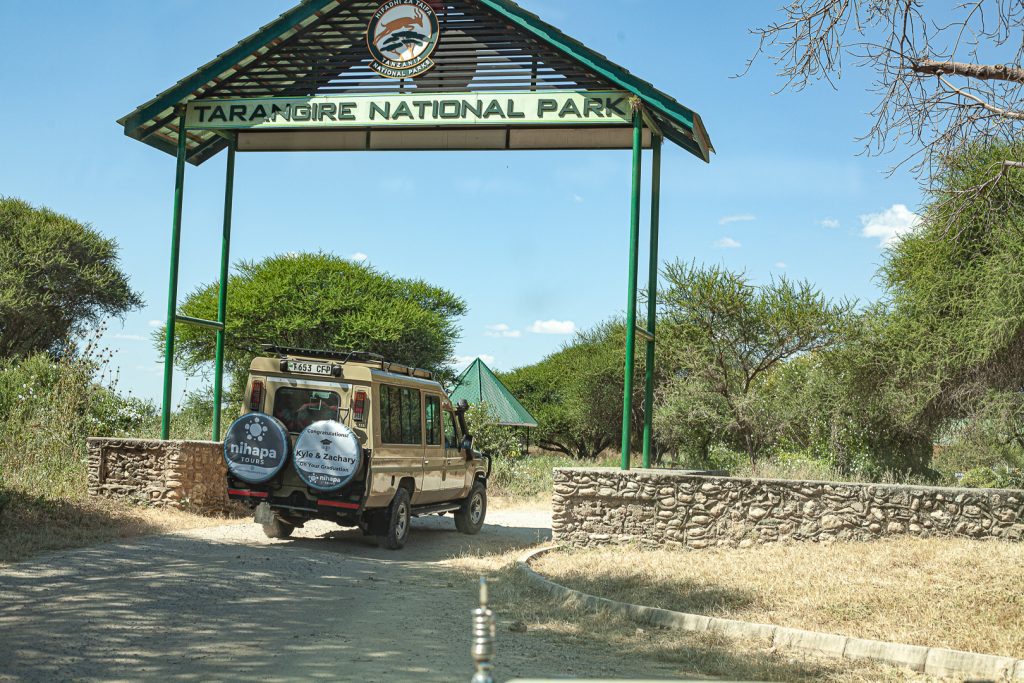
Central to any visit to Tarangire is understanding the park’s entry gates — the official access points through which all visitors must pass. These gates are managed by Tanzania National Parks (TANAPA), the government body responsible for the country’s national parks. Each gate serves as more than just an entry point; it is an administrative hub, an information centre, and in many cases, the beginning of an unforgettable safari experience.
Tarangire Main Gate (Kinyasungwe Gate)
The Tarangire Main Gate, also known as Kinyasungwe Gate, is the primary and most commonly used entry point into Tarangire National Park. It is situated along the Arusha-Dodoma highway (the B129 road), making it highly accessible from major urban centres in northern Tanzania.
Location and Access
The Main Gate is located approximately 118 kilometres southwest of Arusha city and about 7 kilometres from the town of Kwa Kuchinja. Visitors travelling from Arusha pass through Makuyuni junction before heading south on the B129 road towards the gate. The route is paved and generally well-maintained, making it accessible by standard vehicles, though a 4×4 is recommended for game drives within the park.
| From Arusha | Approximately 118 km (2 – 2.5 hours by road) |
| From Moshi | Approximately 145 km (2.5 – 3 hours by road) |
| From Kilimanjaro Int’l Airport | Approximately 120 km (2 hours by road) |
| From Dar es Salaam | Approximately 620 km (8 – 10 hours by road) |
| From Lake Manyara NP | Approximately 75 km (1 – 1.5 hours by road) |
Gate Facilities and Services
The Tarangire Main Gate is equipped with a comprehensive range of facilities designed to ensure a smooth and informative entry experience for visitors:
- TANAPA registration and ticketing offices for processing park fees and issuing entry permits
- Park information boards and maps displaying wildlife zones, roads, and points of interest
- A visitor information centre with educational displays on local flora, fauna, and conservation
- Curio and souvenir shops selling locally made crafts, clothing, and Tanzania-themed merchandise
- Public restrooms and ablution facilities
- Vehicle inspection points to ensure compliance with park regulations
- Ranger stations where guided game drive escorts can be arranged
- Limited picnic areas near the gate entrance
- Emergency contacts and first aid coordination services
Operating Hours
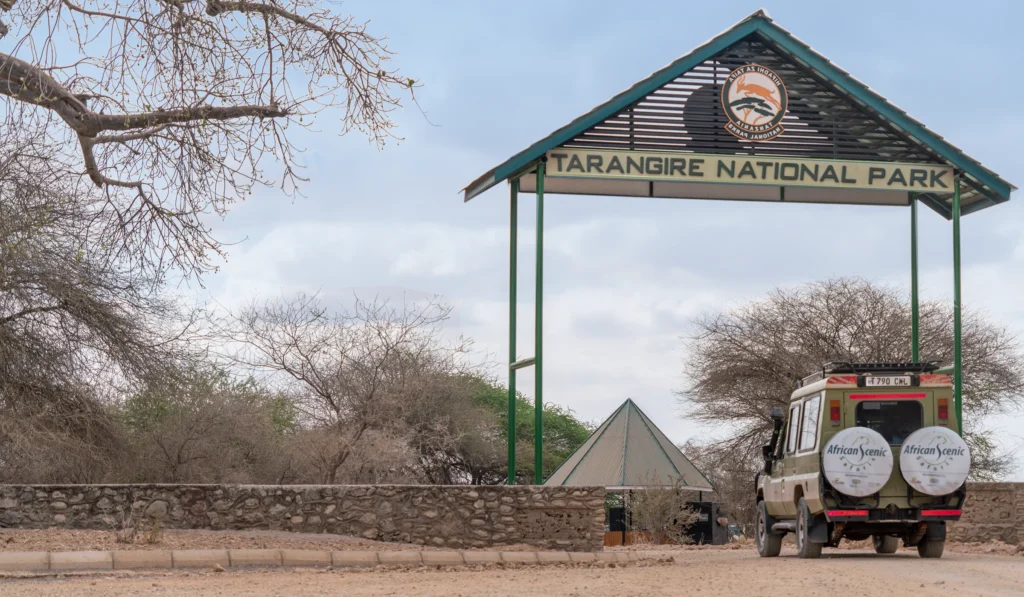
The Tarangire Main Gate operates every day of the year, including public holidays. Standard operating hours are from 06:00 AM to 06:00 PM. Visitors are strongly advised to enter the park by mid-morning to maximise game viewing, and all visitors must exit the park before closing time unless staying at an accommodation facility within park boundaries.
Entry Fees and Ticketing
Entry fees at the Main Gate are standardised across Tarangire National Park and are set by TANAPA. Fees are charged per person per 24-hour period and vary depending on visitor category:
| Non-resident adults | USD 53.90 per person per day (subject to change) |
| Non-resident children (5-15) | USD 19.00 per child per day |
| East African residents (adults) | TZS equivalent (significantly lower rate) |
| East African residents (children) | TZS equivalent concession rate |
| Tanzanian citizens | Subsidised national rate in TZS |
| Vehicle entry fee | USD 40 per vehicle (foreign-registered) |
Payments can be made via the TANAPA electronic fee collection system using credit/debit cards. It is advisable to confirm current fee rates with TANAPA or a licensed tour operator before arrival, as tariffs are periodically reviewed.
Boundary Hill Gate (Northern Gate)
The Boundary Hill Gate, sometimes referred to as the Northern Gate, serves as a secondary access point into Tarangire National Park. It is less frequented than the Main Gate and is primarily used by visitors approaching from the north or those coming from the Lake Manyara region.
Location and Access
Boundary Hill Gate is located in the northern section of the park, accessed via a track off the Makuyuni-Babati road. The gate is particularly useful for visitors who have already visited Lake Manyara National Park and wish to proceed directly into Tarangire without returning to Arusha.
The road leading to this gate is largely unpaved and requires a 4×4 vehicle, especially during the long rains season (March to May). During the dry season, however, the route is generally passable and offers scenic views of the surrounding savanna and woodland.
Facilities and Visitor Experience
Compared to the Main Gate, Boundary Hill Gate offers more limited infrastructure but provides a more exclusive and remote entry experience. Facilities include:
- Basic TANAPA registration and ticketing services
- Ranger post with wildlife information
- Simple toilet facilities
- Vehicle check-in and logbook registration
Wildlife Highlights Near Boundary Hill Gate
The northern zone accessed via Boundary Hill Gate is known for its exceptional elephant populations, particularly during the dry season. Visitors entering through this gate can expect:
- Large elephant herds gathering near seasonal water sources
- Greater and lesser kudu in dense woodland thickets
- Fringe-eared oryx on the open plains
- Maasai giraffe browsing on acacia canopies
- Diverse birdlife including hornbills, rollers, and raptors
Sangaiwe Gate (Eastern/Silale Gate)
The Sangaiwe Gate — also known informally as the Silale Gate — is situated in the eastern reaches of Tarangire National Park. This gate serves as an important access point for visitors exploring the remote eastern sections of the park, including the Silale and Gursi swamps, which are among the most productive wildlife areas within Tarangire.
Location and Access
Sangaiwe Gate is accessed via the Sangaiwe area to the east of the main park highway. A robust 4×4 vehicle is essential for reaching this gate, and independent navigation can be challenging without GPS or an experienced local guide. Due to its remoteness, visitor numbers are considerably lower than at the Main Gate, resulting in a more intimate wilderness experience.
The Silale and Gursi Swamps
The primary draw of the eastern zone accessed through Sangaiwe Gate is its swamp systems. The Silale Swamp and Gursi Swamp are permanent or semi-permanent wetlands that attract massive concentrations of wildlife year-round, but especially during the dry season. During peak dry season, visitors can observe:
- Thousands of zebra and wildebeest crowding the swamp edges
- Cape buffalo in herds numbering in the hundreds
- Lions stalking prey in the open grassland surrounding the swamps
- Hippo pods in the deeper water sections
- Enormous elephant herds using the swamps as a water source and wallowing ground
- Exceptional birdwatching including storks, herons, egrets, and ibis congregating in the shallows
Park Regulations and Entry Requirements
All visitors entering Tarangire National Park through any of its gates must comply with TANAPA’s rules and regulations, which are strictly enforced to protect the park’s biodiversity and visitor safety.
Documentation Requirements
- Valid passport or national identification document
- Proof of East African residency or citizenship where applicable
- Confirmed accommodation booking if staying within the park
- Vehicle registration and insurance documents
- Tour operator licence documentation (for commercial safari operators)
Conduct Within the Park
- All visitors must remain on designated roads and tracks unless on a guided walking safari
- Off-road driving is strictly prohibited and carries significant fines
- Vehicles must not exceed 40 km/h within the park boundaries
- Feeding of wildlife is prohibited under any circumstances
- Littering carries heavy penalties; all waste must be removed from the park
- Noise must be minimised to avoid disturbing wildlife and other visitors
- Photography is permitted; commercial film crews must obtain advance permits from TANAPA
- Night driving is prohibited unless guests are travelling between permanent lodge facilities
- Collecting plants, rocks, soil, or any natural material from the park is illegal
Additional Fees and Levies
| Concession fee | Applicable for scheduled accommodation inside the park |
| Vehicle rescue fee | USD 200+ for vehicle recovery if required |
| Commercial filming permit | Variable; contact TANAPA HQ in advance |
| Walking safari fee | Additional per-person levy above standard entry fee |
| Camping fees | Separate per-person nightly fees for public campsites |
Best Times to Visit
Dry Season (June – October)
This is universally considered the best time to visit Tarangire. As water sources diminish, vast herds of wildlife converge on the Tarangire River. The lack of foliage makes wildlife spotting easier, and road conditions are generally at their best. All gates are accessible throughout this period.
Short Dry Season (January – February)
A shorter dry spell occurs between January and February. This period offers excellent birdwatching, with migratory species present, and fewer tourists than the main dry season. All gates remain fully operational and roads are generally passable.
Wet Season (November – May)
The long rains (March-May) and short rains (November-December) transform Tarangire into a lush, verdant landscape with an extraordinary diversity of bird species. However, some internal park roads may become impassable, and access to remote gates such as Sangaiwe may be restricted. Visitors should consult TANAPA directly regarding gate accessibility during this period.
Key Wildlife and Landmarks by Gate
Accessible from the Main Gate
- Tarangire River viewpoints and hippo pools
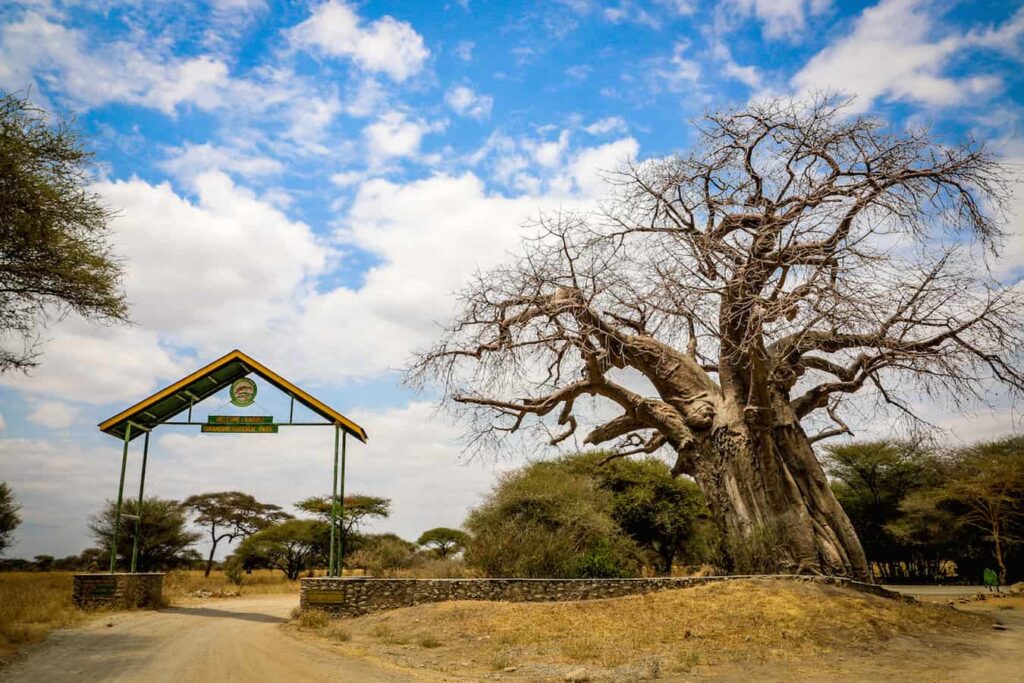
- The iconic baobab forests along the main game drive circuit
- Lemiyon area — classic savanna woodland with dense wildlife
- Engelhard Bridge crossing over the Tarangire River
Accessible from Boundary Hill Gate
- Northern woodland elephant corridors
- Manyara Ranch Conservancy (adjacent, outside the park)
- Boundary Hill panoramic viewpoint
Accessible from Sangaiwe Gate
- Silale Swamp — premier wildlife congregation zone
- Gursi Swamp and its surrounding plains
- Southern Tarangire wilderness areas
- Remote walking safari zones with ranger escort
Accommodation Within and Near the Park
Inside the Park
- Tarangire Sopa Lodge — full-service lodge near the Main Gate zone with panoramic river valley views
- Tarangire Safari Lodge — one of the oldest establishments in the park, above the river
- Oliver’s Camp — intimate exclusive camp in the remote south, focused on walking safaris
- Nimali Tarangire — luxury tented camp offering premium safari experiences
- Tarangire Treetops — unique lodge built around massive baobab trees in the northern zone
- Public and special campsites managed by TANAPA for self-drive and budget travellers
Outside the Park (Near Gates)
- Boundary Hill Lodge — situated outside the northern park boundary, ideal access via Boundary Hill Gate
- Various budget guesthouses in Kwa Kuchinja town near the Main Gate
- Manyara Ranch Conservancy Lodge — en route from Lake Manyara to Tarangire
Practical Tips for Gate Entry
- Arrive at the gate early — ideally by 7:00 AM — to maximise game viewing time and avoid queues during peak season
- Carry printed or digital copies of all booking confirmations, as rangers will verify accommodation bookings
- Ensure all park fees are paid electronically where possible; carry a backup card as connectivity can be limited at remote gates
- Stock up on food, water, and fuel before reaching the gate — services within the park are minimal
- Obtain a current park map from the gate information centre; GPS is helpful but should not replace physical maps
- Register your intended route with the gate rangers, particularly when entering through less-frequented gates
- Respect gate operating hours strictly; overstaying without prior authorisation is a fineable offence
- Confirm road conditions in advance during or after the wet season, as tracks to secondary gates may be closed
Conservation and TANAPA’s Role
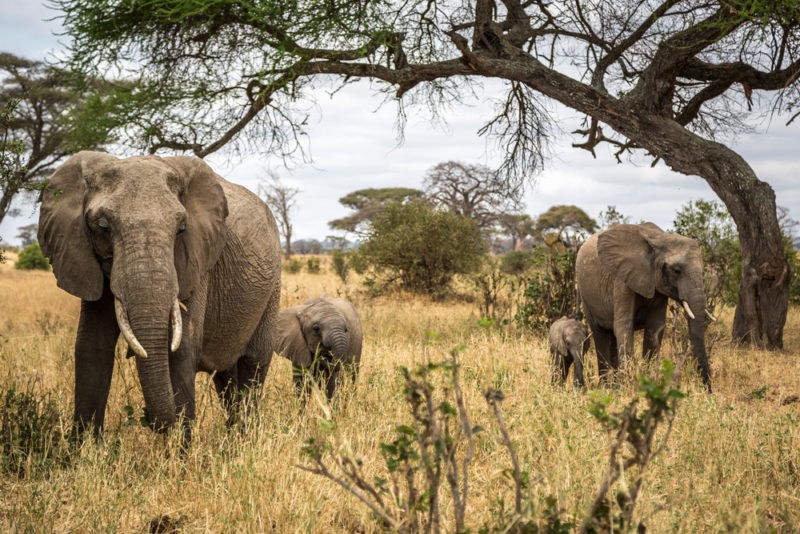
The gates of Tarangire National Park represent the frontline of conservation in one of Africa’s most significant wildlife areas. TANAPA rangers stationed at each gate play a critical role in monitoring wildlife movements, detecting poaching activity, and managing the sustainable flow of tourism into the park ecosystem.
Revenue collected at the gates directly funds conservation programmes, anti-poaching operations, community development initiatives in surrounding villages, and maintenance of the park’s road network and visitor facilities. By paying the required fees and respecting park regulations, every visitor makes a tangible contribution to the long-term preservation of Tarangire’s extraordinary biodiversity.
Conclusion
Tarangire National Park’s gates — principally the Main Gate (Kinyasungwe), Boundary Hill Gate, and Sangaiwe Gate — each offer distinct entry experiences into one of Africa’s most biodiverse and visually stunning national parks. Whether visiting for the first time or returning for deeper exploration of its remote swamps and woodland corridors, understanding the entry system, facilities, and regulations at each gate is essential for a safe, informed, and rewarding visit.
With the Tarangire River as its beating heart, ancient baobabs standing sentinel over the savanna, and wildlife spectacles that rank among the continent’s finest, Tarangire National Park rewards every visitor who passes through its gates with experiences that last a lifetime.