 info@gorillatrekkinginafrica.com

Wildebeest Migration & Gorilla Trekking in Uganda or Rwanda
Wildebeest Migration & Gorilla Trekking in Uganda or Rwanda, Is it feasible to integrate wildebeest migration in Kenya/Tanzania with gorilla trekking in Uganda or Rwanda? The amalgamation of wildebeest migration and gorilla trekking ensures unparalleled wilderness encounters. The wildebeest migration and gorilla trekking are two distinctive experiences, each promising visitors remarkable interactions with diverse wildlife.
The Great Migration enables the observation of millions of wildebeest, with the most pivotal event being the crossing of the Mara River. During the Mara crossing, these mammals traverse the crocodile-infested Mara River, encountering several predators, including lions, leopards, hyenas, and cheetahs. Wildebeest migrate in vast numbers, joined by gazelles and other herbivores, as they seek water and grazing grounds.
Where to go for wildebeest migration?
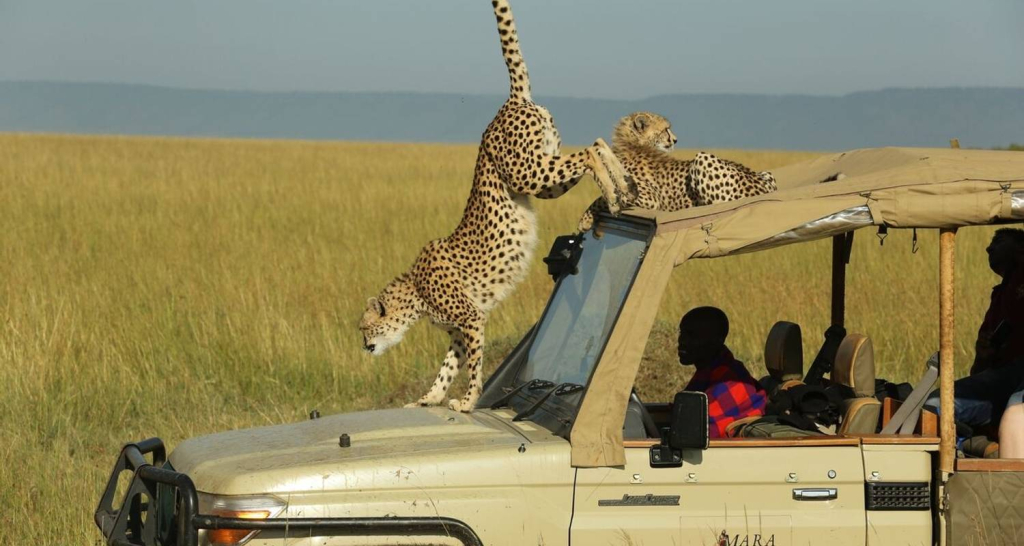
The Great Migration experience is pleasurable in Tanzania and Kenya. In Kenya, no safari is complete without a visit to the Masai Mara National Reserve to observe the remarkable wildebeest migration. The wildebeests migrate from the expansive Serengeti grasslands to Masai Mara across the Mara River. The standard wildebeest migration transpires from July through mid-September. The Great Migration entails perilous traversals over the abundant crocodile-infested Mara River. The Masai Mara is located in Southwestern Kenya and is characterized by gently undulating savanna plains. Covering an area of 1510 sq.km, Masai Mara National Reserve is a distinctive animal protection region. Masai Mara is renowned not just for its substantial concentration of wildebeest but also for safeguarding a significant number of other species. The varied ecosystems of Masai Mara provide sanctuary to several wildlife species, including cheetahs, lions, elephants, African buffaloes, zebras, rhinos, and giraffes.
What is the route to Masai Mara?
Accessing Masai Mara can be achieved via road or plane travel. Travel by road from Nairobi city in a 4×4 safari vehicle for around 5-6 hours, anticipating stopovers at significant locations. The entrance gates surrounding Narok comprise Oloolaimutia Gate, Talek Gate, and Sekenani Gate. The gates surrounding the western section of Masai Mara comprise Musiara and Oloololo. Air travel allows for convenient flights from Nairobi to many airstrips. The principal airstrips in and near Masai Mara comprise Olare Orok Airstrip, Ngerende Airstrip, Serena Airstrip, Keekorok Airstrip, Musiara Airstrip, Angama Airstrip, and Kichwa Tembo Airstrip.
The Great Migration in Serengeti National Park
Located in the northern region of Tanzania, Serengeti National Park is a renowned destination for observing the Great Migration. The Serengeti is the premier location to observe the Great Migration and the Big Five wildlife. The park is around a 6 to 7-hour journey from central Arusha.
Serengeti National Park is a vast protected region in Northern Tanzania, encompassing an area of 14,763 square kilometers. Established in 1940, it is renowned for its dramatic annual wildlife migration. During the Great Migration in the Serengeti, one can watch about 1.5 million blue wildebeest, accompanied by thousands of zebras, as well as elands and Thomson’s gazelles.
The Great Migration exhibits distinct patterns, with several months and seasons influencing their journey to different regions. The principal feature of the Serengeti wildebeest migration is the Grumeti/Mara River crossing. The time is not assured, however it is ideally between June and September/October.
From December to May, the optimal regions for observing wildebeest are the Southeast and Ndutu. The herds migrate to the Western Corridor from May to July and from the Serengeti-Mara region from July to October. The Northern Serengeti and Lobo region — the herds congregate here in October and November.
Other wildlife inhabiting the diverse ecosystems of the Serengeti comprises African bush elephants, African buffaloes, lions, leopards, African golden wolves, African civets, hyraxes, black-backed jackals, striped hyenas, olive baboons, African striped weasels, aardvarks, African wildcats, Nile crocodiles, rainbow agamas, Jackson’s chameleons, serrated hinged terrapins, among others.
Gorilla trekking in Uganda or Rwanda.
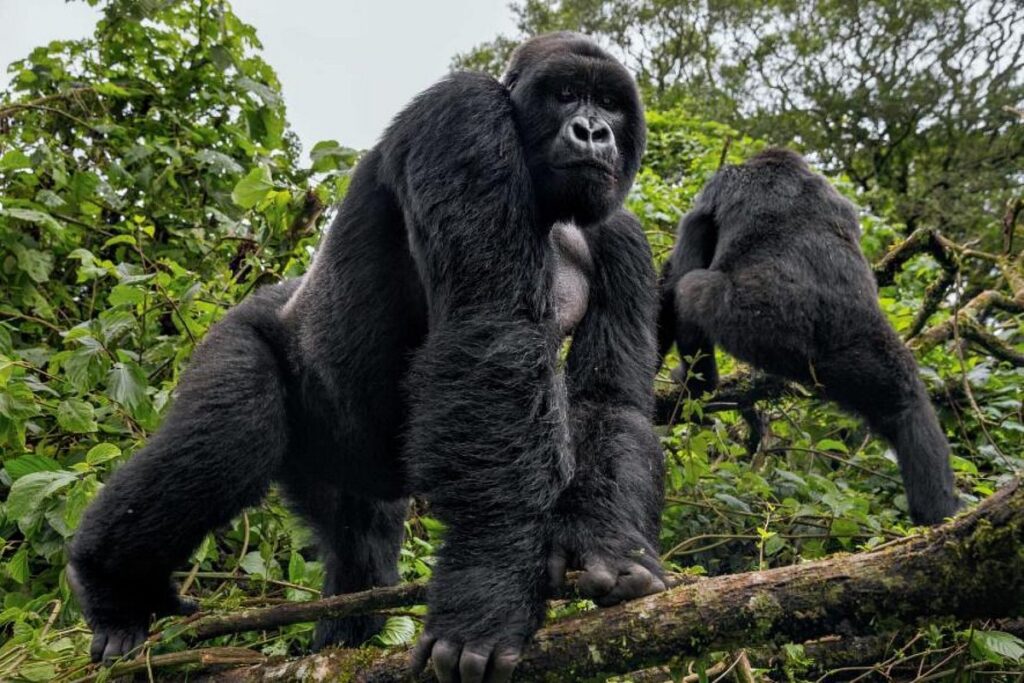
The Great Migration in Kenya and Tanzania can be seamlessly integrated with the gorilla trekking experience in Uganda and Rwanda. Following the Great Migration safari in Masai Mara or Serengeti, you may fly to Entebbe to access Bwindi Impenetrable National Park or Mgahinga Gorilla National Park for mountain gorilla viewing in Uganda. In Uganda, one can opt to spend a gorilla safari holiday in either Bwindi or Mgahinga. These two remarkable parks are home to more than half of the world’s 1,063 mountain gorillas, which walk freely inside their boundaries. Gorilla families in Bwindi National Park are distributed over four sectors: Rushaga, Nkuringo, Buhoma, and Ruhija. Gorilla trekking excursions at Mgahinga commence in the Ntebeko region, where participants receive a briefing on trekking regulations and are assigned a park ranger guide.
Where is gorilla trekking done in Rwanda?
Gorilla trekking in Rwanda occurs in Volcanoes National Park, one of Africa’s oldest parks. Established in 1925, Volcanoes National Park is located in Northwestern Rwanda. This is a tiny protected area encompassing 160 square kilometers, where Dian Fossey commenced her conservation efforts for mountain gorillas. Dian Fossey established her study facility within Volcanoes National Park.
Volcanoes National Park comprises approximately 13 families, including Hirwa, Muhoza, Susa A, Kwitonda, Karisimbi, Agashya, Amahoro, among others. Trekking with gorillas in Uganda or Rwanda requires a duration of between 2 to 6 hours. You engage deeply with the enriching forest of Volcanoes National Park. The pursuit may yield remarkable observations of diverse creatures on route.
The primary expectation is to thoroughly investigate the many behaviors of mountain gorillas in their natural habitat. You engage in meaningful observation of the body language exhibited by these primates. Capturing images of mountain gorillas amidst the verdant foliage is the most remarkable aspect of guided gorilla trekking expeditions.
Gorilla trekking permits according to destinations
Valid gorilla permits are necessary for participation in a gorilla safari or trekking expedition. A single gorilla permit is necessary for each trekker and is priced at USD 1500 per person per day. This pertains to visitors intending to merge wildebeest migration with gorilla trekking in Rwanda.
Gorilla trekking licenses in Uganda are allocated to guests at a cost of USD 800 each. This pertains to the category of foreign nonresidents. Foreign residents pay USD 700 per individual and USD 500 for the newly introduced category of the Rest of Africa. Ugandans and other visitors from East Africa Community member states are required to pay UGX 300,000.
Securing a gorilla permit or gorilla safari in Uganda or Rwanda is more straightforward when engaging a reputable local travel company. Contact our team to arrange your gorilla permits and the complete itinerary. Gorilla permits in Rwanda or Congo are issued exclusively to individuals aged 15 and older.
The packing list for a gorilla trekking excursion may comprise lightweight waterproof hiking boots, a long-sleeved shirt, long trousers, a rain jacket, a daypack, a sweater, a safari hat, and insect repellent. The optimal period for gorilla trekking in Rwanda and Uganda occurs during the peak dry months of the year. This pertains to the months of June, July, August, September, December, January, and February.
What is the best advance booking period for wildebeest migration and gorilla trekking?
The Great Migration and gorilla trekking should be reserved in advance. Ideally, schedule your trip 2 to 6 months in advance. These experiences are in high demand, and early reservations might enable you to arrange lodging and transportation, among other necessities.
What accommodations are recommended for a tour that includes both wildebeest migration and gorilla trekking?
Accommodations for migration safaris in Masai Mara comprise Lalashe Mara Camp, Ashnil Mara Camp, Mara Bush Camp, Zebra Plains Mara, and Mara Ngeche Tented Camp. Accommodations in and near Bwindi comprise Mahogany Springs, Four Gorillas, Nkuringo Bwindi Lodge, Chameleon Hill Lodge, Bweza Lodge, Rushaga Gorilla Lodge, among others. Accommodations in and near Volcanoes National Park, Rwanda, comprise One&Only Gorilla’s Nest, Wilderness Bisate Lodge, Singita Kwitonda Lodge, Sabyinyo Silverback Lodge, and Mountain Gorilla View Lodge.