 info@gorillatrekkinginafrica.com

Mosi-oa-Tunya National Park
Mosi-oa-Tunya National Park, one of Zambia’s smaller national parks, is situated adjacent to Livingstone town, agricultural land, and the Zambezi River. It stretches from the Batoka Gorge and reaches approximately 12 km / 7.4 mi along the Zambezi River, upstream of Victoria Falls.
Livingstone adjoins numerous historic wildlife migration pathways and river crossing locations, some of which continue to be traversed by elephants. Some of these are located within the Mosi-oa-Tunya National Park, where wildlife is present year-round, particularly elephants during the arid months.
This park is unusual in Zambia as it is the sole wildlife reserve that houses white rhinoceros. These are meticulously safeguarded against poachers by the scouts from the Department of National Parks and Wildlife.
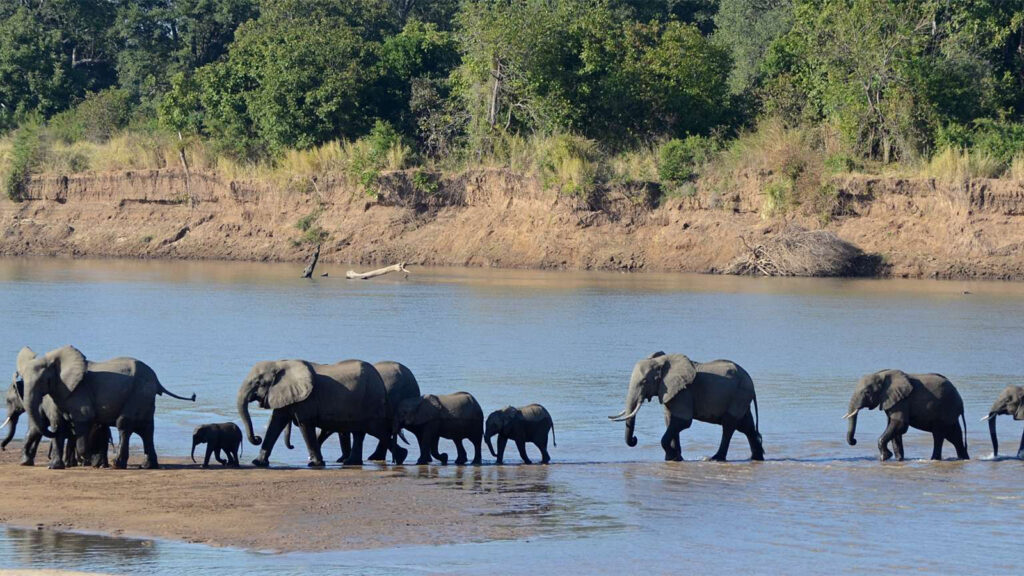
This small sanctuary is devoid of predators. This, along with the presence of artificial borders, ensures a consistent animal population year-round. Alongside the migrating elephants, the park is home year-round to white rhinos, giraffes, buffalo, waterbucks, impalas, wildebeests, zebras, bushbucks, warthogs, monkeys, baboons, hippos, and crocodiles. They reside in a combination of riverine forest, mopane woodland, and grassland, which offers diverse habitats for various bird species.
This park has the Old Drift Crossing Point and Cemetery, the burial site of the first European immigrants. Historically, the Old Drift served as the location where ox-wagons were ferried across the Zambezi prior to the construction of a bridge.
This park is readily accessible from Livingstone. One can traverse sections of the park via car (self-drive or guided game-viewing safari), on foot during a guided walking safari accompanied by an armed ranger, or by boat on a Zambezi River cruise.
A visit to Mosi-oa-Tunya National Park is an excellent option for families or individuals seeking a safari experience or a brief respite from urban life without the need for extensive travel.
Despite the numerous attractions of Livingstone and Victoria Falls, many people tend to overlook Mosi-Oa-Tunya National Park, but most will traverse it at some stage while en way to various activities. The park’s allure lies in its status as ‘under-visited,’ contributing to its beauty and remarkable preservation.
The park includes the Eastern Cataract of Victoria Falls, known as Mosi-oa-Tunya, meaning “the Smoke That Thunders” in the Koloko or Lozi language. This area is a verdant rainforest, nourished by the waterfall’s vital mist. The wooded area hosts little antelope and warthogs. All of this is situated along the banks of the formidable Zambezi River. A visit here will enable you to experience this unique region of Zambia in its most serene state.
Mosi Oa Tunya national park fees.
The fees for Mosi Oa Tunya National Park pertain to the expenses incurred for entry and utilization of the park’s amenities, attractions, and engaging in captivating safari activities. The fees are allocated for the preservation and maintenance of the park’s natural and cultural features, in addition to supporting visitor services and infrastructure.
Entry fees are assessed on a per person, per day basis for access to Mosi Oa Tunya National Park.
Vehicle fees are assessed on a per-vehicle, per-day basis for park entrance.
Fees for guided tours are assessed per individual and offer comprehensive insights into the park’s history, fauna, and ecosystems.
Activity fees are assessed per individual for certain safari activities such as white-water rafting, bungee jumping, and helicopter tours, among others.
Accommodation costs are assessed on a per person, per night basis for lodging in the park’s lodges, chalets, or campsites.
Discounted costs are provided for children, students, elderly, groups, and long-term visits. All these fees support conservation initiatives at Mosi-Oa-Tunya National Park, enhance visitor services, and foster local community development.
The entrance costs for Mosi-Oa-Tunya National Park are 25.20 Kwacha per person for Zambian citizens, 5 USD per person for SADC nationals, and 10 USD per person for foreign tourists, including both residents and non-residents.
- A day refers to the interval from 6 AM to 6 PM.
- Children under the age of five are exempt from entry fees at national parks.
- Children between the ages of five and thirteen are charged 50% of the admission cost to national parks.
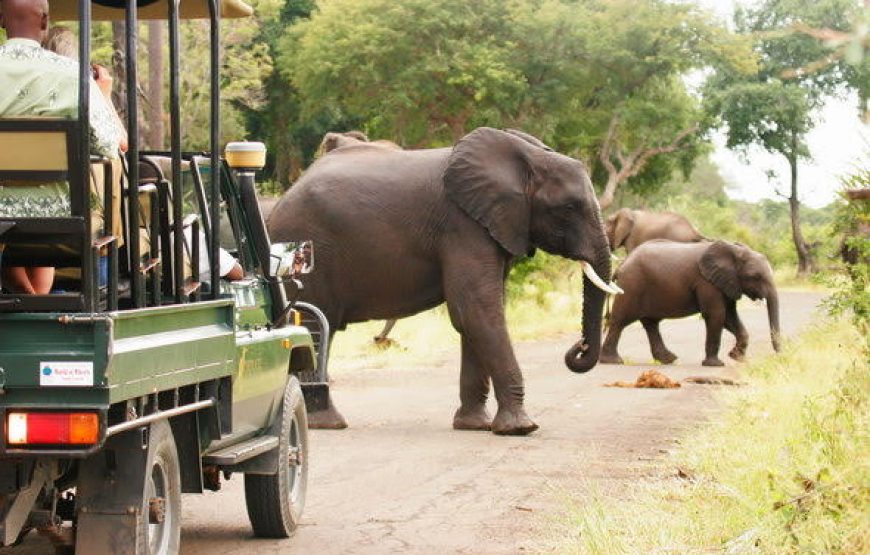
Best time to visit Mosi-Oa-Tunya National Park.
The Best time to visit Mosi-Oa-Tunya National Park is the dry season, spanning from May to October, characterized by mild and sunny weather, which is conducive for wildlife observation and outdoor pursuits. In the dry season, the Zambezi River reaches its minimum level, enhancing visibility of Victoria Falls and facilitating access to Devil’s Pool. The dry season corresponds with the park’s prime tourist season, providing an extensive array of activities and guided tours. However, if you favor reduced crowds and lesser costs, consider visiting the park during the shoulder season (April to May or September to November) when the weather is agreeable and the park is less congested. Refrain from going during the wet season (November to March) when the park is closed owing to substantial rainfall and flooding.
Accommodations in Mosi-Oa-Tunya National Park.
During your safari to Mosi-Oa-Tunya National Park, guests are presented with a variety of accommodations to accommodate various budgets and interests. The accommodations are categorized into cheap, family-friendly, and luxury options, including the Royal Livingstone Hotel, Victoria Falls Hotel, Zambezi Sun Hotel, Sussi & Chuma Lodge, Chundukwa River Lodge, Toka Leya Lodge, Livingstone Backpackers, and Jolly Boys Backpackers, among others.