 info@gorillatrekkinginafrica.com
When should I visit gorillas?
When should I visit gorillas, Mountain gorilla trekking safaris occur in the rainforests of Mgahinga Gorilla National Park and Bwindi Impenetrable National Park, located in southwestern Uganda, adjacent to the Rwandan borders of Cyanika and Katuna. Gorillas can also be trekked in Rwanda’s Volcanoes National Park and the Democratic Republic of Congo’s Virunga National Park. The optimal period for observing mountain gorillas in all three nations coincides, rendering them the sole locations globally where tourists can encounter them.
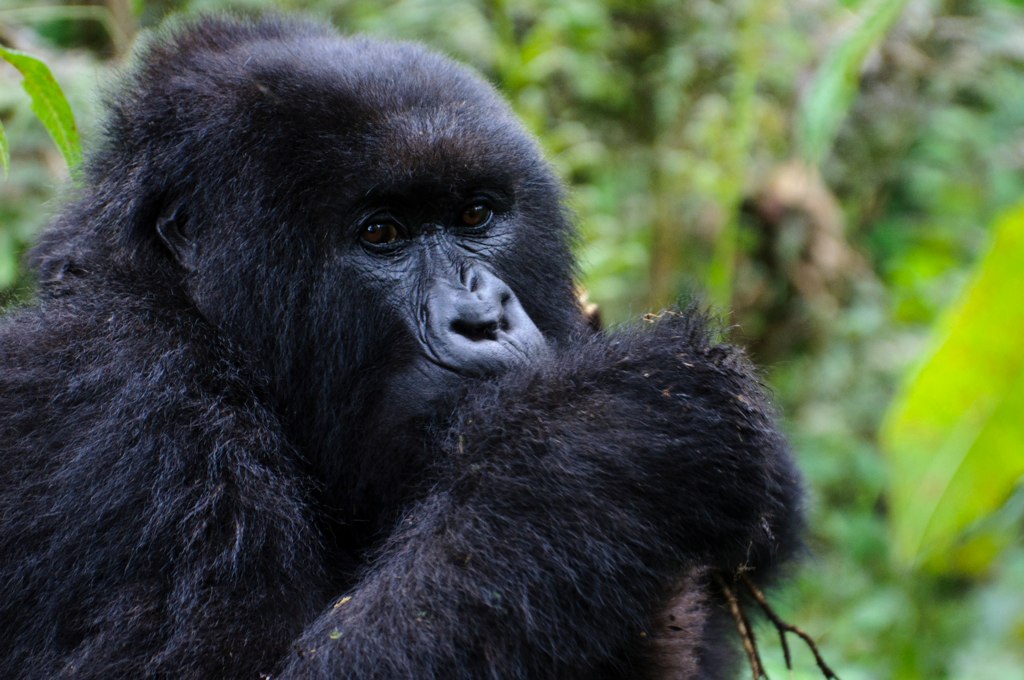
While trekking with mountain gorillas is feasible year-round, it is advisable to schedule your visit during the optimal season. Equatorial Uganda is a distinctive tourism destination year-round due to its warm, tropical environment and unpredictable weather patterns. Uganda has typical daytime temperatures of approximately 21 degrees Celsius (70 degrees Fahrenheit) and nightly lows of about 12 degrees Celsius (54 degrees Fahrenheit). Due to Uganda’s equatorial location, yearly rainfall ranges from 1,000 to 2,000 millimeters, contingent upon the season. Visitors ought to plan their stay at the most advantageous season, as there are both wet and dry months. Consequently, gorilla trekking is categorized into two seasons: peak season and off-peak season.
High season
Peak season: during this period, a significant influx of visitors to the country increases the demand for gorilla permits. Consequently, travelers must get gorilla permits many months prior to the commencement of the peak season. These high seasons are designated as such because to their status as the driest periods of the year. The optimal periods for observing mountain gorillas occur during the dry seasons. Uganda possesses a temperate climate, and the gorillas inhabit highland rainforests characterized by consistently cool temperatures throughout the year. During peak season, hotel prices rise due to competition for gorilla permits and the elevated costs associated with our neighboring gorilla trekking destination, Rwanda, where a gorilla permit is priced at US$1,500 per person, whereas Uganda’s gorilla permits are US$800 per person. This price encompasses both peak and off-peak seasons.
The dry months of the year enumerated below are considered the optimal periods for seeing gorillas in Uganda, Rwanda, and the Democratic Republic of the Congo.
January is the best month for observing gorillas and animals due to its status as one of the few dry months. The arid terrain and elevated altitude, which lead to lower temperatures, facilitate walking even in the rainforests of Bwindi and Mgahinga. This month may encounter moderate rainfall, but it will not detract from your gorilla trekking experience.
February: Despite being one of the year’s dry seasons, tourist numbers are lower during this period, likely causing fluctuations in lodging prices. February is an excellent month for observing wildlife, including animals and birds, as well as being the optimal period for gorilla sightings. The dry season concludes in February, as vegetation begins to diminish and animals, including primates, become more conspicuous due to their aggregation around the scarce remaining waterholes.
June is an optimal month for observing gorillas, as it signifies the onset of the dry season after February. Given that this period is the most congested of the year, entrance to national parks is significantly facilitated. Without reserving permits five months prior to June, they will be unable to observe gorillas due to the strong demand for such licenses.
July is acknowledged as the premier month for travel globally, attributed to its dry season, conducive weather, elevated temperatures, and less precipitation. This enhances accessibility to gorilla trekking, notwithstanding its elevated expense.
August: Although August occurs at the latter phase marking the conclusion of the dry season, it is an excellent month for travel and gorilla trekking. August, characterized by optimal weather conditions, allows tourists to encounter gorillas, resulting in an extraordinary experience. Viewing animals, especially the big five game, is considerably easier, excluding gorillas.
September: While little precipitation occurs towards the end of the month, September is generally classified as a peak season and the commencement of the wet season. Notwithstanding the precipitation, travelers may still arrange their visit, and gorilla trekking is recommended throughout this month.
December is a highly coveted month for global travel. The diminished precipitation during this period enhances accessibility to gorillas, and the arid terrain renders primate trekking far more feasible. Given that December is a hectic month filled with numerous holidays, it is essential to take a vacation. To secure permits, reservations must be made well in advance.
Low season
Low seasons are to periods characterized by minimal demand for gorilla permits and reduced travel activity. The term “low seasons” is attributed to the significant rainfall that transpires during this time of year. Despite the uniformity of gorilla permit costs during peak seasons, this period is optimal for budget-conscious travelers. However, due to reduced traffic during this season, lodging costs are diminished. An additional advantage of going during the off-peak season is the reduced number of individuals trekking mountain gorillas, facilitating intimate, uncrowded encounters with the primates.
Nonetheless, despite the advantages of the off-peak seasons, the roads and paths become exceedingly muddy and treacherous during the rainy season, complicating access to the hiking regions and gorilla trekking. During this season, gorillas tend to be more elusive and difficult to spot, as most are perpetually in motion. Despite the low season’s torrential rains, there are intervals throughout the day when sunlight emerges, enabling individuals to conduct their daily activities.
March: While the extended rainy season technically commences in March, it does not imply that precipitation will cease entirely. Despite the abundant rainfall throughout this season, it still feasible to observe gorillas and other wildlife as the sky clear following a deluge. Accommodations will be plenty.
April and May: These months are exceedingly rainy. Despite the challenges of gorilla trekking during these months due to the normally dense and verdant environments, the foliage provides stunning backdrops for exceptional photography.

October marks the formal commencement of the shoulder season. The month is characterized by unpredictable weather and predominantly mild temperatures. Gorilla hiking is currently viable. This month is optimal for observing birds, in addition to gorillas.
November marks the conclusion of the rainy season. At this season, the flora remains plentiful and verdant, providing sufficient sustenance for animals and primates. Accessing park facilities is significantly easier during the shoulder month.
In summary, gorilla trekking safaris take place daily in Rwanda and Uganda, irrespective of the wet or dry season or peak season. Consequently, gorillas are accessible for visitation throughout the entire year, which accounts for the uniform pricing of gorilla permits across all seasons