 info@gorillatrekkinginafrica.com

Mwiba Wildlife Reserve
Mwiba Wildlife Reserve is a privately managed wildlife reserve encompassing 125,000 acres. It adjoins the western frontier of the Ngorongoro Conservation Area and the southernmost region of Serengeti National Park in Northern Tanzania.
Mwiba Reserve, initially a segment of the Makao Open Area, was formed to enhance wildlife conservation initiatives. It safeguards a region under strain from an expanding human population pressing toward the Serengeti from the west. It enhances animal observation zones to the south and west of Serengeti National Park inside a private, low-density, restricted access environment, a place devoid of the ubiquitous safari vehicles seen in other national parks.
The wildebeest migration in the Serengeti traverses Mwiba from December to April. Distinguished by undulating hills, kopjes, thickets, waterholes, and intermittent rivers that create pools, its perennial water source lures species throughout the year. It serves as a wildlife attraction when the southern Serengeti and the Ngorongoro Conservation Areas desiccate from July to November annually.
A privately administered reserve
Mwiba Wildlife Reserve specializes in exclusive, low-volume safaris. Guests possess nearly exclusive access to an expansive wilderness region. It is safeguarded by one of Tanzania’s prominent conservation organizations — Friedkin Conservation Fund. The fund prioritizes law enforcement and community conservation efforts.
The Mwiba Wildlife Reserve adjoins the Eyasi Escarpment. The reserve offers splendid vistas to the south, overlooking Lake Eyasi and the Yaeda Valley, which is inhabited by Tanzania’s diminishing Hadza bushmen. Maswa Game Reserve is located to the north. Maswa serves as a significant wildlife reserve, acting as a buffer between Serengeti National Park and the western communities.
What is Interesting About the Mwiba Wildlife Reserve?
Mwiba is a private reserve located between the western boundary of Ngorongoro, the southern perimeter of the Serengeti, and Lake Eyasi. Mwiba’s captivating landscape includes hills, cliffs, verdant greenery, and several rivers. This ecosystem is ideal for a substantial population of predators, elephants, giraffes, antelopes, and similar species. In Mwiba, the wildebeest migration is observable from December to April.
As this is a private reserve, there are no limitations for safari activities. There are neither throngs of tourists nor substantial groups of jeeps. In this exclusive region of Tanzania, you will perceive the entire park as being at your command. You may traverse the park throughout the day and thereafter embark on a game drive in the evening following dinner. A nocturnal safari offers a distinct experience, particularly when observing predators in pursuit or creatures that remain inactive during daylight hours.
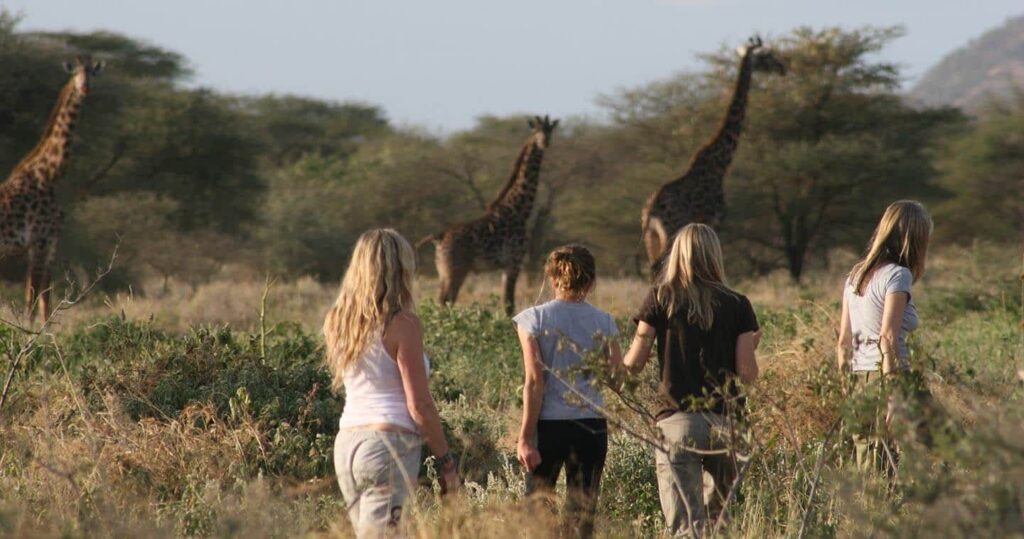
In addition to the traditional vehicle safari, one can traverse Mwiba on foot with the guidance of a ranger. An essential cultural experience is the encounter with the Hadzabe Tribe.
Envision yourself in a picturesque location, enveloped by wildlife and nearly devoid of other people. However, in close proximity reside the members of the indigenous tribe, who reject all modern conveniences, inhabit caves, and procure their sustenance by archery. It appears to be a journey into the past, does it not?
What are the accommodation options in Mwiba?
Concealed from conventional routes are opulent lodges. It is so exquisite and inviting that at times you may find it hard to believe it is occurring in your presence.
Mwiba Lodge
This cabin is hewn from the rock and offers a breathtaking perspective of the reserve. The panoramic pool offers a view of the waterhole. That is the moment to revel in the sunlight and observe the fauna. Ten opulent suites are distinctly separated from one another. While resting in your room, you will perceive an absence of any other living beings in the vicinity.
Mila Tented Camp
Desire to connect more intimately with nature? Select the Mila Tented Camp. It comprises merely six rooms, each offering a vista of a watering well. You will be able to observe the animals without exiting your room. You will succumb to slumber accompanied by the nighttime chorus of cicadas and the nocturnal calls of African predators encroaching upon your tent.
Fly Camp
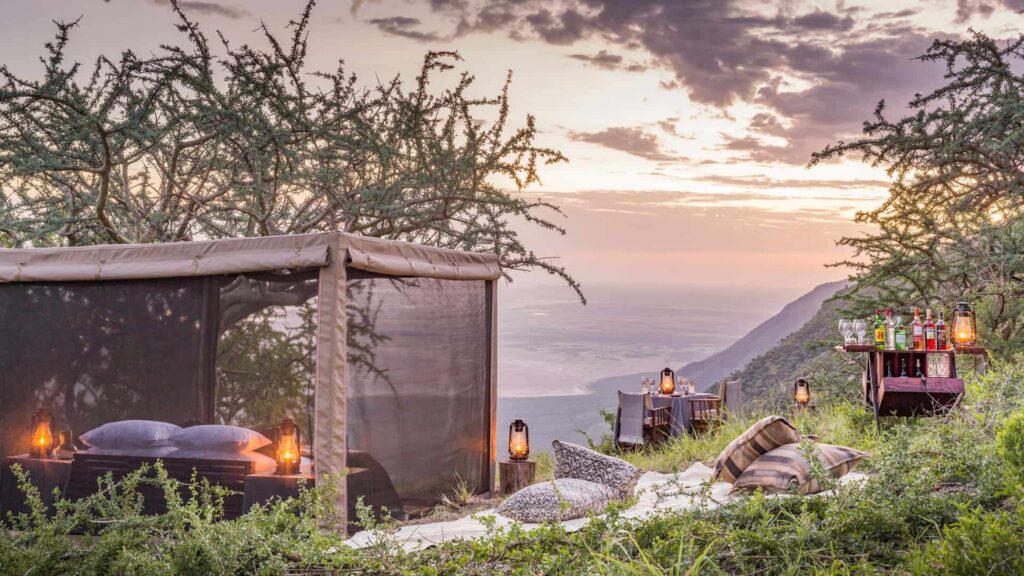
Do you desire to deepen your connection with nature? You may spend the night at Fly Camp, situated on a hill of the Rift Valley with a view of Lake Eyasi. Prepared to forgo contemporary conveniences for a single night, seclude yourself from others, and spend the night nearly beneath the open sky? You will have an exquisite dinner with a view of the lake. You will appreciate the tranquility, the crackling of the fire, and the occasional cries of the animals that may reach you. At night, you will be reluctant to close your eyes due to the enchanting splendor of the starry African sky visible from your bed.
Certainly, there will be security personnel present for your protection. We assure you that your thoughts and emotions will be solely directed towards the enchantment of this exquisite location.
What is the route to the reserve?
Mwiba Wildlife Reserve is accessible via regular or private flights from Arusha. The Mwiba airstrip is within a mere 15-minute drive from the resorts.
What is the best time to visiting Mwiba Wildlife Reserve?
Mwiba safaris are offered throughout the entire year. You may visit at your convenience; however, it is advisable to refrain from coming in April and May, coinciding with Tanzania’s rainy season.
Explore the Authentic Wilderness
Mwiba is an exceptional location. It is a secluded, exclusive park frequented by just a limited number of tourists. Despite its remoteness, Mwiba has numerous activities, and one may also explore the adjacent Ngorongoro and Serengeti. We recommend reviewing the itinerary for the Luxury Mwiba Wildlife Reserve tour and reaching out to us via the Get in Touch form.