 info@gorillatrekkinginafrica.com

Gorilla Trek Africa
Gorilla Trek Africa specializes in orchestrating unforgettable gorilla safaris and associated wildlife excursions in Rwanda, Uganda, Kenya, Tanzania, Congo . Our tailored gorilla tours allow guests to encounter the endangered mountain gorillas in their natural environment while also engaging in various safari activities in the region, including game viewing, chimpanzee tracking, bird watching, and cultural excursions. Gorilla tracking safaris predominantly occur in Bwindi Impenetrable National Park in Uganda and Volcanoes National Park in Rwanda.
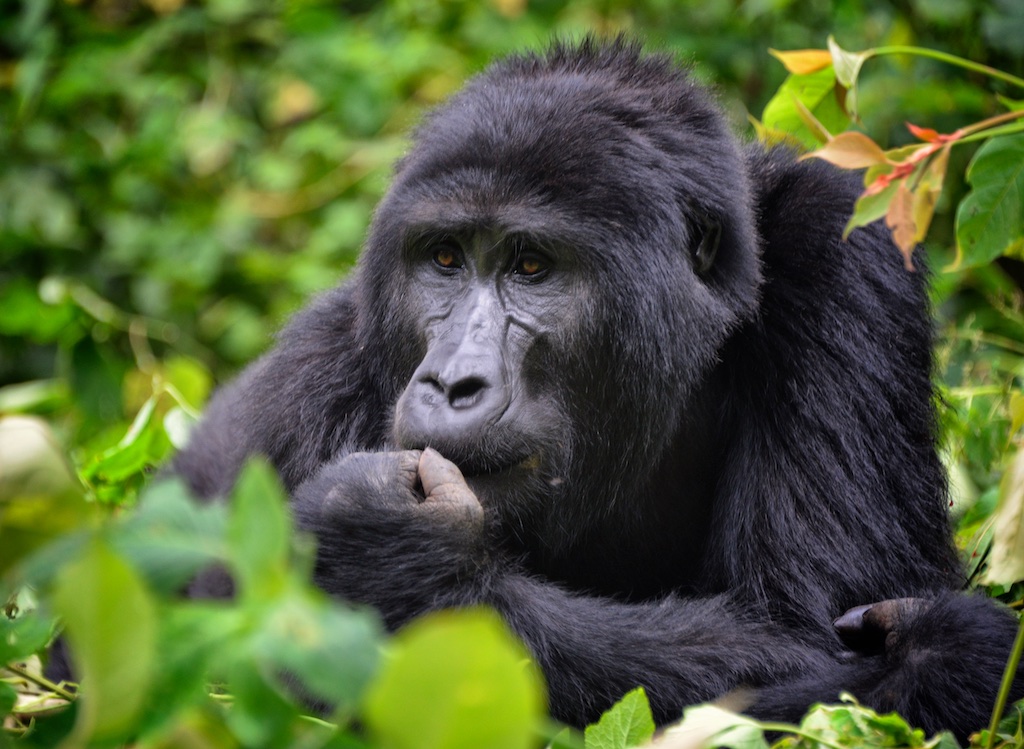
Gorilla trekking is a distinctive experience and is often considered one of the premier animal encounters globally. This exhilarating expedition guides guests to the elusive mountain gorillas by traversing the montane rainforests of Bwindi and the Virunga highlands in Rwanda, Uganda, and the Democratic Republic of Congo. A gorilla tour in any of these locations allows you to engage with a habituated gorilla family during the enchanting hour in their natural habitat.
Where to go for a Gorilla Trek in Africa
If you are considering a trip to Africa for gorilla trekking and seek information on the current safety of this activity to facilitate your booking, this article provides comprehensive answers and is updated weekly. Gorilla trekking is typically secure, particularly when conducted with reputable tour operators and within recognized national parks such as Bwindi Impenetrable Forest National Park and Mgahinga Gorilla National Park in Uganda, Volcanoes National Park in Rwanda, Kahuzi Biega National Park, and Virunga National Park in the Democratic Republic of the Congo. Nonetheless, safety may fluctuate based on various factors; the following assesses the current safety of Gorilla Trekking.
Gorilla Trekking in Uganda
Gorilla trekking in Uganda is the most popular and sought-after activity in the country. This enthralling experience confronts you with astonishing mountain gorillas. Uganda harbors fifty percent of the global population of mountain gorillas, so establishing it as a premier destination for gorilla tours and the optimal location to observe these gentle giants. During a gorilla safari in Uganda, you may choose to engage in gorilla tracking from either of the two locations that host the mountain gorillas: Bwindi Impenetrable National Park or Mgahinga Gorilla National Park. Gorilla tracking is traversing the jungle to see mountain gorillas. The event commences with a briefing at the park headquarters regarding the rules and protocols to be adhered to.
This is succeeded by the allocation of groups (8 individuals per group), with each group assigned a gorilla family/group to monitor under the supervision of an armed game ranger. Gorilla tracking may last between 2 to 8 hours, depending on the location of the mountain gorillas. The warden guide provided to you maintains communication with the monitoring staff on-site to facilitate the swift location of the mountain gorillas. Upon finding the mountain gorillas, you are permitted a maximum of one hour to observe their daily activities. Captivated by the profound memories associated with the mountain gorillas. Upon the conclusion of the hour, you return to the park headquarters to collect a certificate for your participation in the Uganda gorilla safari.
Gorilla Trekking in Rwanda
Gorilla trekking in Rwanda is an unparalleled wildlife expedition—an exceptional experience that attracts nature enthusiasts, explorers, and affluent travelers worldwide. This unique safari offers an intimate experience, enabling direct interaction with endangered mountain gorillas in their native environment, nestled beneath the misty slopes of Volcanoes National Park. Gorilla trekking has emerged as the pinnacle of Rwanda’s ecotourism and a crucial element of the nation’s conservation achievements, as roughly fifty percent of the global mountain gorilla population resides in the region.
Rwanda distinguishes itself among the trio of nations—Rwanda, Uganda, and the Democratic Republic of the Congo—providing mountain gorilla trekking due to its effortless accessibility, premier luxury accommodations, and dedication to sustainable tourism. Due to the well-preserved roads and closeness to Kigali International Airport, travelers may get Volcanoes National Park in less than three hours, establishing Rwanda as the most accessible and upscale site for gorilla trekking. The price of a gorilla permit in Rwanda is $1,500 per individual, indicative of the nation’s emphasis on exclusive, low-impact tourism that substantially aids conservation initiatives and community advancement.
Mountain gorillas are incapable of thriving in captivity and are confined to only two areas globally: Bwindi Impenetrable National Park in Uganda and the Virunga Massif, a series of dormant volcanoes spanning Rwanda, Uganda, and the Democratic Republic of the Congo. Volcanoes National Park in Rwanda hosts approximately 350 mountain gorillas, distributed among 12 habituated families accessible to tourists on a regular basis. A maximum of eight permits are allocated to each gorilla group daily, guaranteeing a tranquil and uninterrupted experience for visitors and gorillas alike. Permits are highly sought after and frequently sell out months ahead, particularly during the dry seasons from June to September and December to February, when trekking conditions are optimal.
Gorilla trekking occurs under stringent laws aimed at safeguarding the health and safety of the gorillas. Visitors are provided with a comprehensive briefing on etiquette and regulations, which includes maintaining a safe distance, refraining from abrupt movements, and limiting their interaction with the gorillas to one hour. These techniques have facilitated the incremental resurgence of mountain gorilla populations, which numbered 1,064 individuals in the latest 2018 census. Since then, conservation programs and responsible tourism, exemplified by Rwanda’s renowned Kwita Izina gorilla naming ritual, have perpetuated population expansion and heightened global awareness.
Each gorilla family exists inside a cohesive social structure governed by a dominant silverback, accompanied by females, juveniles, and newborns. Studying their interactions in the field provides significant insight into the common behaviors of gorillas and humans, as mountain gorillas share more than 98% of our DNA. In addition to these gentle giants, visitors may also observe golden monkeys, forest elephants, and several rare bird species that flourish in the diverse alpine ecology of Volcanoes National Park.
Although Rwanda is renowned for its exceptional gorilla trekking experience, Uganda presents a persuasive alternative, particularly for those interested in gorilla habituation. This exclusive experience, offered alone in the Rushaga sector of Bwindi, permits visitors to engage with a semi-habituated gorilla family for up to four hours while they adapt to human presence—providing a more profound and immersive interaction for anyone desiring extended time with gorillas.
Despite the DRC providing the most economical gorilla permits at $400, persistent civil strife in the eastern region has rendered it a less viable choice. Congo continues to be a biologically affluent locale, including mountain gorillas in Virunga National Park and lowland gorillas in Kahuzi-Biega National Park.
Rwanda provides unparalleled convenience, exclusivity, and a robust commitment to conservation for anyone organizing a gorilla trekking tour. Gorilla trekking in Rwanda, characterized by picturesque rolling hills, opulent lodgings, and enthusiastic local guides, transcends mere adventure; it represents a transforming expedition into one of Africa’s remaining authentic wildernesses. Gorilla trekking in Rwanda offers enduring memories, whether motivated by conservation, wildlife photography, or the exhilarating experience of encountering these magnificent beings.
Gorilla trekking in Congo
Gorilla trekking in Congo is an engaging and adventurous activity that entails traversing on foot into the tropical forest to locate habituated gorillas, after which one may spend one hour in their natural habitat. Gorilla trekking in the Democratic Republic of Congo is the most renowned activity, conducted in two locations: Virunga National Park, which is home to mountain gorillas, and Kahuzi-Biega National Park, which shelters Eastern lowland gorillas. Gorilla trekking is also conducted in other locations such as Volcanoes National Park in Rwanda, Bwindi Impenetrable National Park, and Mgahinga Gorilla National Park in Uganda.
Trekking for gorillas in Virunga National Park
Virunga National Park hosts eight habituated gorilla families that are accessible for hiking on a daily basis. The trekking of mountain gorillas in Virunga National Park commences with a briefing at the park headquarters. Subsequently, participants are divided into groups of eight, with each group assigned a habituated gorilla family to trek and an experienced park guide knowledgeable about the gorilla trekking trails in the forest. Gorilla trekking at Virunga National Park lasts between 30 minutes and 6 hours, contingent upon the gorillas’ location. During the journey, participants may observe many primates, bird species, and plant species, among others. Upon locating the gorillas, you will be permitted to spend one hour in their natural environment, providing an opportunity to observe their behaviors and routines, capture photographs, film movies, and see activities like as feeding, breastfeeding, playing, and grooming their young.
Gorilla trekking in Kahuzi-Biega National Park
Kahuzi Biega National Park is home to around 9 eastern lowland gorillas, with 5 gorilla families having been habituated and made accessible for trekking. Gorilla trekking in Kahuzi Biega National Park commences early in the morning with a briefing at the park headquarters, followed by a journey through the forest in pursuit of the eastern lowland gorillas, accompanied by a park guide. While trekking, you will encounter various wildlife species, and upon locating the gorillas, you will be permitted to spend one hour in their habitat, allowing you to observe their habits and behaviors, witness their daily activities, capture photographs, and document remarkable moments.
Price of a gorilla trekking permit in the Congo
A gorilla trekking permit is an official document granted to visitors aged 15 and older, allowing access to a habituated gorilla family in either Virunga National Park or Kahuzi Biega National Park. A solitary gorilla trekking permit in Congo is priced at USD 400, making it the most economical option compared to other nations, such as Rwanda, where the permit costs USD 1,500 per individual regardless of nationality, and Uganda, where the fee is USD 700 for foreign non-residents, USD 600 for foreign residents, and UGX 250,000 for East African citizens.
Gorilla trekking permits in Congo can be obtained directly from Virunga National Park by reaching out to the Virunga reservation office via email or telephone. Gorilla trekking permits in Congo can also be acquired through a reputable tour operator such as Achieve Global Safaris. To book with Achieve Global Safaris, please provide us with your desired dates and gorilla destination. Upon contacting us, we will verify permit availability; if suitable permits align with your dates, you will be required to submit a deposit for the permission. Upon receipt of the funds, we will get the permit on your behalf.
Best time for gorilla trekking in Congo
Gorilla trekking in Congo is feasible year-round; however, the optimal period occurs during the dry season, specifically in June, July, August, September, December, January, and February. During these months, the gorilla habitats experience reduced rainfall, resulting in drier access roads and trekking trails, in contrast to the wet season when trails become muddy and treacherous, complicating the trekking experience. In the dry season, the sparse foliage in the parks enhances visibility, allowing for clear views of gorillas and other wildlife species.
Gorilla trekking in Congo is feasible during the wet season, specifically from March to May and in November, as parks provide reduced gorilla trekking permits at USD 200, and numerous hotels offer discounts to guests, so benefiting budget travelers.
Best month for gorilla trek Africa: Rwanda, Uganda, and Congo
Mountain gorillas may be monitored year-round, as their movements are unaffected by seasonal variations. While we shall examine the advantages and disadvantages of coming during a specific season, tourists need not be overly fussy about the month for trekking. Based on our experience, the optimal period for tracking gorillas is immediately following the conclusion of the rainy season, when the landscape remains verdant and fertile. Accurately determining this timing is challenging due to the significant impact of global warming on weather patterns in Africa, complicating the prediction of the onset and conclusion of the rainy and dry seasons. Ultimately, the determination of the optimal month for gorilla trekking in Africa rests with the traveler. Our role is to elucidate the merits and demerits of visiting during each season.
Best month for gorilla trekking in Africa Uganda Similar to other nations situated in the equatorial region, Uganda, Rwanda, and the Democratic Republic of Congo experience two distinct dry and wet seasons. The dry season occurs from December to February and again from June to September. Gorilla trekking in the dry season offers distinct advantages. The optimal period for wildlife safaris occurs in Kenya’s Masai Mara, Tanzania’s Serengeti, and the numerous national parks in Uganda. Visitors can effortlessly integrate gorilla trekking with a safari to observe the wildebeest migration and explore Uganda’s Murchison Falls or Queen Elizabeth National Park. This is the optimal moment to get high-quality photographs of the countryside, geographical features, and mountain gorillas, as there are no impediments such as mist or dense vegetation.
The arid season presents certain drawbacks. Traveling during this period is typically more costly. Obtaining gorilla permits is challenging, and securing last-minute gorilla visits is not straightforward. The dry season is suboptimal for those seeking a more manageable climb or proximity to a close gorilla group. For those aiming to observe a certain gorilla troop, it is advisable to secure your reservation several months ahead; otherwise, you may discover that all permits have been assigned to other visitors. Some individuals believe that gorilla trekking in the dry season deprives nature enthusiasts of the chance to appreciate the stunning African landscape following the rains. First-time visitors to the countries may depart with the image of a parched Africa, which is not universally accurate.
Best month for gorilla trekking in Africa — Bwindi and Mgahinga. The periods from March to April and October to November are designated as rainy seasons, sometimes known as low seasons. The woodlands can become exceedingly muddy, complicating the tracking of mountain gorillas. We cannot dismiss the possibility of mud even in the dry season, as mountain gorillas inhabit rainforests where precipitation might occur at any time of the year. It is essential to observe that the precipitation in Uganda, Rwanda, and Congo does not persist throughout the day like it does in Europe or North America. Rain lasts for one to two hours before the sun reemerges, allowing activities to continue irrespective of precipitation. Visitors are provided with rain coats for protection during inclement weather. Gorilla trekking cannot be canceled due to excessive rainfall. Some guests perceive gorilla trekking during the rainy season as more daring, despite the precipitation and muck. Consider reviewing the packing list for a safari in Uganda.
One advantage of tracking gorillas during the rainy season is the reduced number of people in the park. This indicates that you can possess the forest exclusively and experience more intimate interactions with the primates. The reduced number of trackers is allocated into significantly smaller groups to visit each household. During the wet season, there will be approximately three individuals per gorilla group, in contrast to the eight members per gorilla family observed during the dry season. Gorilla permits and tours can be reserved a few weeks or days prior to the trip. Tourists seeking to integrate gorilla trekking with birdwatching may find the wet season ideal. The breeding season is underway, and the forests are teeming with activity. Traveling in the wet season is typically more economical than in the dry season, as most hotels lower their rates to entice additional tourists. You may reside in one of the finest luxury lodges that would appear prohibitively costly during the busy season. During the low or wet seasons, visitors may receive discounts on gorilla permits in Congo. Gorilla licenses in Congo are priced at $400 during peak season, but may be decreased to $200 during the low season. The cost of a Gorilla permit remains unchanged in Rwanda and Uganda, even during the off-peak season.
The determination of when to embark on gorilla trekking is solely the client’s prerogative, factoring in time limitations, financial considerations, physical fitness, convenience, and several aforementioned elements. The determination of when to embark on gorilla trekking ultimately lies with the client, factoring in time limitations, financial considerations, physical fitness, and convenience. Certain clients perceive gorilla trekking in the rainy season as more exhilarating, nevertheless the difficulties encountered.
Gorilla Trekking Rules and Regulations
Rules and Regulations for Gorilla Trekking: Mountain gorillas are critically endangered and possess a limited population globally, necessitating their protection from extinction. Mountain gorillas encounter numerous obstacles primarily due to human activities, which have led to a significant decline in their population. Human activities threatening mountain gorillas include habitat encroachment, hunting for bushmeat, and deforestation, among others.
Mountain gorillas possess a DNA composition that is 95% to 99% similar to that of humans, which enables them to develop human diseases and suffer illness or death from the same ailments that afflict humans.
Due to the aforementioned issues, there are established norms and regulations governing the interaction of trekkers with mountain gorillas in their natural habitat. Prior to the expedition into the rainforest to locate mountain gorillas, trekkers attend a briefing session conducted at the park’s headquarters. Ranger guides conduct briefing sessions, during which trekkers are instructed on the rules and restrictions to adhere to while in the forest and in the presence of mountain gorillas. The following dos and don’ts are crucial and must be adhered to by trekkers to ensure the safety of both the trekkers and the gorillas.
A maximum of 8 people are allowed to visit each gorilla family on each trek
A limit of 8 people per group are permitted to visit each gorilla family per hike each day, implemented to mitigate diseases and alterations in the habits of mountain gorillas. When numerous individuals are present near mountain gorillas simultaneously, the gorillas may perceive a threat, potentially resulting in altered behavior and aggression towards the trekkers.
Keep a distance of 7 meters away from the gorillas
When in the vicinity of mountain gorillas, maintain a distance of around 7 meters. If a gorilla approaches, it is recommended to either retreat gently or remain still, following the guide’s advice.
During the journey, it is advisable to meticulously adhere to the guide’s instructions to completely appreciate the experience.
All trekkers must be 15 years and above
Although mountain gorillas designated for trekking have been acclimated, they remain wild creatures, and their behavior can occasionally be surprising. Consequently, anyone under the age of 15, referred to as “children,” are prohibited from participating in gorilla trekking experiences, as they may have diseases such as chickenpox and mumps that can be transmitted to the mountain gorillas.
Smoking or eating is not allowed while in the presence of mountain gorillas
Smoking and consuming food in the vicinity of mountain gorillas is prohibited, as these substances may serve as vectors for infection and can induce alterations in the gorillas’ behavior.
Unnecessary movement while on the presence of mountain gorillas are prohibited
Visitors are barred from making unnecessary movements in the company of mountain gorillas; they are recommended to remain closely grouped, as this is the only way to ensure the gorillas feel secure and unthreatened. Sudden and abrupt movements by visitors can instill fear in mountain gorillas, inciting defensive behavior that may result in attacks on tourists.
Spend one hour in the presence of mountain gorillas
Visitors are permitted to spend only one hour in the presence of mountain gorillas, while the mountain gorilla trekking experience lasts approximately 2-5 hours. Visitors are permitted to observe mountain gorillas for a duration of one hour, during which they can witness the gorillas’ playful interactions on tree branches, female gorillas nurturing their offspring, and silverbacks safeguarding their families from intruders.
Indeed, mountain gorillas are fully accustomed to human presence; but, they can become easily agitated if humans linger for extended periods.
Flash Photography are strictly not allowed
Photography is permitted in the presence of mountain gorillas; however, flash photography is prohibited as it disturbs the gorillas and may incite them to attack anybody holding cameras.
Keep your voices as quiet as possible
Absolute silence must be maintained in the presence of mountain gorillas, and if communication with rangers or fellow tourists is necessary, voices should be kept to a minimum volume.
Always follow the guidelines and instructions of the guides and rangers
All tourists participating in mountain gorilla trekking are urged to adhere to the laws and restrictions provided by the rangers at the gorilla briefing session at the park’s headquarters.
Always turn away from the gorillas when coughing or sneezing
All tourists participating in mountain gorilla trekking are urged to adhere to the laws and restrictions provided by the rangers at the gorilla briefing session at the park’s headquarters.