 info@gorillatrekkinginafrica.com

Seronera Airstrip
Seronera Airstrip: A prominent and frequently utilized airport within Serengeti National Park is Seronera Airstrip. The airstrip is located in the hamlet of Seronera, around one km south of the Seronera tourist information centre, in the heart of northern Tanzania’s Serengeti National Park. Alongside a lodge, a tourist information center, two gas stations, and a village featuring stores, pubs, and a dispensary, other public and specialized campsites are located nearby.
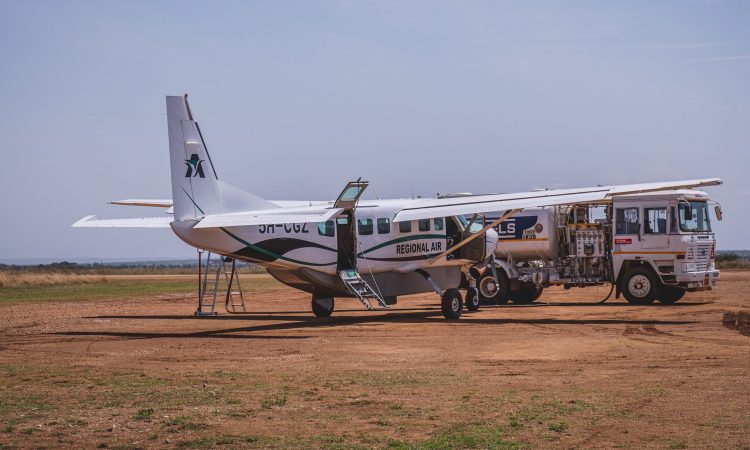
Travelers on fly-in safaris in Tanzania often utilize the Seronera Airstrip to save travel time to their destinations by facilitating convenient connections inside Tanzanian parks or the East African area. Integrating an African safari with a short trip to a national park expedites the procedure. Accessing this airport is pretty straightforward if your trip encompasses the Serengeti. Your safari guide in Tanzania will await your arrival at the airport to escort you to your reserved accommodation.1600 meters above sea level. It is the largest in size and is predominantly used by private jet owners or small regional flights from as distant as Dar es Salaam, along with a few minor international planes from Kenya, Rwanda, and Uganda that fly directly to the park. Furthermore, a singular airport facility accommodates the administrative offices and lobby.
Directions to Seronera Airstrip
A drive from any location within the national park will lead you there, provided your destination is for a fly. The journey from both Naabi Hill and Ndabaka Gates requires approximately two hours.
Seronera Valley and the middle region of Serengeti National Park
Situated in the heart of the National Park, immediately north of the short-grass plains, Seronera presents both the pinnacle and, unfortunately, the nadir of the Serengeti. The setting is very pleasing, featuring expansive plains, intermittent kopjes, and undulating hills that enhance its visual appeal. Experiencing the Central Serengeti and Seronera Valley is a remarkable highlight of a typical Tanzanian wildlife expedition.
Central Serengeti
This region functions as the vibrant epicenter of the Serengeti. The Central Serengeti attracts several people due to its abundant native fauna. This enables travelers to minimize their time observing wildlife. The quintessential depiction of a Serengeti safari is located in the central section, characterized by vast savanna grasslands interspersed with baobab and acacia trees. The park’s headquarters are situated in Seronera, adjacent to the airport, and comprise a tourist center, a café, and a souvenir shop.
The Central Serengeti, situated at the heart of this remarkable national park, is the most frequented region of the reserve. It is renowned for its acacia-dotted grassland, abundant wildlife, and significant population of large felines. This region of the Serengeti is an exceptional destination year-round, particularly from April to June and October to December, with the passage of the Great Migration herds.
Seronera River Valley
The Seronera River Valley, located in the park’s south-central region, is among the most frequented areas in the reserve. Visitors often observe lions, leopards, and cheetahs within a single day of game drives in Seronera, recognized as the Big Cat Capital of Africa. Lions are often observed on kopjes, while leopards inhabit the Seronera River, known for one of Africa’s highest concentrations of big cats. The primary habitat of cheetahs is the expansive savanna referred to as the Serengeti Plains, situated south of the Seronera River. The region’s diverse habitats of rivers, swamps, kopjes, and grasslands host elephants, hippos, crocodiles, buffaloes, impalas, topis, jackals, and bat-eared foxes.
Seronera is an excellent location for animal observation throughout the year due to the Seronera River’s constant water supply; however, the optimal period for game viewing is from April to June, when the plains are abundant with migrating gazelles, zebras, and wildebeest traveling northward. The Seronera’s strategic location renders it one of the premier sites to observe the Great Migration, since the animals traverse the region for months.
Fauna in the Seronera Region
The Central Serengeti hosts several globally recognized locations, including Seronera. The Seronera Valley hosts a greater diversity of resident animals, including elephants, giraffes, impala, waterbucks, hippopotamuses, topi, reedbucks, buffalo, and baboons, than any other location in the Serengeti. Large predators including as lions, hyenas, leopards, and cheetahs, along with many smaller predators including mongooses, jackals, servals, and bat-eared foxes, are attracted to Africa by this resident prey.
This remarkable habitat hosts substantial populations of satisfied lions, cheetahs, and leopards. These are nourished by both migrating game and indigenous herbivores. Seronera serves as a strategic site for observing the migration from November to June, given its proximity to both the Southern Plains and the Western Corridor. The migration occurs here in April and May. The Seronera region in the Central Serengeti is the premier location for observing predators, particularly lions, leopards, and cheetahs, during thrilling hunts. If you seek large felines, this is your optimal choice.
Bird species in Seronera
The Serengeti Ecosystem is a natural haven for research and exploration. Despite the park being designated as an Important Bird Area, these actions have often favored large animal species, neglecting avian considerations. This study examined the avian population in the Seronera region, a prominent area inside Serengeti National Park. Improving tourism in the Seronera region necessitates comprehension of the avian diversity and richness. We performed avian point counts in grassland, riparian, and woodland habitats. During a three-day visit to the park, the predominant diet among the 99 observed bird species was granivorous, including 38.9% of the total.The kind of environment influenced avian density; the majority of the Galliformes order was located in the riverine habitat, which exhibited the highest density. These data may be utilized to diversify tourism activities within the park’s marketing and development strategies. Several sections of the Seronera area’s riverine and forested bush land should be designated as birding zones, with restricted possibilities for supplementary activities like as game drives and guided walks.
Accommodations in the Seronera Region
The primary drawback of Seronera is its perpetual overcrowding. The accommodations available include Serengeti Serena Safari Lodge, Seronera Wildlife Lodge, Dunia Camp, Serengeti Sopa Lodge, and Four Seasons Lodge Serengeti. Numerous campsites are available. Certain lodges and camps offer two to four-hour bush walks with Maasai guides, who will impart knowledge about the flora and smaller fauna that may be overlooked during game drives.
Conduct research on lodges that provide walking activities if you wish to pursue this interest. To gain a deeper insight into the renowned semi-nomadic pastoralist tribe that has historically resided in the area currently designated as the Serengeti and Masai Mara national parks, numerous hotels and camps provide opportunities to visit a Maasai rural settlement. Inhabitants of the Maasai village will engage in song and dance, while the male warriors will execute a traditional jumping dance. Furthermore, one can acquire exquisite jewelry and artisanal products that not only support the local economy but also serve as exceptional keepsakes.