 info@gorillatrekkinginafrica.com

How large is Serengeti National Park
How large is Serengeti National Park, the size of the Serengeti is an often posed inquiry by visitors, attributed to its historical significance, the great wildebeest migration, and the expansive plains of the national park that extend into the Maasai Mara National Reserve in Kenya.
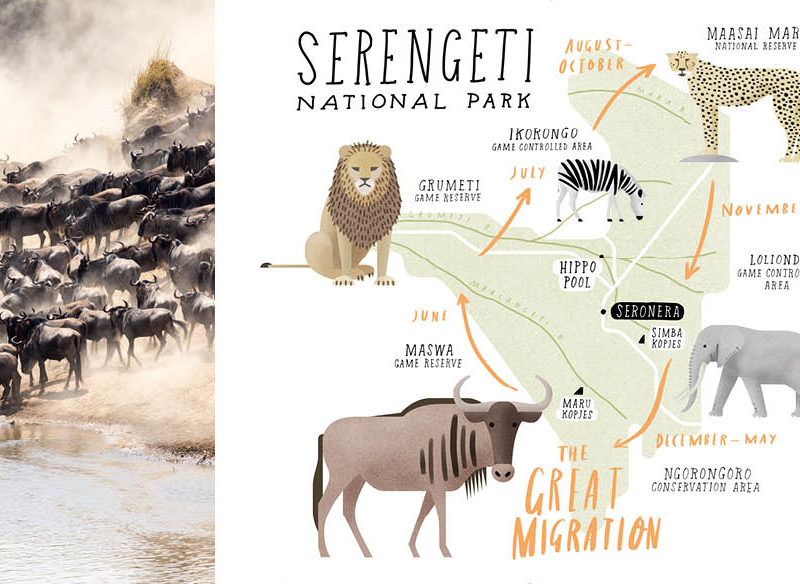
How large is Serengeti National Park, Size of Serengeti National Park
Serengeti National Park encompasses an area of 30,000 square kilometers (equivalent to 12,000 square miles), rendering it the second largest protected area in Tanzania, following the Selous Game Reserve. The park boasts the finest and oldest ecology not only in Tanzania but across Africa, featuring scattered acacia trees that contribute to the ecosystem, while the expanse of open
grassland attracts numerous grazers. Serengeti National Park adjoins the Ngorongoro Conservation Area to the south and the Maasai Mara to the north. The Serengeti National Park environment hosts the highest population of lions, leopards, hyenas, and cheetahs.
The park is also home to a substantial population of wildlife grazers, including buffalo, wildebeest, gazelles, waterbuck, topis, kobs, oribi, zebras, and dik-dik, among others. The southern region next to the Ngorongoro Conservation Area features broad plains with sparse or no trees, characterized by exceptionally nutritious grass that lures wildebeest to this area for calving in January. The Ndutu area calving season lasts merely two months, following which the wildebeest migrate back to the central Serengeti once the newly born calves have gained sufficient strength to traverse great distances.

In the Northwest, Acacia forests are scarce and have been supplanted by Terminalia-Combretum woodlands due to alterations in ecology and soil composition. This region contains a higher population of buffaloes and elephants within Serengeti National Park.
Distance from Arusha
Serengeti National Park is situated along the Northern Corridor, a seven-hour trip from the tourist resort of Arusha, traversing the Lake Manyara region and the Ngorongoro Crater Conservation Area before reaching the park. The journey is picturesque, featuring vantage points of the Great Rift Valley escarpments at Lake Manyara, an aerial perspective of Lake Manyara, and a sight of the Ngorongoro Crater from the observation point, followed by passage through the Maasai warrior mayantas, where traditional tourism occurs.
Best things to do In Serengeti National Park
Serengeti National Park is among the premier safari destinations globally, renowned for its exceptional tourist features that draw millions of visitors to Tanzania each. Furthermore, the park is the most renowned safari destination in Tanzania, founded in 1952, at which time its protection area encompassed the Ngorongoro protection Area. Serengeti National Park spans over 30,000 square kilometers; to the north lies the Ngorongoro Conservation Area, to the west are the Ikorongo and Grumeti Game Reserves, and to the southwest is the Maswa Game Reserve. However, Serengeti, in the native tongue, signifies “Endless Plains” among the Maasai. Furthermore, the park is characterized by vast plains interspersed with kopjes, rivers, and acacia trees, which serve as habitats for the Big Five mammals—elephants, buffaloes, rhinos, leopards, and lions—as well as notable species such as wildebeests, hyenas, zebras, African wild dogs, hippos, crocodiles, and over 550 recorded bird species.
Furthermore, Serengeti National Park is a UNESCO World Heritage site situated in the northeastern area of the country. The vast grasslands of the Serengeti have established it as a premier global safari destination, particularly for enthusiasts of game drives and those seeking to witness the remarkable annual migration. The yearly migration of wildebeest include the travel of roughly 2 million wildebeests, zebras, and gazelles. This is regarded as one of the most extraordinary wildlife phenomena on the planet.
Annually, Serengeti National Park can be visited to observe the significant wildlife migration event that occurs each year. The optimal period to experience the migration in the Serengeti is from May to June and December to March. Between May and June, the wildebeest are observable near the Grumeti River. From December to March, it is an exceptional period for anyone seeking to visit the southern Plains for optimal vistas. The months from July to October are ideal for visiting the northern regions of Kogatende, Lobo, and Loliondo. During this season, the wildebeest migrate from Tanzania, crossing the Mara River into Kenya. The central Serengeti is gratifying due to the year-round diversity of observable fauna.
Things to do and attractions in Serengeti National Park
Serengeti National Park offers numerous attractions and activities for safaris in Tanzania, including game drives, nature walks, hot air balloon safaris, bush meals, visits to the Serengeti Visitors Center, the Ngorongoro Crater, Olduvai Gorge, observation of the wildebeest migration, Maasai camping, exploration of the Bologonja Springs, swimming, the Lobo Valley, camping, bird watching, the hippo pool, and Lake Natron.
Morning Game Drive
A morning game drive in Serengeti National Park is undoubtedly the optimal time to observe a diverse array of wildlife, as it is the most favored activity. A visit here is the optimal method to observe the Big Five mammals and other resident animal species. Animals exhibit heightened activity during the morning and evening hours. The morning game drive commences before sunrise and concludes around 11:00 AM, allowing visitors to view nocturnal creatures returning to their dens or witness herbivores emerging to graze. Nonetheless, it is an opportune moment for observing hyenas, lions, wild dogs, cheetahs, leopards, and hippos, as they are readily visible upon their return from nocturnal foraging near the hippo pool, among others. Lions prefer hunting at night and in the early morning before the sun becomes very hot.
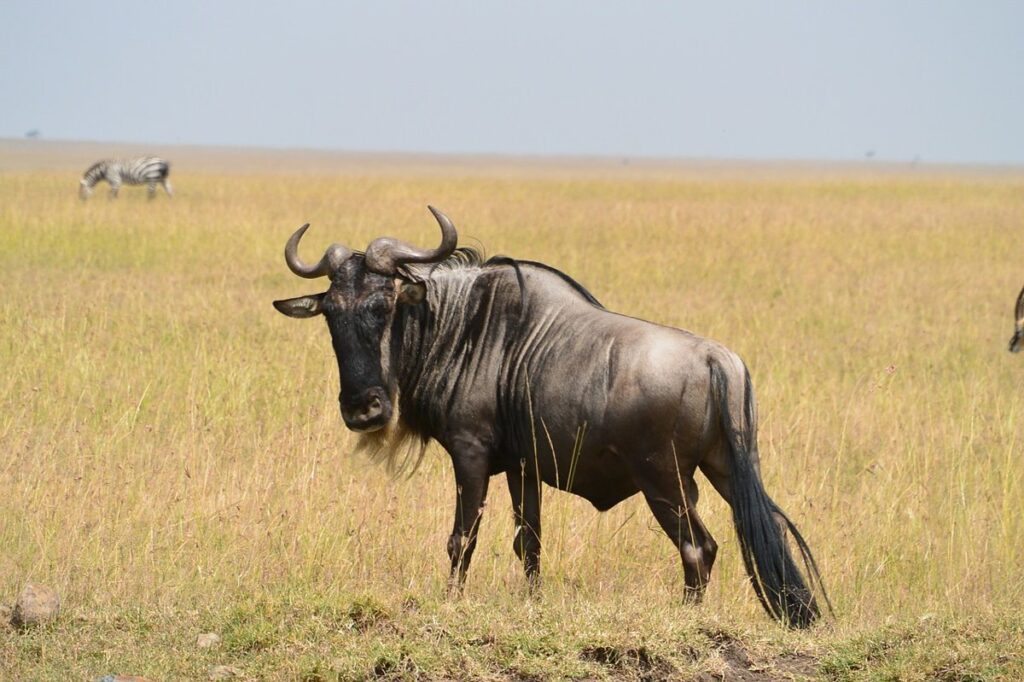
After breakfast at the lodge, we advise you to request the staff to prepare provisions to prevent hunger during your time in the savannah. Concurrently, the roads are in poor condition, and the region encompasses an extensive journey. Additionally, a professional guide is necessary to assist in identifying the various species of animals and birds encountered during the journey.
Additionally, note that afternoon game drives commence at 2:00 PM and conclude at 5:30 PM. To enjoy the magnificent, boundless grasslands of the Serengeti, you may opt for full-day game drives from 6:30 AM to 5:30 PM. Principal Activities and Attractions in Serengeti National Park
Guided Nature Walks
The guided nature walk in Serengeti is ideal for uncovering the park’s hidden beauties in a manner unattainable during a conventional game drive. Nature walks are unpredictable and do not follow designated trails; yet, they provide opportunities to observe avian species, reptiles, insects, and many distinctive flora along the route. A guided nature walk is provided by various safari accommodations in the Serengeti National Park. We recommend that tourists on their nature walk safari be accompanied by an armed ranger guide who is proficient in the terrain and knowledgeable about the various animals in the park.
Hot Air Balloon Expedition:
We strongly recommend a hot air balloon tour for anyone seeking a unique perspective of the stunning, expansive plains. The hot air balloon may ascend hundreds of feet above the ground, providing exhilarating aerial views of the plains and the wildlife inhabiting them. Hot air balloon safaris are especially favored during the wildebeest migration, enabling guests to observe them in vast numbers.
Hot air balloon excursions commence in the morning and conclude with a champagne breakfast in the authentic African wilderness. The balloon basket has a capacity for 12 to 16 individuals. We advise you to reserve your tour in advance and anticipate a cost of approximately USD 500 per person each day.
Hot air balloon excursions are ideal for honeymooners and anyone organizing anniversary or birthday celebrations. Commence planning immediately to obtain a panoramic perspective of the Serengeti plains and Africa’s fauna.
Picnic
Dining in the Bush; If you intend to commemorate your honeymoon in the Serengeti. A visit to the park will provide a memorable dining experience amidst the African nature. Many reputable hotels, both within and outside the park, can facilitate dining beneath the stars with elegantly arranged tables.
Visit the Serengeti Visitors Center
Visit the Serengeti Visitors Center to obtain comprehensive information regarding Serengeti National Park. The visitor center features displays and comprehensive information regarding the park’s ecosystem and history. While you are here, you may also explore the gift and coffee shops. An alternative is to seek leisure in the picnic area.
Olduvai Gorge
The Olduvai Gorge, often termed the “cradle of mankind,” is renowned as the location where the Leakey family unearthed the first human remains. The Gorge is situated in the adjacent Ngorongoro Conservation Area and within the East African Rift Valley.
The Leakey family established a study facility there, including several fossils and implements over 2 million years in age. The tools and human remains are visible in a small museum located within the building.
Visit the Ngorongoro Crater:
The Ngorongoro Crater is no longer included in the Serengeti but is now included within the broader Ngorongoro Conservation Area. Nevertheless, the crater harbors approximately 30,000 large creatures and is frequently characterized as the “Garden of Eden” due to its renowned wildlife. The location is wonderful and gratifying.
Wildebeest Migration
The Wildebeest Migration Event is the primary attraction of Serengeti National Park, drawing thousands of visitors annually from May to June and December. At that season, millions of wildebeests, gazelles, and zebras move between Serengeti National Park and Masai Mara National Reserve, making the experience invaluable.
Additional activities available on a safari to Serengeti National Park encompass seeing the Maasai, camping, exploring Bologonja Springs, undertaking a night game drive, touring the Lobo Valley, and birdwatching, particularly observing the numerous ostriches, among others. Exploring the Moru Kopjes, observing the Retina Hippo Pool, swimming at your hotel amenities, and visiting Lake Natron.
Visitors intending to explore Serengeti National Park may integrate their trip with a safari to Bwindi Impenetrable National Park. Both national parks are readily accessible via domestic flights from Jomo Kenyatta to Entebbe International Airport, where a driver-guide will facilitate your transfer to Bwindi. Alternatively, you may opt for a domestic flight with “Bar Aviation” to the nearby Kihihi airstrip, followed by a 30-minute drive to your reserved lodge in Bwindi.