 info@gorillatrekkinginafrica.com

Arusha Airport
Arusha Airport is a domestic airport situated in Arusha city, a commercial and tourist center for travelers exploring the northern safari circuit of Tanzania, in the northern area of the Republic of Tanzania. Arusha Airport, designated by the IATA code ARK and the ICAO code HTAR, is one of the 59 airports administered, maintained, and operated by the Tanzania Airports Authority (TAA), classified under Group II. Arusha Airport functions exclusively as a domestic airport, situated in the western region of Arusha city, approximately 7 kilometers from the city center. Arusha Airport is situated at an altitude of 4,567 feet above mean sea level, with an average temperature of 23 degrees Celsius.
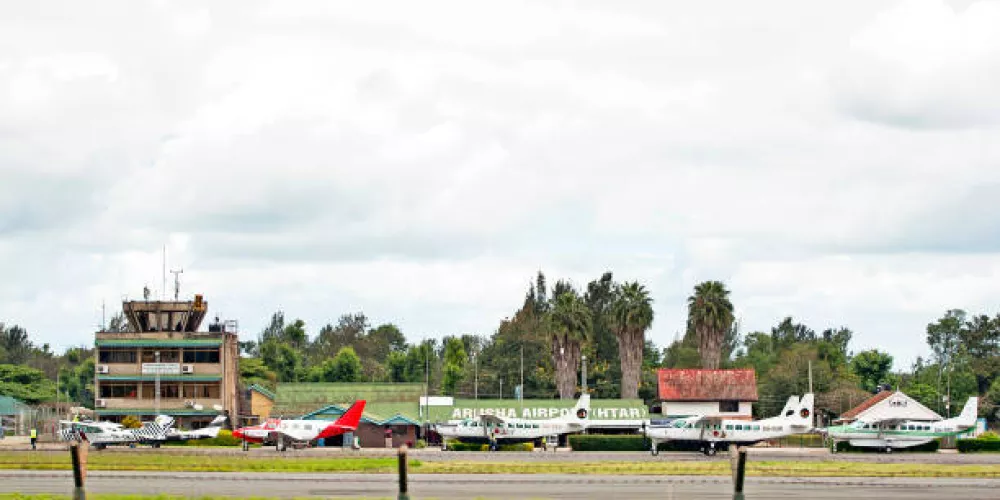
History of Arusha Airport
Arusha Airport was established in 1956 by Colonel Grey, a prominent farmer engaged in the cultivation of coffee and sorghum in the regions of Burka and Mateves. Upon gaining independence in 1961, Tanganyika officially transferred Arusha Airport to the government of Tanzania. Arusha Airport was previously operated by East African Airways; however, with the dissolution of the East African Community, management of the airport was transferred to the Agricultural Department in 1977. Since the establishment of the Tanzania Airports Authority, Arusha Airport has been managed by this entity. In accordance with ICAO rules, Annex 14, Aerodrome Design Manual, Arusha Airport is designated as a code 3C airport.
Arusha Airport features a runway that is 1860 meters in length, 30 meters in width, and oriented at 09 and 27 degrees. Arusha Airport features five taxiways: Taxiways A, B, C, D, and P. Taxiway P is a parallel taxiway of 500 meters in length and 7.5 meters in width, connecting the remote apron to runway 09 and Taxiway A. Arusha Airport features two primary aprons, including;
Essential Aspects of Arusha Airport
- Arusha Airport, now accommodating international flights, was announced in June 2025, featuring enhancements like as immigration and customs facilities.
- The airport presently provides international flights to Nairobi, Kenya, with the possibility of extending to additional destinations.
- This expansion is anticipated to enhance Arusha’s accessibility, thereby augmenting tourist influx and bolstering the local economy.
- Tourism in Arusha will benefit from improved accessibility to national parks such as Serengeti and Ngorongoro Crater.
- Ambiguity persists over the commencement of direct flights from Europe or the Middle East by major carriers such as KLM or Emirates.
Summary of the Upgrade of Arusha Airport
Arusha Airport’s capability to manage international flights is the outcome of a substantial investment by the Tanzania Airports Authority (TAA), amounting to 11 billion Tanzanian shillings. The enhancement comprises lengthened runways, illuminated landing and taxiway systems, and enlarged terminal amenities, facilitating round-the-clock operations and the ability to support larger aircraft. The incorporation of immigration and customs services enables the airport to facilitate the processing of international passengers, a vital measure for enticing major carriers.

Effects on Tourism
The commencement of international flights at Arusha Airport is anticipated to facilitate travel for tourists exploring Tanzania’s northern safari circuit. Historically, international travelers often came at Kilimanjaro International Airport (JRO), located 50 kilometers away, or Julius Nyerere International Airport in Dar es Salaam, necessitating further transit to Arusha. Nonstop flights at Arusha Airport will diminish trip duration, enhancing the region’s attractiveness to safari lovers, climbers, and cultural aficionados. This may result in a rise in visitor arrivals, extended durations of stay, and elevated expenditures, thereby helping local enterprises including hotels, tour operators, and restaurants.
Anticipations for Travelers
Travelers arriving at Arusha Airport for foreign flights will encounter a renovated terminal featuring amenities such as duty-free stores, a cafeteria, and car rental services. The airport, situated at 7 kilometers from Arusha’s city center, provides accessible transportation alternatives, including as taxis, private transfers, and hotel shuttles. The upgraded infrastructure guarantees a more seamless experience for foreign arrivals, featuring expanded security and passenger management capabilities.
Historical Significance and Function of Arusha Airport
Arusha Airport, situated in the Olasiti sector of Arusha city, was founded in 1953 by Colonel Grey, a notable coffee and sorghum cultivator. Originally administered by East African Airways, it came under governmental control upon Tanzania’s independence in 1961 and has been run by the Tanzania Airports Authority (TAA) since 1999. Historically, Arusha Airport has facilitated domestic flights to places such as Zanzibar, Dar es Salaam, and Serengeti, alongside a limited number of regional international flights to Nairobi, Kenya. The airport’s excellent position, 7 kilometers from Arusha’s city center along the Arusha-Dodoma highway, has established it as a crucial nexus for travelers visiting Tanzania’s northern safari circuit.
| Arusha Airport Overview | Details |
|---|---|
| IATA/ICAO Code | ARK/HTAR |
| Location | Olasiti ward, Arusha, 7 km from city center |
| Elevation | 4,567 feet above sea level |
| Runway Length | 1,860 meters (extended in 2025) |
| Operating Hours | 24 hours (post-upgrade) |
| Passenger Capacity | 1,000 passengers at once |
Current International Flights
At present, Arusha Airport offers international flights to Nairobi, Kenya, namely to Jomo Kenyatta International Airport (NBO) and Wilson Airport (WIL), serviced by regional carriers like as Safarilink and Airkenya. The flights, utilizing aircraft like the Cessna Light and ATR 72/42, have a duration of roughly 2 hours and 20 minutes. Although Arusha Airport is now capable of accommodating international flights, no definite schedules for direct flights from Europe, the Middle East, or other continents have been announced as of June 2025. The TAA’s ambition encompasses the attraction of major carriers, however implementation may still be underway.
| Current International Routes | Details |
|---|---|
| Destination | Nairobi (NBO, WIL), Kenya |
| Airlines | Safarilink, Airkenya |
| Flight Duration | ~2 hours 20 minutes |
| Aircraft Types | Cessna Light, ATR 72/42 |
| Frequency | Multiple weekly departures |
Effects on Tourism in Arusha
Arusha Airport’s new capability to accommodate international aircraft significantly transforms tourism in Arusha, an area celebrated for its closeness to Tanzania’s foremost attractions. Arusha, frequently referred to as the “green city” because of its verdant environment at the base of Mount Meru, serves as the entry point to the northern safari circuit, which includes:
Serengeti National Park: Renowned for the Great Migration and the Big Five (lion, leopard, elephant, buffalo, rhinoceros), drawing millions of visitors each year.
Ngorongoro Crater: A UNESCO World Heritage Site recognized for its abundant wildlife and remarkable volcanic crater.
Lake Manyara National Park: A habitat for tree-climbing lions and lakes populated by flamingos, providing varied safari experiences.
Tarangire National Park: Famous for its elephant populations and baobab trees, most vivid during the dry season.
Arusha National Park: Home to Mount Meru, a variety of ecosystems, and activities include as walking safaris and canoeing.
International flights at Arusha Airport obviate the necessity for passengers to transit through Kilimanjaro International Airport (JRO), located 50 kilometers away, or Dar es Salaam, hence diminishing travel time and expenses. This convenience is anticipated to augment tourist visits, with forecasts indicating a substantial increase in visitors to Arusha’s parks and cultural attractions. Local enterprises, such as Mount Meru Hotel and travel operators, are expected to experience heightened revenue, while the region’s prominence as a conference center—hosting events like East African Community meetings—may expand with improved accessibility.
Cultural tourism is a notable feature, providing programs that facilitate trips to Maasai and Wa-arusha villages, allowing guests to interact with indigenous traditions, crafts, and lifestyles. The diversified populace of Arusha, consisting of over 100 nationalities, contributes to its vibrancy, featuring attractions such as the Arusha Declaration Museum, the Natural History Museum, and lively marketplaces that highlight Tanzania’s heritage and culinary offerings.
Arusha City, being a tourist hub, sees most travelers utilizing Arusha Airport for transit to various places, including Serengeti, Zanzibar, Ngorongoro Crater, and Lake Manyara, among others. This is typically an alternative for travelers who want to fly rather than drive for 2-8 hours to the numerous safari areas in Tanzania, such as the 7-8 hour journey to Serengeti National Park.
Arush Airport offers several services including retail outlets, ground handling, extensive parking, refueling stations provided by Puma Energy Tanzania Ltd, complimentary Wi-Fi, and several hotels for accommodation if required. Hotels available for booking near Arusha Airport include Grace Land Hotel, Arusha Crown Hotel, Silver Hotel, Noura Springs Hotel, and Mount Meru Hotel, among others.
Are you traveling from any region of Tanzania to reach Arusha city for your eagerly awaited safari vacation in the northern safari circuit? Your destination should be Arusha Airport. Alternatively, you may arrive at Kilimanjaro International Airport, where your tour operator should facilitate your transfer to commence your eagerly awaited Tanzania safari tour. Coordinate with your reliable tour operator to determine the best ways to get to your numerous destinations.