 info@gorillatrekkinginafrica.com

Boma Natural History Museum Tanzania
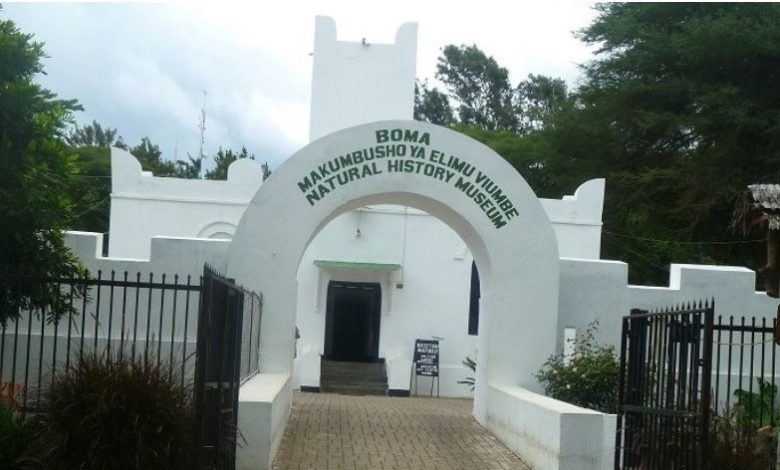
Boma Natural History Museum Tanzania : Comprehensive Information The Boma Natural History Museum is a facility that showcases the natural history, animals, culture, and artifacts of the Arusha region within the Northern Tanzania Safari circuit. The facility comprises three distinct public buildings (the remainder are offices), a modest outdoor botanical garden, and an outdoor gallery for arts and crafts. It is situated within the remnants of a former German military installation.
One building is allocated to animals, another to regional history, and the third to archeological history. In addition to the Boma Natural History Museum, Tanzania’s national museums comprise the Dar es Salaam Museum, the Sukuma Museum, the Mwalimu Nyerere Museum, and the Makumbusho Village Museum. The subsequent artifacts are exhibited at the Boma Natural History Museum:
- Artifacts from excavations in adjacent regions, including Olduvai Gorge, and other deceased fauna
- A historical account of the Arusha region and its inhabitants
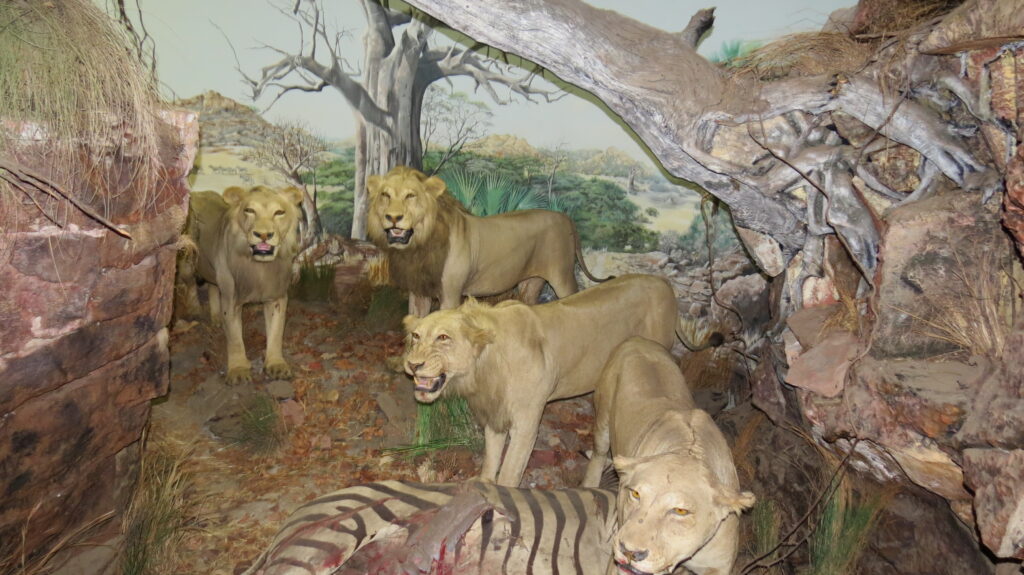
- A section dedicated to animals featuring images and taxidermy exhibits.
- A gallery showcasing the creations of more than 12 premier local artists.
- Art and craft instruction from local artisans, encompassing painting, drum fabrication, and more.
- A small botanical garden
- A very small pond with many indigenous freshwater fish species.
- A small zoo featuring several unusual creatures from the region, including an eagle.
- A segment on insects delineates various ailments and issues they induce.
- An establishment for taxidermy
- Photographs of various indigenous tribes
The Original Boma was erected between 1899 and 1900 to function as a German military outpost in the Arusha region. This was executed to monitor the Meru and Arusha tribes more closely, whose resistance had just been subdued in 1897 and 1898. Other colonial authorities utilized it as both a domicile and an administrative office.
The vanquished warriors were required to labor a minimum of seven hours daily to erect the fort, utilizing their spears to excavate stone and their shields to convey it. The old were tasked with preparing the mortar from wet mud, while the women and children of the tribe were responsible for collecting banana fiber for thatching.
The completed structure was a walled, rectangular enclosure encircled by a barbed wire fence and a trench approximately 6 feet deep. The compound contained multiple structures, along with a kitchen garden and a coffee plantation adjacent to it.
As the inaugural contemporary structure in the region and a bastion of security, it drew an increasing number of individuals seeking employment and commercial prospects. After World War I, when the British assumed authority from the Germans, the fortress remained operational, with government personnel use the front two structures.
In 1979, Tanzania’s independent government converted it into a natural history museum. Subsequently, various elements have been incorporated, comprising a modest aquarium, a miniature botanical garden, a gallery for local artists, a history and antiquities exhibit, a wildlife section, and an arts gallery that additionally provides classes.
A road extended from the south to the compound, flanked by trees along its length throughout this period. This route, which has some of the original trees, still exists today and is named Boma route.
Things to do in Boma Natural History Museum Tanzania
Explore the historical narrative of the Arusha region from the late 19th century to the mid-20th century; the Declaration Museum offers additional insights into 20th-century history. Furthermore, one can uncover extensive information regarding the fauna and insects residing in adjacent national parks as well as conventional habitats.
A plethora of items from adjacent excavations is accessible for viewing, including realistic sculptures of early humans and the renowned Zinjanthropus skull from Olduvai Gorge (a replica). A gallery featuring local artists’ works is situated at the rear of the museum.
With fortune on your side, you may encounter one of them at work or, for a nominal fee, acquire the skills to create your own art. The art department offers both drum-making training and paintings for sale. Remember to observe the fish, turtles, and eagles.
Where is Boma Natural History Museum located in Tanzania
The Boma Natural History Museum of Arusha is located in a tranquil, tree-lined area of Arusha, Tanzania, at the elevated terminus of Boma Road. Furthermore, it is situated in the heart of the CBD, in close proximity to retail establishments, businesses, hotels, and dining options. It is situated in the riparian zone of the Themi River, which traverses the city and extends beyond its southern suburbs from the mountain slopes. The museum serves as an excellent venue for a brief respite following your Mount Kilimanjaro ascent or a tour of the Northern Safari circuit.
How to get to Boma Natural History Museum Tanzania
The clock tower, a prominent municipal icon, must be accessed initially via private conveyance before proceeding uphill (north). The Boma Museum is located at the terminus of the road that shares its name and extends northward. If you are utilizing the bus, seek one that is en route to the clock tower or the Arusha hotel district, and disembark at the clock tower stop. The museum is accessible via a brief, ten-minute uphill walk from that location.