 info@gorillatrekkinginafrica.com

Worst/Best Time to Visit Kenya for An African Safari
Worst/Best Time to Visit Kenya, this article will elucidate the best and worst time for visiting Kenya on African safari. Kenya is a nation located within the Great Rift Valley. Consequently, it includes numerous physical attractions both within and beyond the Great Rift Valley. The following outlines many physical attractions, activities, and experiences available for exploration and enjoyment during the best time to visit Kenya.
Things to do in Kenya during a Safari
| Mount Kenya | Maasai Mara National Reserve | Lake Nakuru | Hell’s Gate National Park | Watamu Marine National Park |
|---|---|---|---|---|
| Hiking | Game drives | Bird watching | Rock climbing and exploration | Wildlife viewing |
| Bird watching | wildebeest migration Kenya | Game drives | Game viewing | Boat activities |
| Mountain climbing | The Big Five in Kenya (lions, leopards, rhinos, elephants, buffaloes) | Exploring Makalia waterfalls | Nature walks | Viewing marine animals |
| Nature walks | Exploring the Maasai culture | Boat cruising safaris | Cave exploration | Kenya safari Game drives |
When is the Best time to Visit Kenya for a safari
Inquiring about the best time to visit Nairobi, Kenya’s national parks, and more attractions? The most, if not all, of the safari tour activities in Kenya that tourists engage in are conducted outdoors. It is best to undertake such daring excursions during the most favorable season for a safari in Kenya. The best time to visit Kenya is during the dry season, from late June to October. During this period, Kenya typically has reduced rainfall relative to other months. Therefore, if you are still contemplating the optimal month to visit Kenya, consider the period from June to October.
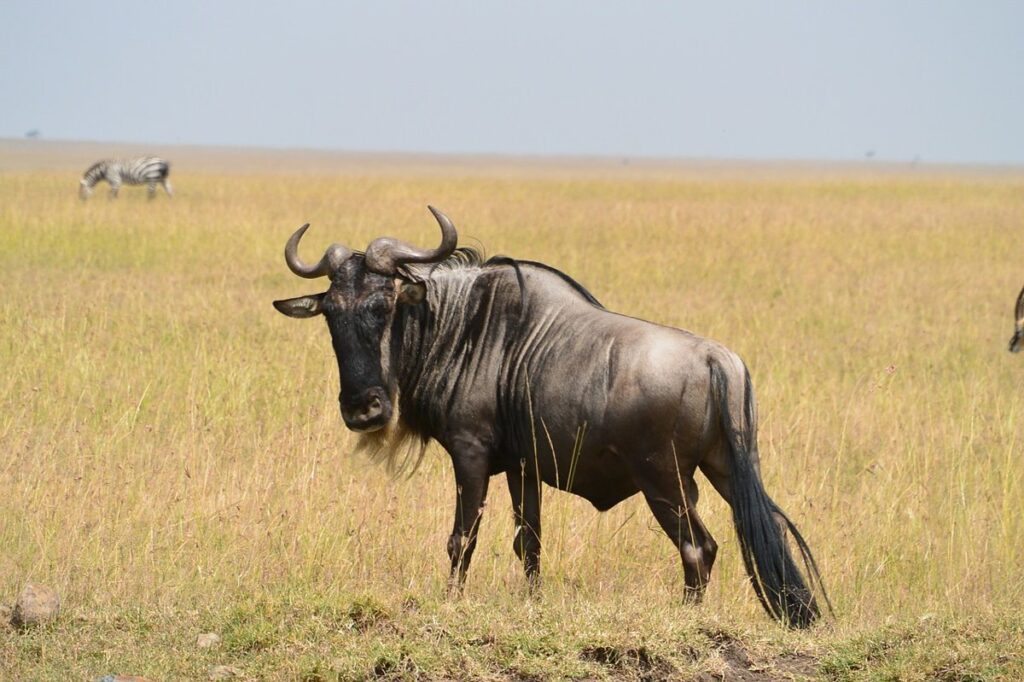
This month has numerous opportunities for wildlife observation, including the wildebeest migration in Masai Mara. The Kenya migration safari typically takes place during this timeframe, sometimes referred to as the Great Migration months in Afica. The interval from June to October constitutes the optimal period for visiting Masai Mara in Kenya.

Tourists can also observe several wild creatures in Kenya, including uncommon species such as the black rhinoceros, caracal, and aardvark. Because they would be readily identifiable throughout this timeframe. This results from the poor distribution of vegetation in the Kenya National Parks due to insufficient rainfall amounts obtained. The best time for boat activity and marine observation in Kenya is during this time. Furthermore, it is due to the optimal availability of marine species during this period. Furthermore, the water bodies in Kenya see reduced wind conditions that may interfere with boating activities such as kayaking.
During this best time to visit Kenya, there are additional activities to explore inside the country. In addition to beaches and wildlife, other activities during the optimal safari season in Kenya encompass the culture of the Maasai people and the seaside resort of Mombasa. The remainder comprises the Kakiya cave and numerous others in Kenya.
Worst time of year to visit Kenya for a Safari
Worst/Best Time to Visit Kenya for An African Safari, The Worst time of the months to visit Kenya are March, May, November, and December. Furthermore, this is due to Kenya experiencing substantial rainfall during this period. Nevertheless, the months of March and May experience substantial rainfall. This renders certain tourism locations in Kenya susceptible to flooding. Consequently, undertaking your journey in Kenya during this period is more perilous.
The rain complicates game viewing for visitors in Kenyan parks such as the Masai Mara National Reserve. This occurs when certain wild animals seek refuge in denser areas to evade the rain. Consequently, the tourists are unable to observe them on their safari holidays in Kenya. Water-based activities such as surfing also become challenging. The turbulent waters hinder sailors’ navigation.
Nevertheless, during this worst time for visiting Kenya, there are fewer tourists in the country. Consequently, tourist spots are less congested, and more economical travel packages are offered in comparison to the dry season. Consult our Serengeti Masai Mara safari specialists to ensure optimal safari experiences in Kenya, regardless of the season.
Tourist Attractions in Kenya.
For numerous travelers, Kenya epitomizes East Africa in miniature. Wildlife safaris have been the premier tourist attractions in Kenya for decades, providing a range of activities for visitors to the country.
Maasai Mara National Reserve.
The Maasai Mara National Reserve is a premier tourist destination in Kenya and the nation’s most renowned game park. Each year, the Maasai Mara National Reserve attracts thousands of tourists who arrive to observe the remarkable wildlife and the yearly migration of zebras and wildebeests. The great migration occurs annually in the Maasai Mara National Reserve from July to October, as millions of wildebeest and zebras migrate from the Serengeti in Tanzania to the reserve.
Amboseli National Park.
Amboseli National Park is a very modest reserve situated near the Tanzanian border at the base of Africa’s tallest peak, Mount Kilimanjaro. Amboseli National Park is renowned as the premier destination in Africa and the primary tourist draw in Kenya due to its proximity to free-ranging elephants. Additional attractions of Amboseli National Park include the chance to engage with the Maasai tribe and the breathtaking vistas of Mount Kilimanjaro.
Lake Nakuru National Park.
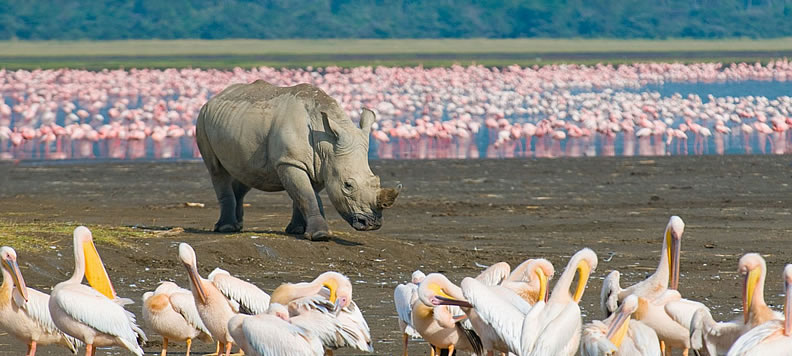
Lake Nakuru National Park features a highly shallow lake located in central Kenya. The lake’s profusion of algae draws enormous numbers of lesser flamingos, occasionally exceeding one million simultaneously. The flamingos, often regarded as the most magnificent avian display on the planet, rank among Kenya’s premier tourist attractions. The flamingos are captivating attractions for tourists because to their pink coloration, which is prominent in Lake Nakuru, hence drawing many visitors to Kenya.
Tsavo National Park.
Tsavo National Park in Kenya is one of the largest national parks globally. The park was divided into two sections: Tsavo West and Tsavo East, due to its size. Tsavo West features breathtaking scenery characterized by an undulating volcanic terrain, whilst Tsavo East is predominantly comprised of expansive savannahs compared to its western counterpart. Tsavo National Park is the quintessential destination in Kenya for individuals seeking peace and seclusion, as well as the opportunity to traverse the entire bush throughout their safari.
Lamu Island.
Lamu Island is a component of Kenya’s Lamu Archipelago and has remained pristine and unaffected by the extensive tourism that has impacted much of Kenya’s coastline. Lamu Town, the oldest inhabited settlement in Kenya, has preserved its beauty and character developed over centuries. Lamu Island lacks highways, including only alleyways and pathways, resulting in a scarcity of motorized vehicles. Inhabitants traverse the area on foot or via boat, while donkeys are employed for the conveyance of goods and supplies.
Hell’s Gate National Park.
Hells’ Gate National Park is a small park named for a narrow fissure in the rocks, which was formerly a tributary of an ancient lake that nourished early inhabitants in the Rift Valley. It is distinctive among Kenya’s wildlife reserves, as visitors are permitted to wander or cycle unaccompanied by a guide. The landscape features stunning landscapes, including high cliffs, gorges, and basalt columns. Hell’s Gate National Park boasts remarkable features, including a diverse array of animals, albeit in limited numbers; notable examples of the rarely observed fauna include lions, leopards, and cheetahs.
Samburu National Reserve.
Samburu National Reserve is a tranquil national reserve located in Northern Kenya. The national reserve features several attractions, including the Ewaso Nyiro River, a diverse combination of forest and grassland vegetation, and three big cats: the lion, cheetah, and leopard. Additionally, the reserve is home to other species such as elephants, buffaloes, and hippos. The Ewaso Nyiro River harbors the highest population of Nile crocodiles, drawing several tourists.
Mount Kenya.
Mount Kenya is the tallest mountain in Kenya and the second tallest in Africa, following Kilimanjaro. The mountain presents stunning vistas to travelers, its summits adorned with snow and its slopes cloaked in forest. The 5,199-meter (17,057 ft) summit is a challenging technical ascent; yet, the surrounding lower peaks offer an accessible destination for any physically competent trekker.
Malindi Marine National Park.
Malindi offers an excellent introduction to Kenya’s coastal tourism attractions, featuring huge coral reefs and picturesque beaches. Tourists engage in surfing, snorkeling, deep-sea fishing, and various other water sports. Malindi Marine National Park is a protected area featuring beautiful waters and vibrant fish. Malindi is accessible via a domestic airport and a route connecting Mombasa and Lamu.
Nairobi National Park.
Nairobi National Park is located within 10 minutes from the city of Nairobi, with only a fence delineating the park’s wildlife from the urban environment. The skyscrapers of Nairobi are visible from the park. Nairobi National Park, despite its closeness to the city and relatively modest area, is home to a diverse array of species. While it features the Big Five, it lacks elephants, thereby comprising the Big Four: lions, rhinos, leopards, and buffaloes. During the dry season, wildebeest and zebra congregate in the park, which is one of Kenya’s most successful rhinoceros sanctuaries.
Kenya is the preeminent country in Africa, boasting numerous tourist attractions. It features breathtaking sites that should not be overlooked during one’s visit. While the primary attractions have been mentioned, there are additional sites that contribute to Kenya’s status as a highly frequented destination due to its diverse offerings.