 info@gorillatrekkinginafrica.com

Colobus Monkey Trekking in Nyungwe Forest National Park
Colobus Monkey Trekking in Nyungwe Forest National Park, Situated in the southwestern highlands of Rwanda, Nyungwe Forest National Park is one of Africa’s most unspoiled montane rainforests and offers one of the continent’s most remarkable primate tracking experiences. The park’s premier activity, colobus monkey tracking, provides visitors with a remarkable chance to watch substantial battalions of Angolan colobus monkeys in their natural environment. This detailed book examines all essential aspects of colobus monkey tracking in Nyungwe Forest, encompassing the extraordinary primates and pragmatic planning advice for an unforgettable experience.
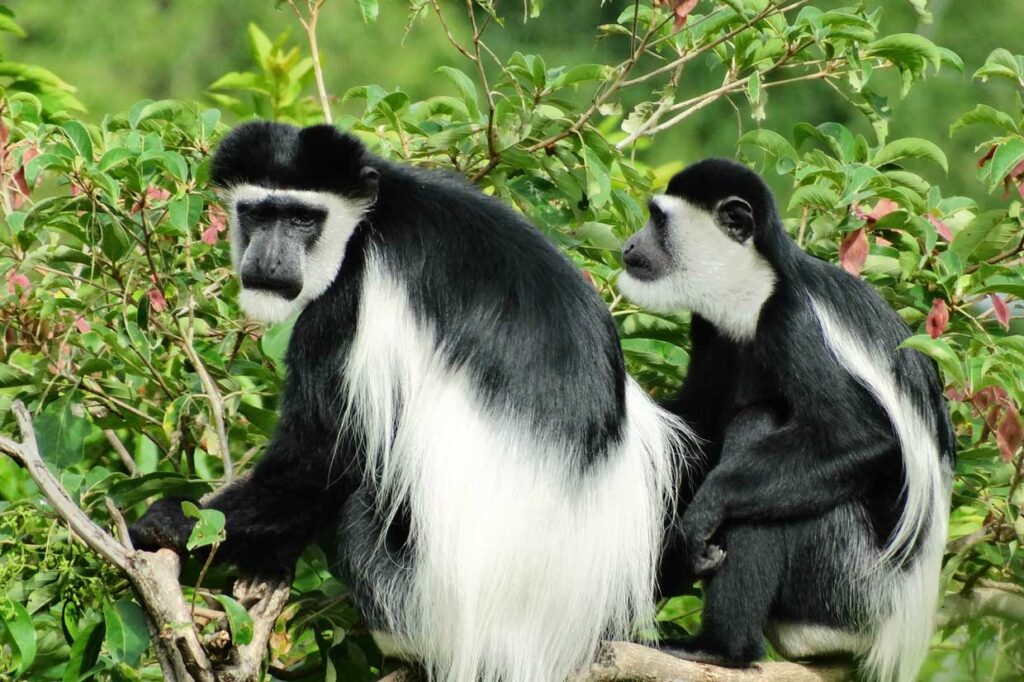
Knowing the Angolan Colobus Monkeys
The Angolan colobus (Colobus angolensis), sometimes referred to as the Angolan black-and-white colobus, is one of the most charismatic species residing in Nyungwe Forest. These remarkable primates are characterized by their vivid black and white pigmentation, featuring long, flowing white mantles that drape over their shoulders like sophisticated capes. Adult colobus monkeys can attain lengths of up to 70 cm, with their remarkable tails contributing an additional 80 centimeters to their notable size.
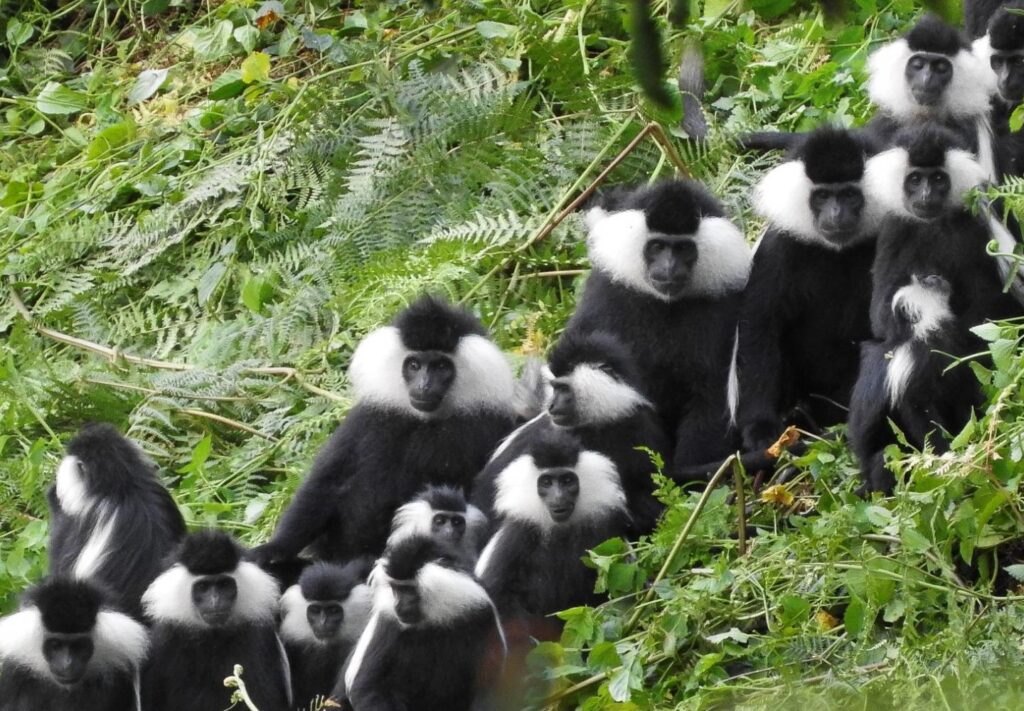
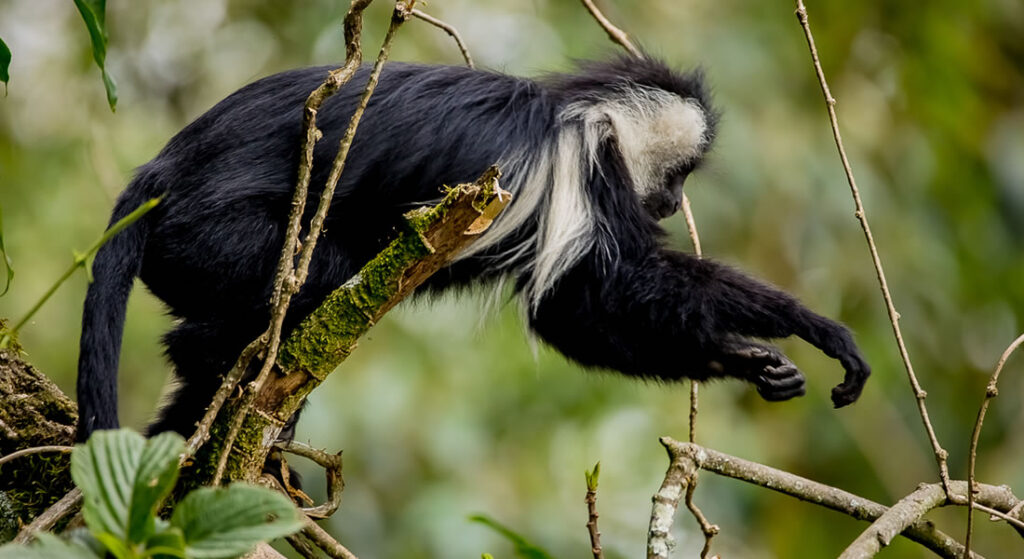
The colobus population of Nyungwe is distinguished for its remarkable social structure. The woodland is home to armies of up to 400 individuals, ranking them among the largest colobus units documented in Africa. These arboreal acrobats predominantly inhabit the forest canopy, traversing the trees with exceptional agility, utilizing their robust limbs and elongated tails for equilibrium. In contrast to numerous primates, colobus monkeys are devoid of thumbs, an adaptation that augments their capacity to traverse branches using hook-like grips.
The Angolan colobus serves a vital ecological function in Nyungwe Forest by acting as seed dispersers, hence sustaining the forest’s remarkable biodiversity. Their food predominantly comprises leaves, fruits, and flowers, supported by their unique stomachs that can digest resilient plant elements indigestible to other primates. This nutritional specialization renders them essential participants in forest regeneration and ecological vitality.
The Colobus Tracking Expedition
Tracking Colobus monkeys in Nyungwe Forest commences early in the morning, generally at 5:00 AM, as seasoned guides escort small groups of visitors into the forest’s interior. The tracking experience markedly contrasts with conventional gorilla monitoring, as colobus monkeys exhibit greater activity and mobility during the day. Trackers must be ready for a dynamic expedition that may entail pursuing troops as they navigate the forest canopy in quest of sustenance.
The tracking method is an instructive expedition through one of Africa’s ancient rainforests. Guides provide intriguing insights about colobus behavior, forest ecology, and conservation initiatives while traversing well-maintained trails and occasionally deviating from the path to track monkey movements. The experience generally endures for two to four hours, contingent upon the troops’ location and their activity levels.
Upon successfully locating a colobus group, the spectacle is truly awe-inspiring. Observing numerous black and white primates elegantly bounding over the canopy, their white pelages billowing like silk scarves, engenders an almost enchanting ambiance. The discordant sounds of calls, rustling foliage, and intermittent thuds as monkeys traverse the trees create an engaging auditory backdrop to this extraordinary wildlife experience.
Organizing Your Colobus Tracking Expedition
Effective colobus monkey tracking necessitates meticulous planning and preparation. The activity is accessible throughout the year in Nyungwe Forest, although the dry seasons from June to September and December to February typically provide the most advantageous tracking conditions. During these intervals, trails exhibit less mud accumulation, and the sight of monkeys may improve due to diminished foliage density.
Colobus tracking licenses are priced at $90 per individual and can be acquired from the Rwanda Development Board or licensed tour operators. In contrast to gorilla permits, colobus tracking permits are typically more accessible; however, advance reservations are advisable, particularly during peak tourist seasons. Groups are restricted to eight individuals per tracking session, guaranteeing a personal and minimally intrusive experience for both guests and primates.
The physical fitness prerequisites for colobus tracking are moderate yet should not be undervalued. The sport entails hiking in hilly regions at elevations between 1,600 to 2,950 meters above sea level. Participants must be ready for significant inclines and declines over occasionally demanding terrain; nonetheless, the trails are predominantly well-maintained and appropriate for persons with moderate fitness levels.
Essential Things and Required Items
Thorough preparation substantially improves the colobus tracking experience. Durable, waterproof hiking footwear with enough ankle support are crucial, as paths may be muddy and irregular. Long-sleeved shirts and trousers in neutral hues provide protection from insects and vegetation while eschewing vibrant colors that could disrupt nature. A lightweight rain jacket is essential, as the weather in Nyungwe can fluctuate swiftly.
Photography aficionados should equip themselves with cameras featuring superior zoom capabilities, as colobus monkeys frequently inhabit the upper canopy. Binoculars augment animal observation and facilitate the detection of other forest dwellers, such as birds and diminutive primates. A compact daypack including water, energy snacks, and personal prescriptions guarantees comfort during the trekking adventure.
Effects of Conservation and Advantages for the Community
Tracking Colobus monkeys in Nyungwe Forest beyond mere tourism; it functions as an essential conservation strategy and a catalyst for community development. Revenue derived from tracking permits directly funds park administration, anti-poaching initiatives, and research projects that assess colobus populations and forest vitality. This sustainable tourism approach illustrates the economic significance of conserving Rwanda’s natural heritage.
Local communities adjacent to Nyungwe Forest derive substantial benefits from colobus tracking via employment opportunities as guides, porters, and in tourism-related activities. Numerous guides are ex-poachers who have shifted to conservation positions, becoming influential advocates for wildlife preservation. The initiative also enhances awareness regarding the significance of forest conservation and the dangers confronting Rwanda’s primate species.
Research undertaken during tracking efforts enhances scientific comprehension of colobus behavior, population dynamics, and environmental necessities. This information is essential for formulating successful conservation plans and securing the long-term survival of these extraordinary monkeys.
Beyond Colobus Tracking
Although colobus monkeys are the primary draw of Nyungwe, the forest provides a variety of supplementary activities that enrich the whole experience. Chimpanzee tracking facilitates encounters with Rwanda’s other prominent ape species, while canopy treks present distinctive views of the forest ecosystem from suspended bridges 70 meters above the ground. Birdwatching aficionados can observe more than 310 species, including various endemics of the Albertine Rift.
Nature walks showcase Nyungwe’s remarkable botanical richness, featuring over 1,068 documented plant species within the park. Waterfall treks culminate in breathtaking waterfalls, and cultural excursions to adjacent towns offer insights into traditional Rwandan life and the interplay between inhabitants and forests.
Tracking Colobus monkeys in Nyungwe Forest provides a unique opportunity to observe one of Africa’s most remarkable primate congregations while aiding essential conservation initiatives. This extraordinary trip integrates animal observation, environmental education, and adventure travel within one of the continent’s most unspoiled forest habitats. Visitors desiring genuine African wildlife experiences beyond conventional safaris will find that colobus tracking in Nyungwe Forest offers enduring memories while contributing to the conservation of Rwanda’s natural heritage for future generations.