 info@gorillatrekkinginafrica.com

African Elephants; Facts, Habitat, Diet, Size and Strength:
African elephants constitute the largest terrestrial mammals in the planet. They are marginally larger than their Asian counterparts and can be distinguished by their more prominent ears, which resemble the shape of the African continent. Asian elephants possess smaller, rounder ears.
Despite being historically classified as a single species, researchers have established that there are, in fact, two distinct species of African elephants, both of which face the threat of extinction. Savanna elephants are larger creatures inhabiting the plains of sub-Saharan Africa, whilst forest elephants are smaller species residing in the forests of Central and West Africa. The International Union for Conservation of Nature categorizes savanna elephants as endangered and forest elephants as extremely endangered.
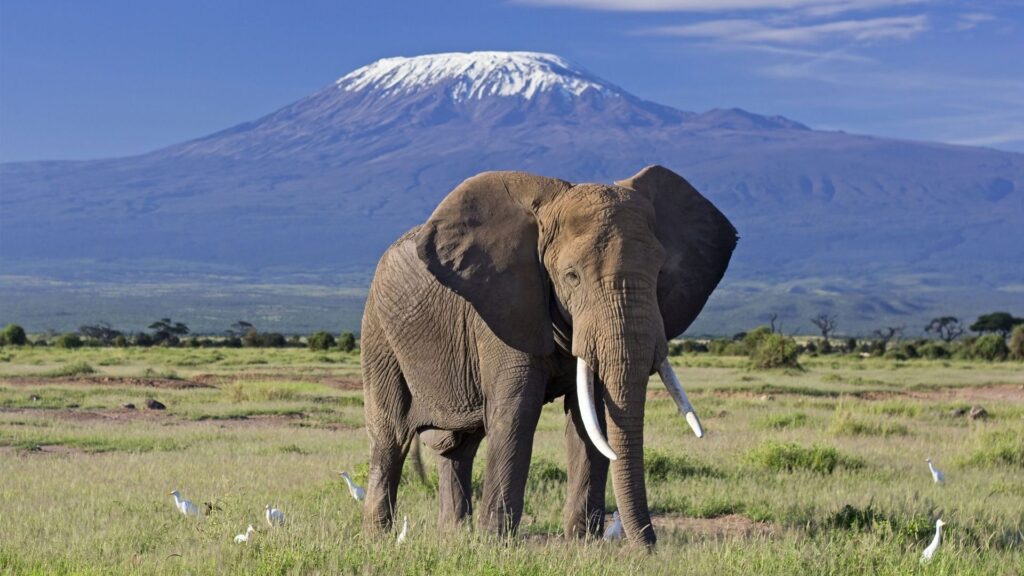
African elephants are keystone species, signifying their essential function within their ecosystem. Commonly referred to as “ecosystem engineers,” elephants significantly influence their environment in several manners. In the arid season, they utilize their tusks to excavate desiccated riverbeds, so forming watering holes accessible to numerous animals. Their excrement is rich in seeds, facilitating plant dispersion across the ecosystem, and it also provides an excellent habitat for dung beetles. In the forest, their consumption of trees and shrubs establishes corridors for smaller fauna, while in the savanna, their uprooting of trees and consumption of saplings facilitates an open environment for zebras and other grassland species to flourish.
Trunks and tusks
Elephant ears dissipate heat to assist in thermoregulation, however at times the African heat proves excessive. Elephants exhibit a preference for water, delighting in bathing by siphoning water into their trunks and dispersing it over their bodies. Subsequently, they frequently apply a protective layer of dust to their skin.
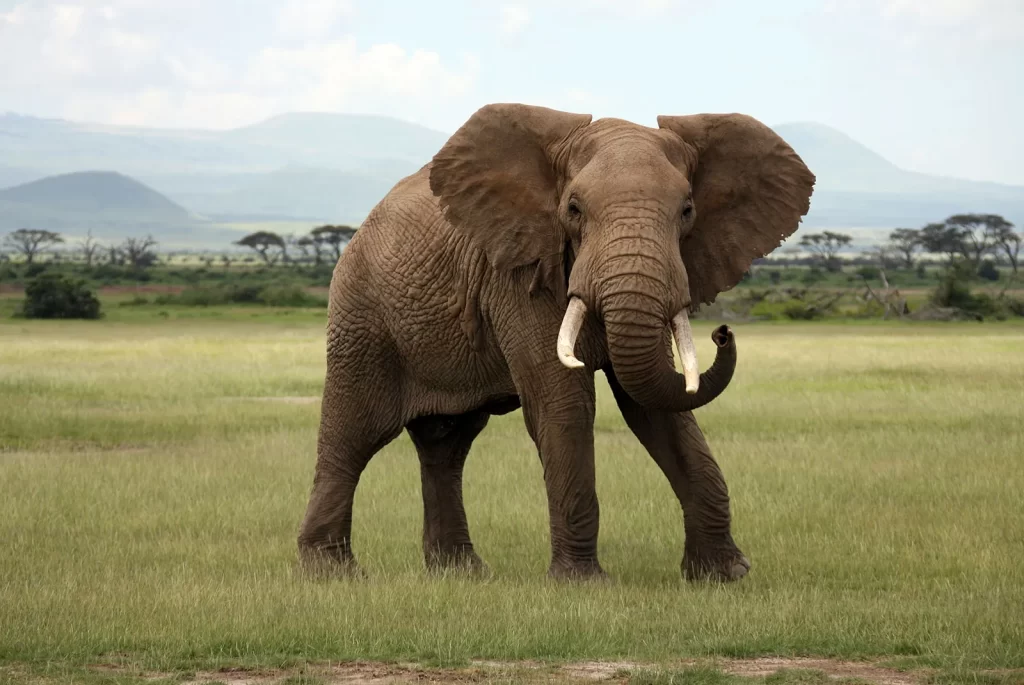
An elephant’s trunk is an elongated snout utilized for olfaction, respiration, vocalization, hydration, and grasping objects—particularly food. The trunk alone comprises around 40,000 muscles. African elephants possess two digit-like appendages at the terminus of their trunk, enabling them to grasp small objects. Asian elephants possess a one trunk.
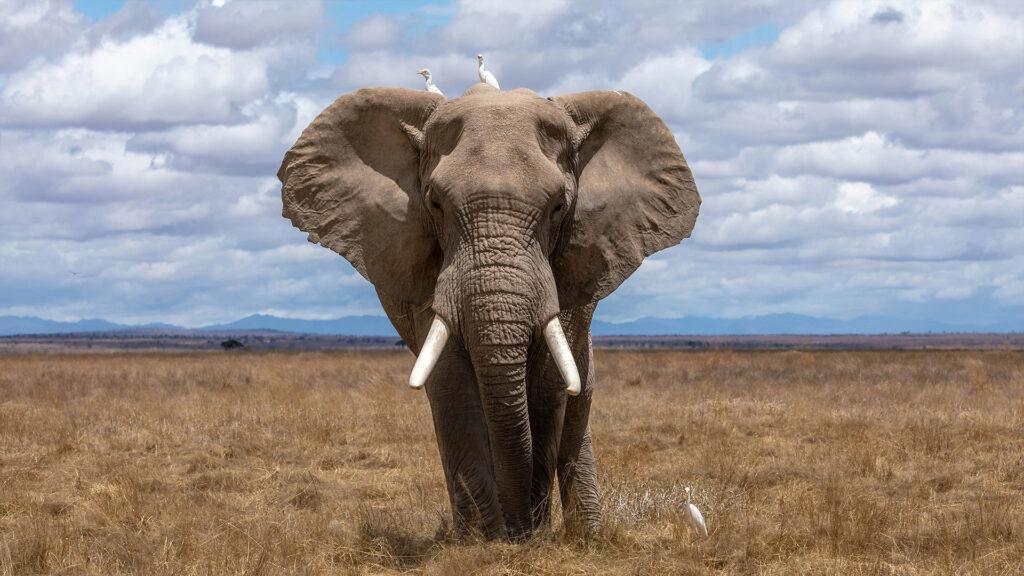
Both male and female African elephants possess tusks, which are perpetually growing teeth. Savanna elephants possess curved tusks, whereas forest elephants exhibit straight tusks. They use these tusks to excavate for sustenance and hydration, as well as to remove bark off trees. Male individuals, possessing greater tusks than their female counterparts, utilize their tusks to engage in combat with each other.
Diet
Elephants consume roots, grasses, fruits, and bark. An adult elephant can ingest as much as 300 pounds of sustenance daily. These voracious animals exhibit minimal sleep, traversing extensive distances in search of the substantial food quantities necessary to sustain their enormous physiques.
African elephants inhabit the savannas of sub-Saharan Africa and the rainforests of Central and West Africa. The northernmost elephants on the continent inhabit the Sahel Desert in Mali. The little, migratory herd of Mali elephants traverses a circular path through the desert in pursuit of water.
Due to their substantial dietary requirements, elephants are increasingly encountering humans. An elephant may devastate an entire season’s worth of crops in one night. Several conservation initiatives collaborate with farmers to safeguard their crops and offer compensation in the event of elephant incursions.
Herds
Elephants exhibit matriarchal social structures, characterized by female-led groups. The matriarch is typically the largest and most senior. She leads a multi-generational herd comprising other females, referred to as cows, and their offspring. Adult males, referred to as bulls, often wander independently, occasionally forming smaller, loosely affiliated all-male groups.
Owning a newborn elephant constitutes a significant commitment. Elephants has the longest gestation period of any mammal, lasting over 22 months. Cows typically produce one calf every two to four years. At birth, elephants typically weigh approximately 200 pounds and measure around three feet in height.
Threats to survival
Poaching for the illicit ivory trade is the greatest threat to the survival of African elephants. Prior to European colonization of Africa, the elephant population may have reached 26 million. By the early 20th century, their population had reduced to 10 million. The prevalence of hunting continued to rise. By 1970, their population had decreased to 1.3 million. From 1970 to 1990, hunting and poaching endangered the African elephant, halving its number.
Since then, poaching has persistently endangered both species: Savanna elephants experienced a 30 percent loss from 2007 to 2014, but forest elephants suffered a 64 percent reduction from 2002 to 2011 as poaching intensified in Central and West Africa. In 2021, the International Union for Conservation of Nature classified them as distinct species for the first time, designating savanna elephants as endangered and forest elephants as severely endangered. Currently, only approximately 400,000 remain.
The lengthy reproductive cycle of elephants exacerbates the issue. Given that reproduction rates are approximately 5 to 6 percent, the number of calves being produced is insufficient to compensate for the losses incurred from poaching.
African elephants are experiencing habitat loss due to the expansion of the human population and the conversion of land for agricultural and developmental purposes. Elephants require extensive space; hence, habitat destruction and fragmentation complicate their access to food, water, and social interactions, while also heightening their confrontation with humans.
Conservation
The determination to classify African elephants as two distinct species is regarded as a significant advancement for conservation, as it underscores the unique challenges encountered by each species. Researchers anticipate that the designation will enhance awareness of forest elephants, which have frequently been neglected by governments and benefactors when considered alongside the more prominent savanna elephants.
African elephants get various levels of protection throughout all nations within their geographic distribution. They are also safeguarded by international environmental accords, namely CITES and the Convention on the Conservation of Migratory Species. Recent attempts to re-legalize the worldwide commerce in ivory have thus far proven unsuccessful.
Conservation organizations and governmental entities have collaborated to designate property for wildlife, including corridors that link these protected areas. Researchers estimate that as much as 70 percent of elephants’ habitat is situated on unprotected ground.
To mitigate poaching, halting the illicit trade is essential. Advocates have initiated campaigns targeting both the supply side (poaching) and the demand side (consumers of ivory). Recent years have witnessed notable advancements, particularly with demand. In 2015, China, considered the largest illegal and legal ivory market globally, consented to a “near-complete” prohibition on the domestic ivory trade. Following the implementation of the prohibition, public demand for ivory appears to have diminished.
Addressing poaching of elephants necessitates a localized strategy on the supply side. A 2019 study indicated that the distress of elephants correlates with that of the adjacent human populations: Areas characterized by elevated poverty and corruption tend to exhibit increased poaching rates. This indicates that assisting communities in establishing sustainable livelihoods may diminish the appeal of poaching.