 info@gorillatrekkinginafrica.com

Best 2 Days Lake Nakuru and Maasai Mara National Reserve safari
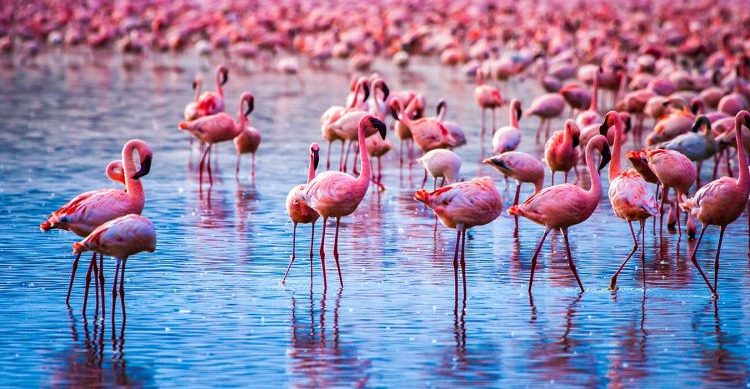
This best 2 Days Lake Nakuru and Maasai Mara National Reserve safari will take you to both Lake Nakuru National Park and Maasai Mara National Reserve, allowing you to observe diverse species while engaging in game drives in Kenya. Among the prominent wildlife species to observe are the Big Five, various avian species, including numerous pink flamingos, and many other interesting sightings. Please refer to the comprehensive itinerary below for additional information regarding the safaris in the wilderness.
Highlights for your Best 2 Days Lake Nakuru and Maasai Mara National Reserve safari
- Day 1: Transfer to Lake Nakuru National Park
- Day 2: Full day game drive in Maasai Mara National Park and departure
Detailed itinerary Best 2 Days Lake Nakuru and Maasai Mara National Reserve safari
Day 1: Transfer to Lake Nakuru National Park
Pickup will occur as early as 4:30 AM from a location of your preference within Nairobi city. Your guide will collect you and transport you to Lake Nakuru National Park. Upon arriving in the park, you will partake in a game drive and explore many trails that lead to attractions such as Rothschild’s giraffes, buffaloes, lions, leopards, and numerous other large felines. You will also observe several bird species, including pink flamingos, beside other attractions. Following the event, return to your hotel for dinner and an overnight stay.
Day 2: Comprehensive wildlife drive in Maasai Mara National Park
Following an early morning breakfast at your accommodation, you will engage in a full-day game drive, participating in both the morning and afternoon excursions, each offering distinct safari experiences. In the morning game drive, you will have increased opportunities to observe early risers, including rhinos, buffaloes, Uganda kobs, oribis, and several other herbivores as they partake in their initial meal of the day. Your trip in the ark is intriguing; during the wildebeest migration drives, you will witness millions of wildebeests traversing the Mara River from Serengeti National Park in preparation for the calving season. The wildebeest migration will provide an opportunity to observe lions, leopards, and other predators capturing their prey in the wild. Following the morning game drive, you will proceed to a picnic area for lunch, and subsequently, in the afternoon, you will engage in another game drive that will provide access to other sites. During the afternoon wildlife drive in Maasai Mara National Park, you will observe carnivores capturing their prey and herbivores taking their final bites of the day. Upon completion of the safari, your guide will transport you back to Nairobi, where you will be dropped off at a place of your preference or at Jomo Kenyatta International Airport, concluding your Best 2 Days Lake Nakuru and Maasai Mara National Reserve safari.

Includes;
- 4X4 safari land cruiser with a pop up ROOF & Fuel
- Full time English speaking driver/ guide
- Park entrance fees
- Lunch
- Pick up and drop off in Kigali city
- Vehicle entrance fees
- Bottled mineral water while on safari
Excludes;
- Tips
- All items of a personal nature like tents, bedding, laundry, phone calls, beer, e.t.c
- Anything else not included in the itinerary
When is the best time to visit Lake Nakuru National Park?
Lake Nakuru National Park is a rift valley lake located at an altitude of approximately 1,755 meters above sea level. Lake Nakuru National Park is situated in the southern region of Nakuru County, with Nakuru Town as the nearest urban center, approximately 164 kilometers, or a two-hour drive, from Nairobi City, the capital of Kenya. Lake Nakuru National Park is a UNESCO World Heritage Site designated in 2011, an Important Birding Area acknowledged in 2009, and a Ramsar site established in 1990. Lake Nakuru National Park is a wildlife sanctuary and a haven for birdwatchers in Kenya, characterized by the stunning vistas of Lake Nakuru, millions of pink flamingos, and several gorgeous locations across the park, which spans an area of 45 square kilometers.
best time to visit Lake Nakuru National Park is during the dry season, generally occurring from July to October. During this interval, the climate is comparatively temperate, characterized by clear skies and negligible precipitation. The optimal conditions facilitate the observation of wildlife as they gather around the lake edges and water holes, providing excellent possibilities for game viewing and birdwatching.
The dry season coincides with the zenith of the flamingo season at Lake Nakuru. Hundreds of thousands of these vivid birds congregate at the alkaline lake waters, producing a captivating pink display that is remarkable to witness. The visual and auditory spectacle of these flamingos collectively is genuinely breathtaking and provides exceptional photographic prospects.
Alongside the flamingos, the arid season provides an opportune moment to observe additional animals in the park, including endangered white and black rhinoceroses, as well as giraffes, zebras, buffalo, and diverse antelope species. The limited vegetation during this period facilitates the detection of predators like lions and leopards, enhancing the thrill of your safari experience. Visiting Lake Nakuru National Park in the dry season provides the opportunity to traverse the park without the hindrance of muddy roads or precipitation, facilitating seamless and pleasurable wildlife drives and safari experiences.
A favorable period to visit Lake Nakuru National Park is from December to March, coinciding with the short rains. This season is when the park is at its most verdant, despite the possibility of afternoon showers. The terrain is vivid, and the wildlife is abundant, creating exceptional photographic opportunity.
The months of April and May represent the peak of precipitation at Lake Nakuru National Park; thus, these months should be circumvented when planning a visit, as the roads may become impassable. Excessive rainfall disrupts game drive schedules and causes grass to grow excessively tall, hindering wildlife sightings. Nonetheless, for avian observation aficionados, this period may be optimal for visitation, as the park transforms into a sanctuary for migratory birds.
Activities in Lake Nakuru National Park
Bird Watching
Lake Nakuru National Park is an avian haven, accommodating over 450 bird species, so establishing itself as one of Kenya’s premier birding locales. Birdwatching in this park gives an opportunity to observe a diverse array of bird species. During your guided birdwatching excursions in the park, you will have the opportunity to observe a diverse array of vibrant avian species, including lesser and greater flamingos, ostriches, white-faced whistling ducks, African black ducks, Egyptian geese, helmeted guineafowl, yellow-necked spurfowl, common quail, crested francolins, great crested grebes, speckled pigeons, mourning collared doves, yellow-throated sandgrouse, African palm swifts, Jacobin cuckoos, lesser moorhens, grey crowned cranes, white-bellied bustards, white-bellied go-away-birds, African openbills, yellow-billed storks, great white pelicans, and hammerkops, among others.
Wildlife excursions
Lake Nakuru National Park provides an exceptional wildlife safari experience, featuring a diverse range of mammals and birds amidst its stunning landscape. The park is renowned for its populations of both black and white rhinoceros, offering a unique opportunity to observe these magnificent animals in their natural environment. The park hosts diverse wildlife, including Rothschild’s giraffes, waterbuck, lions, cheetahs, leopards, pythons, buffalo, and other antelope species. On your wildlife tour, you will get the opportunity to observe these magnificent animals in their natural environment. The park’s diversified habitat accommodates both driving and pedestrian safaris, catering to varying preferences. Expertly led wildlife safaris by seasoned rangers enrich the experience, providing tourists with understanding of animal behaviors and conservation methods.
Optimal period for visiting Lake Nakuru National Park Fauna in Lake Nakuru Picturesque routes
The picturesque routes in Lake Nakuru National Park provide a stunning blend of enchanting scenery and plentiful wildlife, rendering them a focal point of any visit. These drives traverse several landscapes, ranging from acacia woodlands to expansive savannahs, offering stunning vistas of the lake set against the striking background of the Great Rift Valley. During your picturesque drives, you will get the opportunity to observe panoramic vistas of the lively environment and encounter a variety of wildlife, including grazing herbivores and prowling carnivores. The bamboo cliff offers breathtaking vistas of the park and its extraordinary flora and animals. The experience is heightened around sunrise or dusk when the remarkable interplay of light creates a golden hue across the area.
Hiking and natural pathways
Visitors can engage intimately with the breathtaking landscape of Lake Nakuru National Park by hiking and exploring its nature trails. The park has multiple clearly designated pathways accommodating diverse fitness levels, ranging from casual strolls to more demanding hikes. These routes traverse picturesque landscapes, encompassing woodlands, grassy plains, and rocky outcrops, while providing stunning vistas of the vibrant lake and its environs. During your hiking and nature treks, you will get the opportunity to experience various flora, fascinating geological formations, and observe wildlife that may not be apparent from a car.
Accessing Lake Nakuru National Park
Accessing Lake Nakuru National Park, situated in Kenya’s Rift Valley, is a gratifying endeavor that provides entry to one of the nation’s most renowned wildlife reserves. The predominant route by road is a drive from Nairobi, located around 156 kilometers to the north of the city. The travel generally requires approximately 2-3 hours, contingent upon traffic circumstances. An alternative route is from Nakuru; upon reaching Nakuru town, tourists may take the B2 road, which leads directly to the park entrance. The park is roughly 10 kilometers from the main cores.
For individuals seeking to conserve time, domestic flights from Nairobi to Lake Nakuru can be organized. Several little airstrips are located near the park, with planes generally arriving at the Naivasha airstrip, from which a brief drive leads to the park.