 info@gorillatrekkinginafrica.com

When is the best time to visit Masai Mara National Reserve
The When is the best time to visit Masai Mara National Reserve, Best time to visit Masai Mara National Reserve is when the wildlife population is abundant and readily observable. Kenya safaris rank among the finest excursions in Africa. In Kenya, the Masai Mara National Reserve is a premier tourism destination renowned for its unique environment, with a variety of wildlife species and breathtaking vistas.
The Masai Mara National Reserve is situated in southwestern Kenya, encompassing 1,510 square kilometres within the Great Rift Valley, a geological fault line extending from Ethiopia’s Red Sea through Kenya, Tanzania, Malawi, and into Mozambique, and it serves as an extension of Tanzania’s Serengeti National Park in the Mara region. The Masai Mara National Reserve encompasses four types of topography, including the Ngama Hills to the east, characterized by verdant shrubs preferred by Black rhinos, as well as sandy soils. The western boundary is delineated by the Siria Escarpment, which rises to create a stunning plateau. The alternative type is the Mara Triangle, adjacent to the Mara River, characterized by verdant grasslands and woods that sustain a diverse array of species, including wildebeests. The predominant region is referred to as the central plains, characterized by dispersed shrubs and stones over undulating grasslands preferred by the native wildlife.
Brief history of Masai Mara National Reserve
The Masai Mara National Reserve is named in honour of the Maasai tribe, an indigenous population inhabiting the area encompassed by the reserve. The Masai Mara National Reserve was founded in 1961 as a wildlife refuge including roughly 250 square kilometres, subsequently enlarged to the east to span around 1,821 square kilometres, and eventually designated as a game reserve. In subsequent years, its area was diminished to 1510 square kilometres, which is the current size of the Masai Mara National Reserve. The Masai Mara National Reserve is managed by the Narok County government. The protected area is administered by two entities: the eastern section of Masai Mara National Reserve, which attracts a significant influx of tourists, is managed by the Narok County Council, while the western section, known as the Mara Triangle, is overseen by the Trans Mara County Council, which also holds the management contract for the Mara constituency.
Wildlife and Attraction in Masai Mara National Reserve
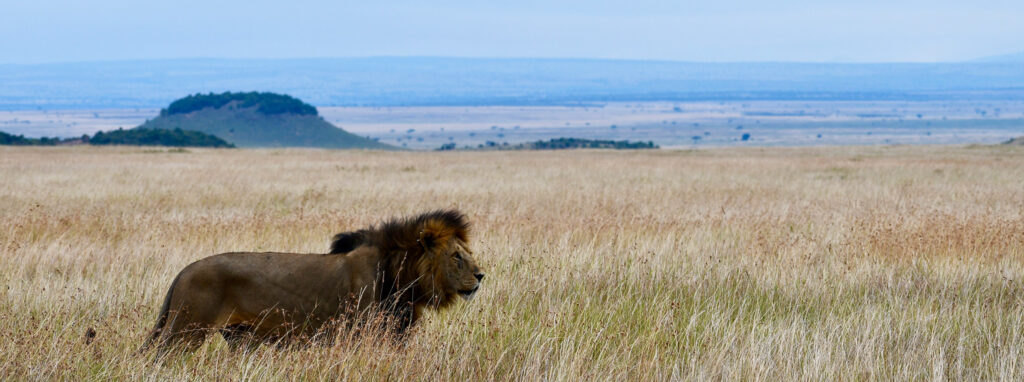
The prominent wildlife species encompass the big five game: African lions, African elephants, African Cape buffaloes, leopards, cheetahs, black rhinos, roan antelopes, Thomson gazelles, impalas, hyenas, and waterbucks. The Masai Mara National Reserve is home to over 470 avian species, establishing it as a premier destination for birdwatching in Kenya. Notable species include vultures, African pygmy falcons, black-bellied hart, turacos, secretary birds, ostriches, grey crowned cranes, guinea fowls, and Pel’s fishing owls, among others.
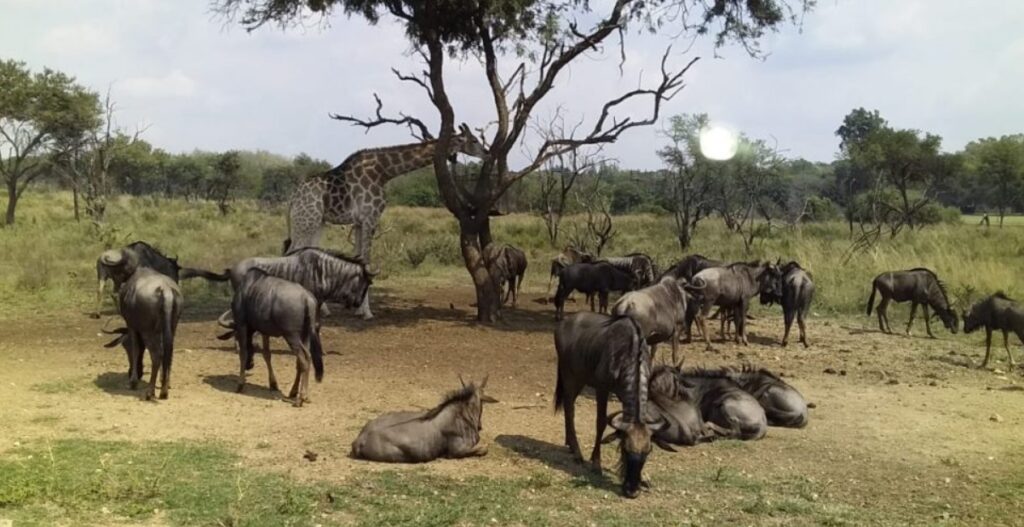
The Masai Mara safari includes numerous sights, notably the Great Migration of approximately two million wildebeest migrating from Serengeti National Park in Tanzania. This intriguing migration typically occurs annually from July to September, during which approximately 1.5 million wildebeest, zebras, and antelopes congregate in the yellow savannah in pursuit of sustenance and hydration.
Furthermore, visitors to Masai Mara National Reserve must partake in night drives, which provide an opportunity to observe the nocturnal activities of the wildlife in the reserve. Additionally, engage in activities such as wildlife drives, birdwatching, hot air balloon flights, bush meals for breakfast, lunch, and supper, as well as visits to Maasai cultural villages, among others.
Exploring Masai Mara National Reserve
The Masai Mara National Reserve exhibits a humid environment and maintains an average temperature relative to other regions in Kenya. The Masai Mara National Reserve receives rainfall from March to May and has short rains from November to December. From July to October, the Masai Mara National Reserve experiences arid conditions and features lush vegetation, rendering this period advantageous for visitors. High temperatures are observed from December to January, marking the peak season of Masai Mara National Reserve, while cool temperatures prevail from June to July.
During the migration season, a diverse array of species inhabits the Masai Mara National Reserve, including large felines such as lions, cheetahs, and leopards that feed upon their victims. The wildebeest’s life cycle promotes the expansion of other species, as its continuous search for water and food provides predators with opportunities to prey on them, resulting in robust progeny. The travellers have the opportunity to capture exceptional photographs, rendering the entire safari a beautiful and exciting experience that is indispensable in one’s lifetime.
The Great Migration in the Maasai Mara.
The Great Migration is undoubtedly one of the most popular tourist attractions in the Masai Mara region. The annual migration of 1.5 million wildebeest from the Serengeti to the Masai Mara occurs in the Mara from July to October. The savannah is teeming with wildebeest, zebras, and several other fauna throughout this season. This is the season when the Mara and Talek Rivers converge dramatically. This season is drier than normal, resulting in reduced greenery, so facilitating easier wildlife observation.
While the Masai Mara is an excellent destination for wildlife observation throughout the year, numerous visitors plan their trips to align with the Great Migration. At this time of year, the Masai Mara National Reserve and its renowned locations can become extremely crowded. At some point, you may encounter a line of safari vehicles besides another individual. If you encounter significant traffic delays during your commute, you may opt to visit the Masai Mara at an alternative time of year or select a more affluent, less touristy conservancy for your stay. Acquire comprehensive knowledge on the Great Migration.
Lion season.
The Masai Mara birthing surge commences after a bountiful rainy season and a surplus of nourishment and hydration. The enormous felines emerge as the plains teem with vitality, showcasing newborn wildebeest, zebra, and other herbivore calves traversing the landscape. It is an integral component of the life cycle. The ‘Lion season’ is designated as the period from January to March. With the cessation of rainfall, grass growth has diminished, facilitating easier wildlife observation. This season is optimal for observing solitary lions or potentially a pride in their natural habitat.
Green season.
The ‘heavy rains’ in the Masai Mara commence from March to May. The arid African savannah is revitalised by the spring rains, which, akin to a paintbrush, imbue the landscape with vibrant hues of green, gold, and other vivid colours. The expansive plains function as a nursery for juvenile impalas, antelopes, and various other species, while the arid savannah transitions into undulating grasses. Anticipate observing several high-velocity pursuits across the plains throughout this season, as the newcomers attract various predators. The optimal period for birdwatching is the verdant season. Numerous vibrant groups of migratory birds descend onto the savannah, gathering around the newly revitalised, blossoming trees brought to life by the rains. The expense of residing at safari hotels and tented camps is considerably reduced during the rainy season. Masai Mara lodges and camps significantly lower their prices during this period, as most tourists choose to visit during the Great Migration. Explore the meteorological conditions and climatic characteristics of Maasai Mara National Reserve.
Annual overview of Masai Mara.
January until February.
The past three months have been extremely hot and arid. Visit a waterhole for exceptional wildlife observation, as water is more limited during this season. Be vigilant regarding the skies; avian migration is presently at its peak.
March, April, May.
The ‘long rains,’ the most intense of Masai Mara’s two rainy seasons, transpire throughout this period. The months remain warm, however April is especially characterized by precipitation. The rains facilitate the resurgence of indigenous flora, transforming the Masai Mara into a vivid green landscape.
June, July, August, September, October.
Favorable weather characterized by warm, arid conditions and predominantly clear, azure skies above. The Masai Mara experiences a peak season for safari travel owing to optimal weather conditions for wildlife observation.
November until December.
The “short rains,” the less prominent of the two rainy seasons, commence in the last two months of the year. Anticipate overcast, dreary conditions accompanied with afternoon precipitation. Despite the mornings remaining relatively cool, temperatures remain elevated.
Comparison between dry season and wet season.
When contemplating a visit to Masai Mara, evaluate the merits and drawbacks of travelling during the dry season against the wet season
Accessing Masai Mara National Reserve
The Masai Mara National Reserve is located around 241 kilometres south-east of Nairobi City, accessible by either road or air transport. Travelling by vehicle from Nairobi city to Masai Mara National Reserve requires approximately five hours. Transportation options include bus, taxi, or private vehicle. It is advisable for visitors to utilise 4WD vehicles to traverse the muddy paths leading to Masai Mara National Reserve. Visitors that choose air travel may utilise chartered flights operating from Jomo Kenyatta International Airport or Wilson Airport in Nairobi.
Accommodation options in Masai Mara National Reserve
The Masai Mara National Reserve offers a variety of accommodation options that facilitate relaxation and enhance your safari experience in Kenya. The accommodations encompass upscale, mid-range, and budget options, including Maasai Serena Safari Lodge, Cottar’s 1920s Camp, Base Camp Masai Mara, Mara Bush Camp, Mpata Safari Club, Matira Camp, Acacia House, Mara West Chalets, Fairmont Mara Safari Club, Elewana Sand River, Tembo Tented Camp, Governors Private Camp, and Mara Ngenche Luxury Tented Camp.
In summary, the Masai Mara National Reserve is accessible year-round, irrespective of the season, whether or not one witnesses the huge migration. You will still encounter an unparalleled adventure throughout your safari in Africa.