 info@gorillatrekkinginafrica.com

Things to do in Lake Nakuru National Park
Things to do in Lake Nakuru National Park: What activities are available for tourists at Lake Nakuru National Park? The activities available at Lake Nakuru National Park are numerous, ranging from leisurely drives within the park to camping in the wilderness, allowing for an authentic experience of the African landscape. The national park provides an excellent opportunity for tourists to experience remarkable moments of relaxation and rejuvenation. Lake Nakuru National Park is classified as one of Kenya’s ‘Premium Parks’ because of its famous attractions that attract foreign tourists and contribute to the nation’s tourism brand. Lake Nakuru was designated a Ramsar Site in 1990, recognised as an Important Bird Area and part of the Kenya Lake System inside the Great Rift Valley World Heritage site. The national park is famous for its substantial flocks of flamingos that feed there; however, recent hydrological changes have resulted in sporadic movements and diminished gatherings at Lake Nakuru. Nevertheless, numerous activities are available for guests to engage in during a safari at Lake Nakuru National Park, and we will examine some of the more prevalent activities, including;
Birdwatching
Lake Nakuru National Park is renowned as a haven for birdwatchers, including an extensive array of over 400 bird species. The park’s most renowned inhabitants are the pink flamingos, which gather in the lake’s shallow waters to consume the plentiful algae. The optimal period for birdwatching is during the wet seasons when flamingos congregate in remarkable quantities, transforming the lake into a canvas of pink hues. During your birdwatching excursions in the park, you will have the opportunity to observe a diverse array of avian species, including the Madagascar Pond-Heron, Lesser Flamingo, Pallid Harrier, Greater Spotted Eagle, and Grey-crested Helmet-shrike, in addition to substantial gatherings of Greater Flamingo. Black-necked Grebe, Little Grebe, Great White Pelican, Yellow-billed Stork, African Spoonbill, Common Hoopoe, Hornbills, Owls, African Fish Eagle, Mountain Buzzard, Pelican, Eagles. Secretary Bird, Osprey, African Paradise Flycatcher, White-necked Raven. Grey-crested Helmet-shrike, Von Erlanger’s Batis, Red-fronted Parrot, Lanner Falcon, Greater Kestrel, African Pygmy Kingfisher, Pied Kingfisher, Rufous-crowned Roller, White-throated Bee-eater, Olive Bee-eater, Red-and-yellow Barbet, White-headed Barbet, Brown-backed Woodpecker, Grey Woodpecker, and Yellow-bellied Eremomela, among others.
Game Drives
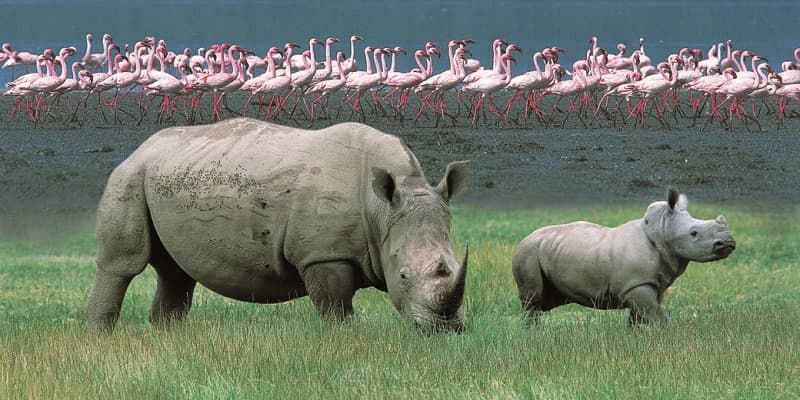
One of the most thrilling methods to explore Lake Nakuru National Park is through its renowned wildlife drives. Visitors on a Kenya safari in the park can participate in guided excursions in open-top vehicles, providing an exhilarating opportunity to observe the area’s rich species in their natural environment. The park hosts a remarkable diversity of species, including black and white rhinoceroses, lions, leopards, buffalo, warthogs, hyenas, African elephants, and numerous ungulates such as giraffes, zebras, and several antelope species. Game drives generally commence in the early morning and late afternoon, coinciding with the active periods of animals. During your game drive tours in the park, you will get the opportunity to observe remarkable wildlife species in their natural habitat while appreciating the stunning surroundings, including the lake’s bright colours and the majestic vistas of the Great Rift Valley, among others.
Photography
Expertise Lake Nakuru National Park is an excellent locale for photographers, including breathtaking landscapes and a plethora of wildlife tours that enhance the composition. The park is renowned for its scenic vistas, which include the tranquil lake, undulating hills, and stunning sunsets, rendering it a perfect location for landscape photography. A visit to the park is deficient without documenting the stunning spectacle of numerous flamingos adorning the shoreline, producing a vivid contrast of pink and blue. The park features numerous captivating views where tourists on a photography trip can capture the stunning scenery, such as Baboon Cliffs, which offers a panoramic vista excellent for showcasing the park’s vast splendour. The abundant biodiversity presents opportunities to capture images of diverse animals, ranging from stately elephants to elusive leopards, with each moment offering a distinct chance to chronicle wildlife in situ.
Nature walks
Traversing Lake Nakuru National Park on foot via nature paths enables visitors to connect closely with the environment, providing a distinct viewpoint compared to that of a car. This guided walk navigates tourists through diverse ecosystems, facilitating a closer engagement with the flora and wildlife characteristic of the region. During guided nature walks, you will have the opportunity to observe a diverse array of wildlife, including lions, buffalo, cheetahs, elephants, leopards, both black and white rhinos, giraffes, waterbucks, and numerous bird species such as lesser and greater flamingos, Madagascar Pond-Heron, Pallid Harrier, Greater Spotted Eagle, and Grey-crested Helmet-shrike, as well as large gatherings of Greater Flamingos, Black-necked Grebes, Little Grebes, Great White Pelicans, Yellow-billed Storks, African Spoonbills, Black-winged Stilts, and Grey-headed Gulls, among others. The park’s knowledgeable guide imparts insightful narratives of the park’s flora and fauna, as well as the conservation initiatives designed to safeguard endangered species. Nature walk excursions will facilitate encounters with local populations, providing insights into their everyday lives and customs, among other aspects.
Outdoor camping
Camping at Lake Nakuru National Park provides a distinctive opportunity to engage with nature and experience closer wildlife interactions. The park provides multiple authorized camping sites, enabling visitors to set up tents and immerse themselves in the sounds of the nature at dawn. This immersive experience enables travellers to observe the sights and sounds of nightlife in the park, including the calls of distant hyenas and the rustling of nocturnal creatures, among others.
Preservation and community involvement
Visiting Lake Nakuru National Park provides tourists with the opportunity to participate in conservation initiatives that assist wildlife protection and community development. Various programmes offer visitors to engage in activities such as tree planting, wildlife monitoring, and anti-poaching measures, enabling them to directly contribute to the conservation of the park’s distinctive ecosystems. Visitors can engage in cultural exchange, acquiring knowledge of local traditions and practices while supporting community-based initiatives, among others.
Best time for visiting Lake Nakuru National Park.
The optimal period to visit Lake Nakuru National Park is during the dry season, generally occurring from June to March. During this period, the grasslands are less dense, facilitating the observation of animals such as rhinoceroses, buffaloes, elephants, lions, giraffes, zebras, and other antelopes in their natural habitat. Furthermore, the lake’s water levels are diminished, attracting substantial flocks of flamingos and resulting in a stunning spectacle. Visiting the park in the dry season entails a reduced likelihood of precipitation, facilitating more pleasurable game drives and outdoor activities. The temperatures are often milder, enhancing comfort for tourists to explore the park and appreciate the breathtaking vistas of the surrounding surroundings.
Another consideration when considering a visit to Lake Nakuru National Park is the Great Migration of wildebeest and zebras, which generally transpires in the adjacent Maasai Mara National Reserve from July to October. This indicates an increased probability of encountering these intriguing species traversing the park during this period, enhancing the whole safari experience.
Accommodation options for a safari in Lake Nakuru National Park, Kenya
Tourists intending to discover the concealed treasures of Lake Nakuru National Park should not concern themselves with accommodation options. Lake Nakuru National Park offers a diverse range of lodging alternatives for travellers during their Kenyan safari. The accommodation options encompass luxury, midrange, and budget categories, including Ziwa Bush Lodges, Lake Nakuru Sopa Lodge, Top Cliff Lodge, The Cliff Nakuru, Sleepway Cottages, Sarova Lion Hill Camp, Lake Nakuru Flamingo Hill Tented Camp, Mbweha Camp, and Lake Nakuru Lodge, among others.