 info@gorillatrekkinginafrica.com

Oldonyo Sabuk National Park
Oldonyo Sabuk National Park, derived from the Maasai term for “large mountain” or “Kyanzavi” in Kamba, is both a mountain and a town located in the Kyanzavi Division of Machakos County, Kenya. The driving distance from Nairobi via the Embu-Nairobi highway is 75.5 kilometers. It is located 18.5 kilometers southeast of Thika Town along the Thika-Garissa Road, which is flanked by renowned pineapple orchards on both sides.
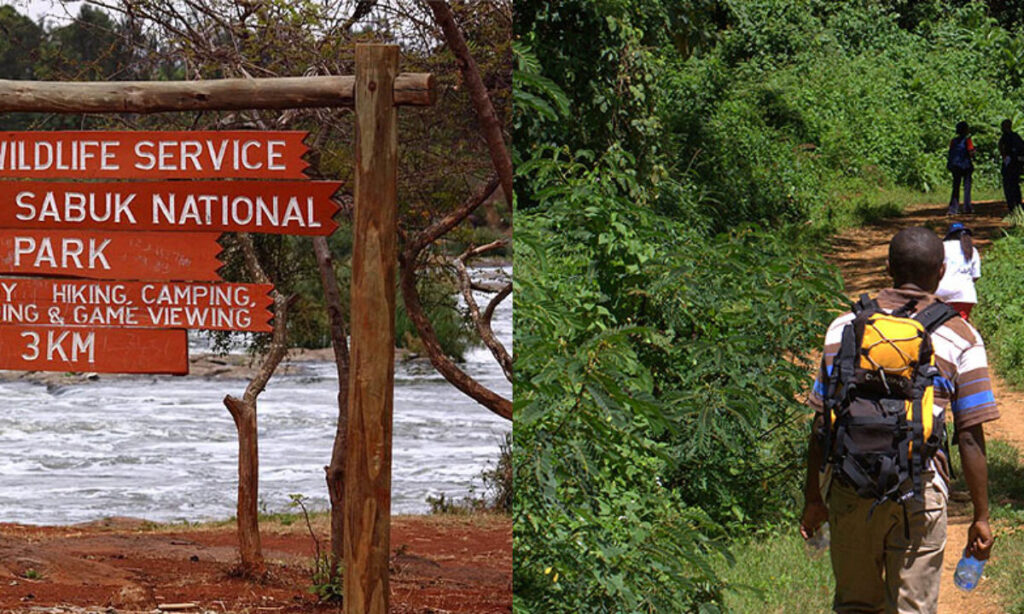
Approximately 18 km east of Thika town, there is a crossroads heading south, indicated by Kenya Wildlife Service signage. Two kilometers south of this junction is the renowned Fourteen Falls, regarded as one of Kenya’s most remarkable features. Adjacent to the river are St. Johns Kilimambogo Teachers College and Immaculate Heart of Mary Mission Hospital. Donyo Sabuk settlement is located one km from Fourteen Falls, directly across the Athi River, with a crossroads that leads to a game park covering an area of 20.7 km² and another junction that directs to the grand residence of Donyo Sabuk.
William Northrup McMillan was the inaugural white settler in this region, significantly impacting the area. Adjacent to the peak are the graves of Sir William Northrup McMillan (1872–1925), his wife Lady Lucie, and their dog. Additionally, there exists an additional grave for one Louise, who commenced employment with the Macmillans at the age of 13 until her demise. A multi-ethnic community of farms, owned by former squatters and their laborers, exists in the rural area. The mountain peak is located within the game park, while the remaining area is largely owned by the Kenyatta family. William Northrup McMillan was a philanthropist and multimillionaire who possessed properties in British East Africa. In 1905, he obtained a 99-year lease for 4,000 hectares (10,000 acres), which subsequently became known as Juja Farm. He built the five-bedroom Juja House, a three-bedroom manager’s bungalow, a two-bedroom bungalow named “Lucie’s Bolthole,” and three further bungalows accommodating the post and telegraph office, as well as quarters for drivers and gardeners.The structures were equipped with power, running water, and a sewage system, and in subsequent years, it emerged as a favored site for film crews.
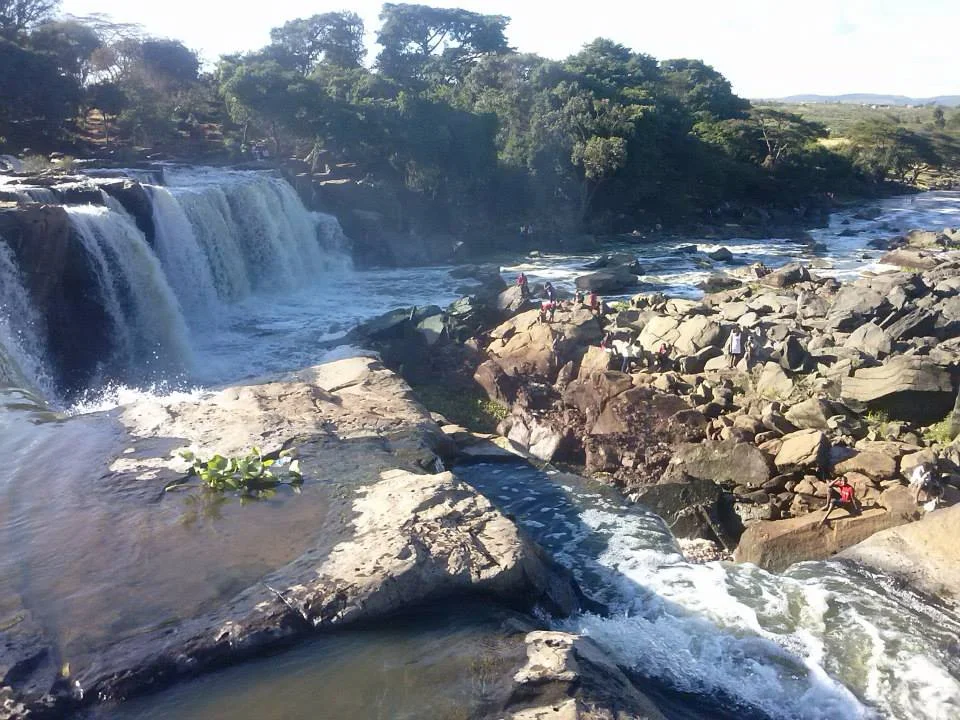
Ol Donyo Sabuk National Park was established in 1967 and is managed by the Kenya Wildlife Service. The mountain’s apex is located within the park. It is highly appealing to hikers or families seeking freedom and physical activity away from their vehicles. Access to the area is facilitated through the Fourteen Falls on the Athi River. The park’s landscape is exquisite, featuring vistas of both Mount Kenya and Mount Kilimanjaro, rendering it one of the region’s most remarkable viewpoints in Kenya.
Features of Ol Donyo Sabuk National Park
1: Fauna
This excerpt highlights the remarkable diversity of wildlife that Kenya’s safari tours offer, including species such as buffalo, colobus monkeys, baboons, bushbuck, impala, duiker, leopards, bush babies, porcupines, waterbucks, dik-diks, bush pigs, aardvarks, and a plethora of avian life. Notable bird species include the bronze sunbird, ring-necked dove, helmeted guinea fowl, white-browed sparrow weaver, augur buzzard, mourning dove, purple-breasted sunbird, grey-headed sparrow weaver, African hawk eagle, speckled mousebird, yellow-vented bulbul, African pied wagtail, great sparrowhawk, grey tit, starling, Mackinnon grey shrike, and bateleur.Ol Donyo Sabuk mountain ascends to 2,145 m (7,037 ft) from a predominantly flat region, necessitating a 4WD (4×4) vehicle for the steep ascent.
Tom Mboya, one of Kenya’s most vibrant politicians, was raised here. His father was employed as a laborer on the sisal plantation. Tom Mboya was enrolled at Kilimambogo Primary School, a Catholic missionary-sponsored institution, situated within the broader St. Johns Kilimambogo Teachers College.
2: The McMillan Castle
The structure that served as McMillan’s residence, a fortress by any standard, stands in magnificence. Over seventy-five percent of the house is secured with a lock and key. A section of it accommodates the Muka Mukuu Farmer’s Co-operative Society Ltd, a farmers’ cooperative. The area surrounding the residence is presently utilized for pineapple cultivation. The villagers are perplexed as to why a childless couple would construct such a large residence. The building is so expansive that Lord Macmillan and his wife would reside in one wing for a year before relocating to the other wing for the latter half of the year. The residents have not yet determined how to capitalize on this evident tourist magnet.
3: Club House (Kilavu)
During World War I, the castle functioned as a military hospital for British officers. The extravagant soirées occurred in the castle, where the infamous colonial maverick Colonel Ewart Grogan allegedly orchestrated wine-tossing and oversaw wife-sharing orgies that garnered international media attention. The inhabitants named the castle “Kilavu,” which translates to Clubhouse in Kamba.
Fourteen Falls
The Fourteen Falls holds historical and religious significance for both local locals and Asian immigration. Asians utilize the spot for leisure and spiritual ceremonies, dispersing cremated remains into the river under the premise that they would go to India via the Indian Ocean, so serving as a shrine. Others visit for leisure, maintaining the Happy Valley concept initially established by Lord McMillan; the neighboring village continues to cultivate the land in a manner reminiscent of Lord McMillan’s practices.
The best Time to visit
The majority of activities in Ol Donyo Sabuk National Park are optimally conducted during the dry season, including game-watching, trekking, nature walks, and mountain climbing, as the trails are drier and the vegetation is less dense. The aridest months occur from January to March. The period from April to June is characterized by high humidity and elevated temperatures, whereas from July to October, conditions are warm and arid. The period from November to December is characterized by warmth and precipitation. Birdwatching is optimal during the rainy season due to the abundance of food at Oldonyo Sabuk National Park.
Activities at Ol Donyo Sabuk National Park
Hiking
Hiking on Mount Ol Donyo Sabuk culminates at its peak, accessible by a 10-kilometer trek, which may be completed in 2 to 3 hours, depending on individual fitness and pace.
Game Drives
It involves traversing the grasslands of Ol Donyo Sabuk National Park in pursuit of wildlife safaris in Kenya. During the game drives, one may observe fauna such as leopards, bushbucks, bushbabies, porcupines, waterbucks, dik-diks, bushpigs, aardvarks, rock hyraxes, tree squirrels, buffaloes, and impalas, among other species in the plains or at water sources.
3: Ornithology Observation
While observing birds in Oldonyo Sabuk National Park, one may encounter various species, including the bronze sunbird, ring-necked dove, helmeted guinea fowl, white-browed sparrow weaver, augur buzzard, mourning dove, purple-breasted sunbird, grey-headed sparrow weaver, African hawk eagle, speckled mousebird, yellow-vented bulbul, African pied wagtail, great sparrowhawk, grey tit, starling, Mackinnon grey shrike, and bateleur, among others.
4: Camping
Oldonyo Sabuk National Park features approved camping spots suitable for camping with friends and family. During the camping experience, you will get the opportunity to witness the sunset and sunrise while listening to the sounds of animals in Oldonyo Sabuk National Park.
Nature excursions
Nature walks in Ol Donyo Sabuk National Park are exemplary pursuits for travelers wishing to fully appreciate nature; during this activity, participants can relish the breathtaking vistas, rivers, explore the woodlands, and stroll along the foothills of Ol Donyo Mountain.
Picnicking is permitted in Ol Donyo Sabuk National Park, with The Fourteen Falls being one of the premier picnic locations within the park.
Available accommodations at Ol Donyo Sabuk National Park
Ol Donyo Sabuk National Park offers a diverse array of accommodation alternatives, including camping, midrange, economy, and luxury options such as Fourteen Falls Lodge, Ol Donyo Sabuk Resort, Malazi Thika, Eton Hotel, and The Coconut Grill, among others.