 info@gorillatrekkinginafrica.com

Best Things To Do in Juba and South Sudan
Things To Do in Juba and South Sudan, South Sudan possesses numerous attractions; but, persistent civil wars have precluded global awareness of its biodiversity and cultural offerings. Just as the country appeared to be recuperating following its independence in 2011, internal conflicts necessitated a renewed pause in the development of its tourism resources and overall economy. Tourism in South Sudan presently accounts for less than 4 percent of the nation’s economy. The primary hurdles facing tourism, aside from insecurity in specific regions, include insufficient promotion, a scarcity of high-quality lodging, a lack of trained personnel to oversee the business, inadequate road infrastructure, financial deficiencies, and ineffective legislation.
The perpetual civil battles in specific regions of the country have significantly deterred potential visitors from traveling to Juba or any of the outlying towns. All media outlets are saturated with adverse reports regarding the political climate in the country. Few discuss the advantages or the reality that South Sudan has one of the greatest animal migrations globally. Even fewer discuss the lakes, rivers, 14 national parks, national reserves, the world’s largest swamp (the Sudd), and arguably the premier birdwatching location globally. Certain national parks in South Sudan surpass the size of certain countries in East Africa.

Many erroneously presume that Juba represents the entirety of the county’s offerings. The most remarkable aspects of South Sudan are encountered in the countryside. The wildlife and extraordinary cultures of South Sudan remain sequestered in the expansive and inaccessible wilderness, awaiting discovery with the assistance of a competent local guide.
To enable tourists to explore the country’s remarkable features, it is imperative for the nation to enhance its infrastructure and promote the destinations vigorously. The national road network remains inadequate, and additional high-quality hotels must be constructed in the national parks to accommodate both budget and luxury travelers. There are already tangible benefits present. Juba International Airport is seeing rapid expansion, with major firms from East Africa establishing a presence in the city.
What is the current safety status of traveling to South Sudan?
Flexibility and open-mindedness are essential while visiting countries such as South Sudan or the Democratic Republic of Congo. Although traveling to South Sudan or Juba may appear perilous or intimidating, the actual circumstances on the ground are markedly different. Juba and numerous larger cities and towns can be explored without complications, if one is accompanied by an appropriate local guide. Numerous international expatriates operate in Juba and even the most isolated regions of the country without significant security incidents. The Capital Juba is notably secure due to the substantial expatriate population and the presence of UN peacekeeping personnel monitoring the city. This does not imply that you should disregard all caution while traveling to South Sudan. Prior to venturing beyond the capital, one must take caution. Inquire with your embassy of the current security conditions in the country before to traveling to a specific destination. As previously stated, it is essential to engage a qualified and dependable local guide to accompany you at all times. The Guide will assist you in navigating the political dynamics among the various contending partisan factions in both urban and rural areas. Do not anticipate high-quality infrastructure, such as hotels and highways. Anticipate extended travel durations and alterations in itineraries due to the volatile security conditions in certain minor cities outside Juba. Certain tourists perceive uncertainty as the element that renders travel to specific places exhilarating.
What is the benefit of proceeding now rather than postponing until later?
The reward is in uncovering locations that only a select few have ever traversed. Sudan, akin to the Democratic Republic of Congo, provides intrepid travelers a chance to encounter Africa in its primordial state. Untouched nature, sequestered and uncommon cultural communities Activities in Juba and South Sudan that remain unaffected by technology. You will see locations that will eventually gain immense popularity, and in your later years, you will take pleasure in knowing you were among the pioneers to experience them. Return to security. For individuals seeking novelty, embracing adventure and danger to uncover nature’s finest offerings, we advise against postponing a decision to visit South Sudan until complete tranquility is restored. The media should not impede anyone from uncovering the several remarkable aspects of South Sudan. The civil conflict resulted in poaching within the national parks near Kigali, but those in more remote regions remained isolated, with animal populations reportedly increasing tenfold. Irrespective of the textual content, we must not overlook the nation’s extensive mineral resources, particularly oil, which will ultimately be utilized to enhance infrastructure and the tourism sector. It is really a question of time. What are the principal tourist attractions in Juba and South Sudan? Prior to proceeding with the attractions in Juba city, you may find our post on the tourist places in Mombasa intriguing.
Tourist Attractions in Juba and South Sudan
Explore the capital Juba, along with the other cities and towns: Juba serves as the capital of South Sudan and is among the rapidly expanding cities in Africa. It possesses excellent hotel facilities, with numerous additional ones under construction. Juba International Airport is increasingly congested daily due to direct flights from major countries in the Middle East and Africa. The roads both within and outside the city are improving, and significant corporations have established a presence to capitalize on the various economic prospects. Juba may be thoroughly explored during one or two days. The capital offers numerous intriguing attractions and sites to explore. Certain ones will be addressed as individual attractions in subsequent chapters.
We advise individuals entering the capital by vehicle from Uganda or the Democratic Republic of Congo to visit Juba International Airport. The University of Juba is the largest public university in the nascent nation and a commendable destination to explore. The University was established in 1977 but subsequently moved to Khartoum, Sudan, due to civil upheaval in the 1980s. Students receive instruction in English. Following your visit to the University, you may also visit the newly inaugurated presidential palace, which opened in 2011, three months subsequent to the nation’s independence. Certain sections of the palace are accessible to visitors; however, photography is prohibited.
We propose ascending Jebel Kujur Mountain for the optimal city perspective. This mountain has an elevation of merely 684 meters. The original name was Korok, but it was renamed to Kuruk due to the frequent visits by individuals performing rituals and various sorts of witchcraft at the summit. You may also examine other historical edifices from the colonial era or visit the monument situated at the center of the primary roundabout, where the major city clock is positioned. The largest market in Juba is referred to as Konyo Konyo. The environment is somewhat hectic; yet, it is arguably the optimal location to witness the local populace congregating to purchase vegetables, fruits, and groceries.
For a secure venue to socialize or imbibe in the evenings, we suggest visiting a bar located within one of the premier hotels. Consider attending Logali House on Wednesday evening for the latest blockbusters. Avoid walking at night and refrain from carrying valuables in public spaces. A local guide will inform you that certain areas in the city are highly unsafe and should be avoided entirely.
During an extensive trip of the country, consider visiting significant towns such as Aweil, Kodok, Deim Zubeir, Bentui, Gondokoro, Tonj, Gongrial, Torit, Yambio, Rokon, Kaya, Yei, Wau, and Rumbek (the historic capital). Torit is the location where the initial armed conflict commenced in 1955. One may visit the burial site of the initial courageous and patriotic individuals who sacrificed their life for the emancipation of the South Sudanese people. The Mausoleum of Rev. Father Saturnino Ohure merits a visit when in Torit. The Catholic priest perished while combatting alongside his community in the quest for independence. Should you find yourself in Nimule, be sure to visit the renowned Tamarind Tree. This is the location where explorer Sir Samuel Baker paused during his quest for the Nile’s source in 1869. The tree persists to the present day. Most of these settlements are accessible by air or via the lengthy and erratic roads.
Boma National Park:
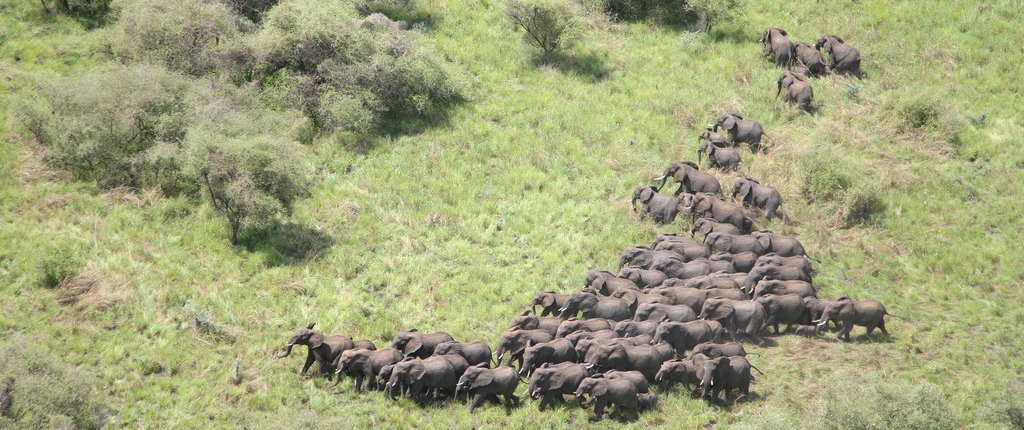
Boma is among the largest national parks in Africa. It encompasses an area of 22,800 square kilometers and is located in Jonglei State, near the border with Ethiopia. Between March and April, as well as November and January, one of the world’s most significant wildlife migrations transpires in the park. Approximately two million animals, including kobs, gazelles, and several antelope species, migrate from the Sudds and Bandingilo National Park to Boma National Park and then to Ethiopia. The animal migration is governed by the impending rainfall. In the arid months from November to January, the animals return to graze on fresh green pastures after the inundation of the Nile River. Boma National Park is home to more than 7,000 elephants, baboons, giraffes, and oryx.
Bandingilo National Park:
This national park is located in the Equatorial region of South Sudan and remains largely unvisited by visitors. Established in 1992, it encompasses an area exceeding 10,000 square kilometers. This national park is significant in South Sudan due to its attraction of the extensive wildlife migration. The park boasts remarkable biodiversity and houses giraffes, lions, leopards, cheetahs, gazelles, elephants, and reedbuck. Additionally, you ought to peruse the page regarding events in Dar es Salaam.
The Sudd
The Sudd is the largest swamp globally, encompassing around 30,000 square kilometers. It is among the premier avian observation locations globally. The perpetual presence of water in the wetland renders the soils rich, hence sustaining diverse vegetation, wildlife, and avian species. More than 450 avian species inhabit this area, including black-crowned cranes, big white pelicans, and shoebill storks. The Sudd is highly conducive to fishing.
Nimule National Park:
This national park was founded in 1954 at the border with Uganda. It encompasses around 540 square kilometers. It is readily accessible and serves as an excellent waypoint for those entering South Sudan from Uganda. Nimule National Park is comparatively well-developed due to its proximity to the city and its diverse wildlife, including leopards, baboons, zebras, warthogs, and other antelope species. The park features an office, and rangers are available to guide you on a tour of the park or by boat to Opekoloe Island, where big herds of elephants and certain predators can be observed. Additional fauna in the park comprises hippopotamuses, zebras, crocodiles, leopards, warthogs, bushbucks, baboons, jackals, primates, hyraxes, and the Uganda kob. If you intend to visit Kenya soon, you may find the article regarding social venues in Nairobi intriguing.
The Wau Zoo is located near a river in the state of Bahrel Ghazal. The primary attraction in the zoo is the striped hyena, the largest species of hyenas. The zoo also houses several wild species, including antelopes, warthogs, crocodiles, ostriches, and primates such as baboons.
Mount Kinyeti and the Imatong Range:
For mountain climbing enthusiasts, Mount Kinyeti presents a formidable hiking challenge. Mount Kinyeti, at an elevation of 3,187 meters, is the highest peak in South Sudan. It is situated in the secluded and hardly explored Imatong Mountains near the Ugandan border. Ascending to the summit reveals unspoiled wildness, wooded inclines, and the chance to observe fauna like as leopards, buffaloes, and elephants inhabiting the Imatong Forest Reserve.
White Nile:
The Nile River originates in Uganda and traverses other countries before emptying into the Mediterranean Sea in Egypt. South Sudan is one of such countries. The Nile River has two principal tributaries: the White Nile and the Blue Nile. The name originated from the river’s hue. The Nile’s hue alters at this location because to the clay soil. The White Nile traverses Juba, providing tourists in the capital with the ability to visit it without undertaking extensive travel. It is advisable to visit the Juba Bridge and appreciate the river from above, recognizing its passage through multiple countries. Fishermen and transport vessels can be observed conducting their usual activities. The White Nile is comparatively tranquil and flows smoothly.
Nyakuron Cultural Center:
This is arguably the premier destination to experience the unique culture of the South Sudanese people. Similar to many nations in Africa, the tribal communities in South Sudan esteem dancing, singing, and storytelling as means of showcasing the virtues of their culture. The Nyakuron Cultural Center was established in 1976 to exhibit the cultural history of the Southern Sudanese populace. It features an expansive garden, a nightclub, an outdoor stage, and an auditorium.
Whitewater rafting:
Did you believe that whitewater rafting was exclusively available in Uganda? Consider carefully. A whitewater rafting team has been established near Nimule, providing daring guests the chance to navigate the formidable Nile rapids from Nimule to the capital, Juba. The tourist attractions of South Sudan offer a whitewater rafting experience that is particularly daring, since it traverses regions inhabited by hippos, crocodiles, antelopes, primates, and elephants. There are locations on the islands and tranquil waterways for sport fishing or birdwatching. If you are in Juba for the weekend, you may reserve a whitewater rafting excursion with a firm named African Rivers. They will collect you from the capital and transport you to the Fola Falls in Nimule National Park. The activity commences early in the morning. The initial eight kilometers consist of grade 4 rapids, which may be daunting for novice rafters. Subsequently, conditions improve as the rapids transition to grades 3 and 2.
Tour the John Garang Mausoleum:
Garang was the esteemed former leader of South Sudan who perished in a helicopter crash while returning from a summit in Uganda. He was the head of the freedom movement that opposed the oppressive regime of the Sudanese government until the nation achieved independence. The Mausoleum is located on the Avenue of Nations, a site designated for independence celebrations. Visit the Mausoleum to honor a leader regarded as the father of South Sudan. The facility is rigorously secured, and it is imperative to exhibit politeness when signing the visitor’s log to ensure unimpeded access. The establishment features a portrait of the former president and flags of South Sudan. The grave is rigorously secured and confined within a specialized enclosure.
The All Saints’ Cathedral:
This is the principal Christian worship center in Juba. It is situated between Gombura Street and Lanya Street. The Sunday prayers draw several prominent individuals in Juba and might be a captivating venue. Three services are held on Sunday – one in English, one in Zande, and one in Arabic. Plans exist to construct a significantly larger church capable of accommodating the substantial number of worshipers.
Wau Cathedral:
The Wau Catholic Cathedral, constructed in 1913, serves as a significant emblem of the influence of Christian missionary organizations in the nation’s growth. It features remarkable architectural designs and includes rare glass windows and stone decorations that distinguish it from the lesser churches in the vicinity.
Attend a Dinka Cattle Camp or Cattle Market:
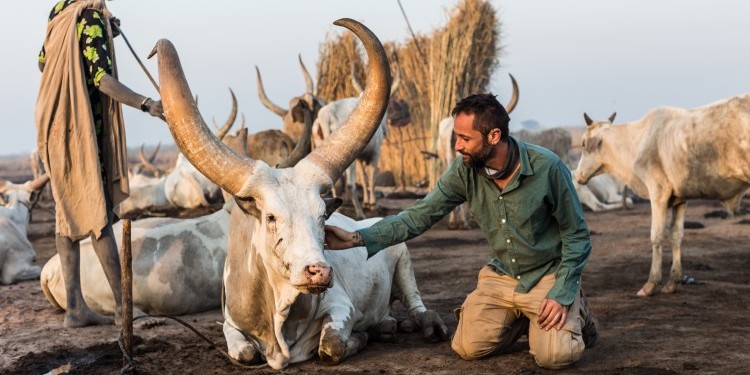
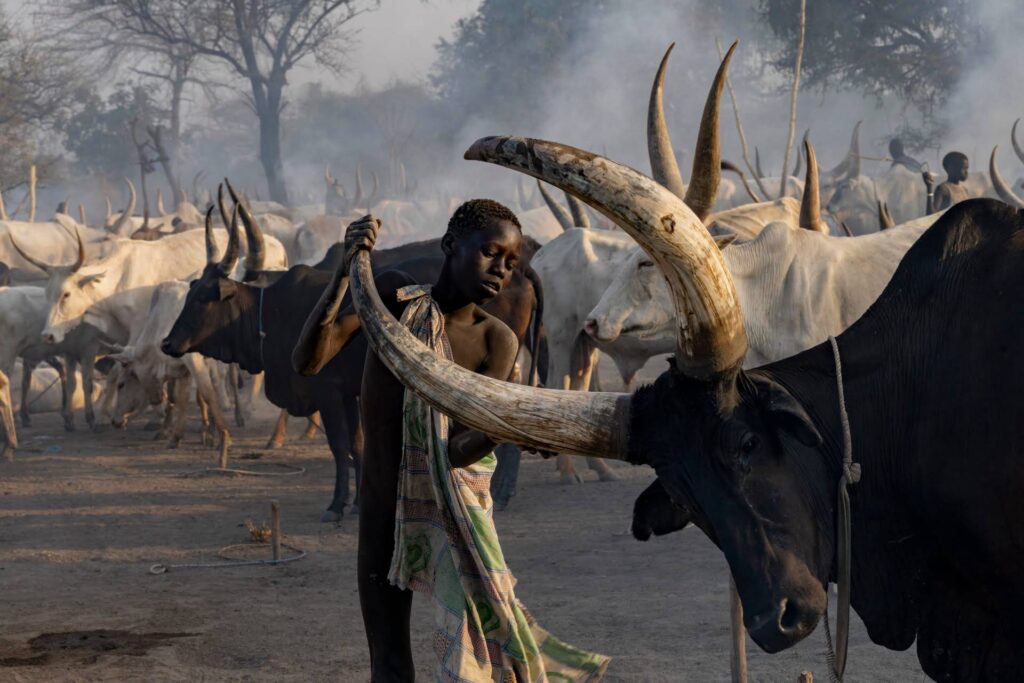
The Dinka constitute the most prominent and largest ethnic group in South Sudan. Although numerous individuals have relocated to the capital and other administrative regions, the majority continue to be nomadic pastoralists in South Sudan. Cattle significantly influence the social standing of individuals and families, with bride prices occasionally surpassing 400 cattle. Their livestock camps may accommodate over 600 head of cattle. Visiting one of the camps will provide insight into their lifestyle, which is based on their animals. The cattle supply nearly all the essentials for the owner’s survival. If you are in Juba and have difficulty accessing the cattle camps outside the city, you may visit the cattle market in the city center to observe animals being sold. Cows retain significant symbolism in South Sudan, and a fully mature long-horned white bull is a remarkable sight.
Observe Wrestling at Bor’s Freedom Square:
Wrestling is a customary sport among numerous tribes in South Sudan. Participants disrobe their upper garments and confront one another in a duel before a substantial audience. A prize for the victors may consist of a monetary amount or livestock. To view this, you must visit the square on weekends.
Dine externally:
The substantial humanitarian and expatriate presence in Juba has resulted in the creation of several excellent restaurants in the capital. There exist both high-end and economical eateries that operate late into the evening. To enhance your interaction with the local populace, consider dining at one of the more affordable establishments that serve traditional cuisine. What are the premier restaurants in Juba? We should commence with Da Vinci, which offers international, Italian, and vegetarian cuisine. Notos Lounge Bar and Grill offers Indian and Mediterranean cuisine. Spice ‘n Herbs is renowned for its exceptional Chinese, Italian, and Indian cuisine. One may also patronize Home and Away for Thai and other Asian cuisines. Il Paradiso and Juba Bridge Hotel Restaurant are the premier destinations for those seeking African, specifically Ethiopian, cuisine. For superior burgers, soups, pies, cakes, and fresh salads, Le Bistro is a recommended destination. Additional noteworthy establishments include Istanbul, specializing in Turkish and Middle Eastern cuisines, and Villa Marvella, ideal for a quick snack after a long workday.