 info@gorillatrekkinginafrica.com

Hill vs Mountain: What’s the Difference?
Hill vs Mountain, the fundamental distinction between a hill and a mountain resides in their elevation and the gradient of their slopes. Mountains are typically taller and steeper than hills; however, particular requirements may differ according to local or national classifications.
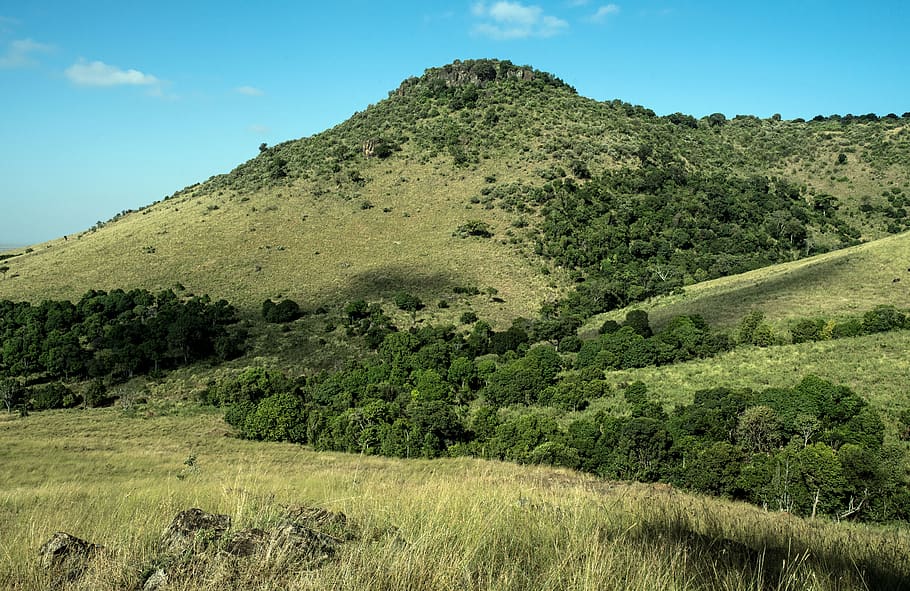
Hills
Hills typically possess an elevation of less than 2,000 feet (610 meters).
Rise gradually from the adjacent landscape, exhibit a more gradual contour, and typically possess a less abrupt incline in comparison to mountains
Mountains
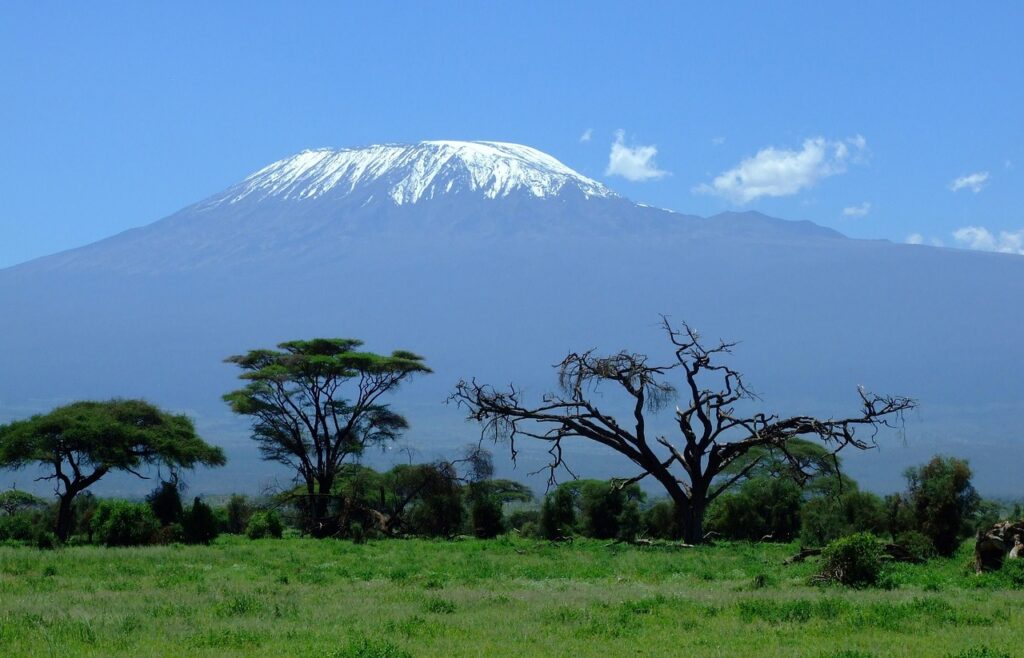
Mountains often possess a height over 2,000 feet (610 meters).
exhibit steeper inclines and greater prominence, frequently characterized by rough topography, encompassing peaks and ridges
Historical Definitions
The definitions of hills and mountains have changed over time. They can differ markedly based on geographical environment and the standards established by various nations or organizations. A widely acknowledged definition distinguishing a hill from a mountain is lacking, and these labels are frequently applied subjectively, influenced by local cultural and practical factors.
Historically, the differentiation between a hill and a mountain was primarily based on popular impression and local terminology rather than precise measurements. In numerous languages and cultures, the terminology for hills and mountains is interchangeable or contingent upon context, without a definitive height criterion.
In the United Kingdom, a mountain is conventionally defined as any peak that reaches a minimum elevation of 2,000 feet (about 610 meters). Nonetheless, this is not an absolute criterion, and other lesser summits are nonetheless widely regarded as mountains.
The U.S. Geological Survey (USGS) lacks an official terminology that differentiates hills from mountains in the United States. Informally, a height of 1,000 feet (305 meters) is frequently referenced, albeit this is not uniformly applicable.
Geographic and Geologic Perspectives
Geologists typically do not employ a rigid elevation standard to classify mountains, prioritizing the processes underlying their development instead. They examine elements like as the structure, history, and composition of the Earth’s crust.
Mountains frequently arise from tectonic forces or volcanic activity. These processes elevate the earth’s crust to considerable altitudes, resulting in the formation of entire mountain ranges rather than isolated summits. Mountains are frequently less accessible, rendering them less appropriate for agriculture. Nonetheless, their inclines sustain varied ecosystems and are favored for pursuits such as mountaineering, skiing, and hiking.
Hills are typically created by erosion or minor tectonic movements of the Earth’s crust. They typically do not arise from tectonic plate collisions but may be relics of ancient mountains eroded over millions of years by weathering and erosion. Hills are more accessible and frequently utilized for agriculture, habitation, and leisure activities. Their modest inclines render them suitable for strolls and as vantage places to admire the surrounding scenery.
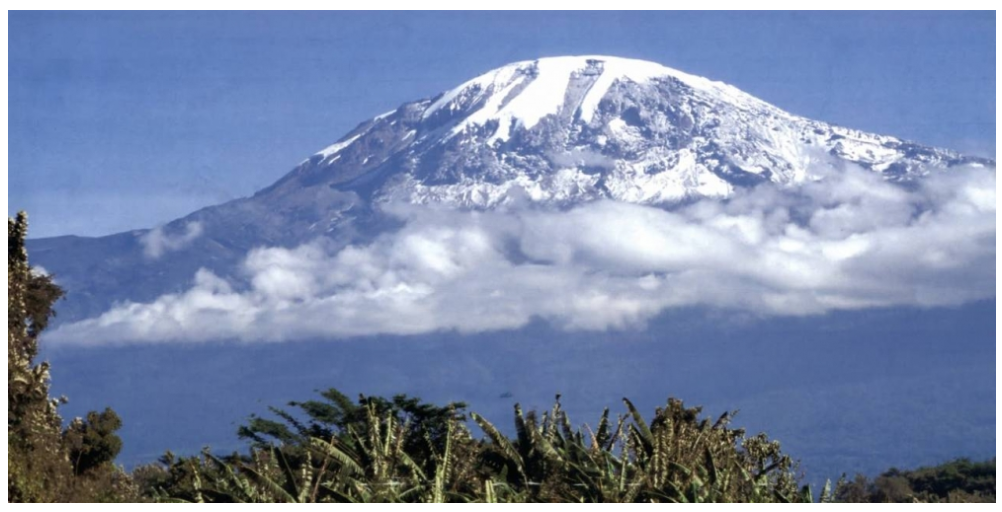
Mount Kilimanjaro, Africa’s tallest peak, rises to an elevation of 19,341 feet (5,895 meters) above sea level. Due to its isolation, its prominence is roughly equivalent to its elevation—19,308 feet (5,885 meters). Although its absolute elevation is far lower than that of the tallest peaks globally (Mount Everest stands at 29,029 feet/8,848 meters), Mount Kilimanjaro is among the most prominent mountains in the world.