 info@gorillatrekkinginafrica.com

Nairobi National Park
Nairobi National Park is situated in Kenya, at the center of the capital city, Nairobi. This is one of the rare national parks in Africa located within an urban area. The park was founded in 1946. Nairobi National Park is Kenya’s oldest protected area, situated about 7 kilometers south of the capital city, Nairobi.
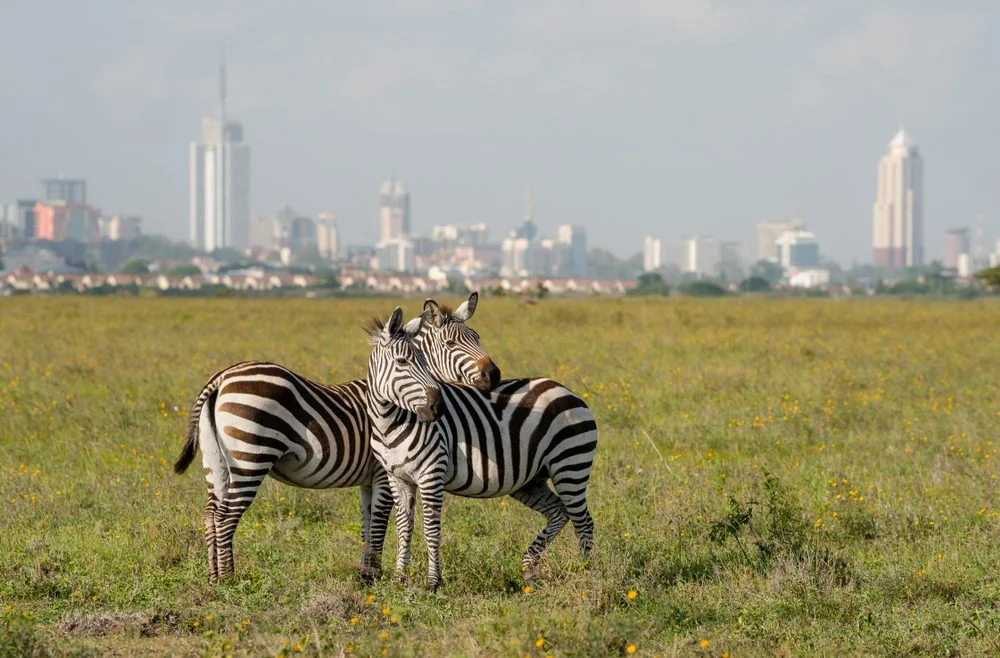
The park is recognized by its tagline “the world’s only wildlife capital” and is distinguished by short open grass, allowing residents in the city’s skyscrapers to enjoy complimentary game viewing from their comfort. The park features diverse vegetation, including Acacia trees and woods, which serve as habitats for permanent residents, with four of the African Big Five present, excluding elephants. Nairobi National Park is home to around 400 avian species, encompassing forest, savannah, and aquatic birds, as well as approximately 100 mammalian species.
Nairobi National Park encompasses a size of 117 square kilometers, rendering it one of the smallest parks in both Kenya and Africa as a whole. The park possesses the largest population of black rhinos not only in Africa but globally. The successful rhinoceros conservation efforts have given the park the additional moniker “Kifaru Ark.” The park houses more over 50 black rhinos and is equipped with a prominent anti-poaching team; yet, in August 2013, poachers infiltrated and murdered one rhino, followed by another in January 2014.
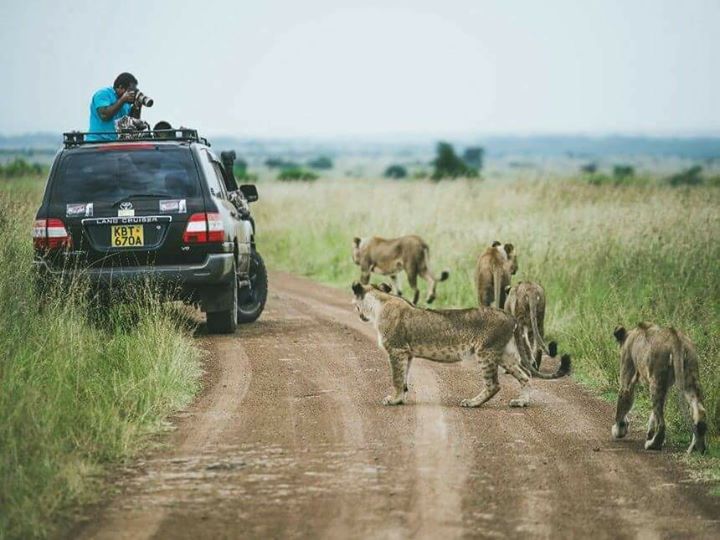
The Nairobi National Park offers the most successful game drives, allowing for easy observation of lions and hyenas, since rangers actively watch the lions’ movements to prevent human interactions with these large felines. This has facilitated guest visibility of the lions; however, one must exhibit patience and fortuity to observe the elusive leopards and occasionally the cheetahs.
Attractions of Nairobi National Park
Nairobi National Park features numerous attractions, and the park’s overall nature has significantly contributed to the establishment of various points of interest within its vicinity. The primary attractions encompass animals. The park is home to more than 100 species of mammals, lacking just elephants among the African Big Five. Additional fauna at the park comprises giraffes, elands, zebras, gazelles, waterbucks, hippos, and numerous others.
The national park has around 400 bird species, including migratory birds that arrive during the rainy season for nesting and subsequently depart after the mating period. There are also permanent residents that reside in the park continuously. The avian species are categorized into three existing habitats within the park: Forest birds, located in the southern region characterized by forest cover; Open savannah birds, which constitute the majority of the species due to the park’s predominant open savannah landscape, including examples such as Rüppell’s Vulture, secretary bird, ostriches, long-tailed fiscal, bustards, among others. Numerous waterbird species inhabit the marshes of Nairobi National Park. The avian species comprising waterfowl include the Common Moorhen, Black-headed Heron, Blacksmith Lapwing, among others.
Nairobi National Park boasts a significant concentration of predators that are readily seen. The rangers observe and record the movements of lions, facilitating guest sightings on game drives. Additional predators comprise leopards, cheetahs, hyenas, and jackals.
Activities in Nairobi National Park
The numerous attractions of the park have facilitated various activities. The following are the principal activities conducted at the park:
Bird watching
Nairobi National Park provides one of the premier birding safaris in Kenya, second only to the Masai Mara National Reserve. Birding can occur year-round, although the optimal season is during the rainy months of March to May and November. This is the period when birds are nesting, and migratory species, particularly those from European countries, are present.
Wildlife observation:
Nairobi National Park, albeit one of the smallest parks in Kenya, offers an exceptional game viewing experience. Four of the African Big Five are seen. These encompass rhinoceroses, buffalo, lions, and leopards. Other significant wildlife at the park includes hyenas, cheetahs, jackals, gazelles, zebras, and numerous others. The game drives may last a full day with a packed lunch or a half-day, contingent upon the guest’s available time.
Rhinos Trekking:
The park is renowned for being one of the premier national parks globally that has successfully conserved black rhinos. The park houses more than 70 black rhinoceroses. Rhino trekking is a principal activity available in Nairobi National Park.
City Tour:
Nairobi National Park, situated in the heart of the city, offers picturesque vistas that complement a city tour, allowing one to unwind in the suburban areas after a fulfilling day in the bush. City visits may be conducted in the afternoon following a game drive in the bush.
Nairobi National Park is a destination that may be conveniently visited within a single day following business engagements in Kenya. All brief yet highly enjoyable safari excursions can be undertaken in Nairobi National Park. If you seek activities to enhance your visit to the capital of Kenya, your search ends here. Nairobi National Park will provide an exceptional experience.
Nairobi National Park is one of the parks that may be visited during a business trip to Nairobi. One can have a day safari at Nairobi National Park, which is abundant in animals.
What is the best time to visit Nairobi National Park?
Nairobi National Park is the oldest national park in Kenya, officially inaugurated in 1946. The park hosts significant populations of wildlife near a major global center. The establishment of the park was motivated by the necessity to conserve Kenya’s diverse biodiversity and to offer a refuge for several species, including black rhinos, lions, and giraffes. The park is located approximately 7 kilometers south of Nairobi, requiring no more than 15 minutes to reach from downtown. This distinctive position facilitates convenient day getaways and brief stays, enabling the pleasure of a safari adventure without extensive travel from the city. The geographical location includes diverse habitats such as savannah grasslands, riverine forests, and rocky outcrops.
What is the optimal time to visit Nairobi National Park?
Nairobi National Park hosts a varied array of animals, including lions, giraffes, zebras, rhinoceroses, and other antelope species. Moreover, visitors may observe a diverse array of avian species and smaller mammals within the park’s confines. The park’s most prominent inhabitants comprise the endangered black rhinoceros, frequently observed grazing or resting in the park’s grasslands.
Nairobi National Park possesses a cold and temperate climate. Temperatures remain rather stable throughout the year, with a significant drop at night. The Dry season, spanning from June to October, experiences less precipitation. The wet season from November to May is marked by two distinct periods of rainfall. The short rains reach their maximum intensity in November, while the long rains peak in April.
The optimal period to visit Nairobi National Park is during the dry season. This period offers the optimal opportunity for wildlife observation, as animals congregate around water sources and on arid grasslands. The dry season extends from June to October, constituting the largest duration, while a shorter dry interval occurs from January to February. During certain periods, the park is more navigable, facilitating a more enjoyable experience during your game drives.
Although the park is accessible throughout the year, observing wildlife might be challenging during the rainy season. The extended rainy season often transpires from March to May, whereas the brief rainy season occurs from November to December. During wet conditions, the park becomes muddy, complicating vehicular navigation, while the tall grass and dense bushes provide animals with additional concealment opportunities. This implies they tend to disperse, rendering them more difficult to observe.
Although the rainy season may appear to be an unpopular time to visit Nairobi National Park, it offers several significant advantages. The optimal period for avian observation at Nairobi National area is in April and November, when migratory birds from European and African nations arrive in the area. April and November are characterized by the breeding season, during which numerous animal species are observable. Observe the Jackson widowbird, which is visible exclusively from March to May, with April being the period of rainfall in the park. Moreover, due to the diminished influx of tourists during the rainy season, one can relish a more tranquil experience devoid of the throngs typically encountered in the bustling dry season when game drives are much sought after.
Directions to Nairobi National Park
There are multiple methods to reach Nairobi National Park, including taxi, public transportation, or private vehicle. Booking a guided tour or safari with Focus East Africa Tours is the most effective method to guarantee a secure and enjoyable visit to the park. We provide an array of transportation alternatives to accommodate diverse requirements, including four-wheel drive safari vehicles, accompanied by our seasoned guides who will lead you on an exhilarating expedition through the park.
Nairobi National Park is only a mere 10-minute drive, approximately 8 kilometers south of downtown Nairobi, accessible via Langata Road. This location is ideal for individuals seeking to experience Kenya’s wildlife without the necessity of a lengthy journey to destinations such as the Maasai Mara or Amboseli. If you are in Nairobi with constrained time, visiting this park is an excellent choice. The proximity to the city facilitates access, rendering it an ideal launching point for safari excursions across Kenya.
Nairobi National Park, situated at 9 kilometers (6 miles) south of the city, can be visited for either half a day or a full day. Accessing Nairobi is very straightforward, as it serves as one of the largest and most vibrant transportation hubs in Africa. The majority of international flights arrive at Jomo Kenyatta International Airport (NBO), located around 15 kilometers (9 miles) southeast of the city.
The park features seven entrance gates, two of which, Mbagathi Gate and Banda Gate, are exclusively designated for the Kenya Wildlife Service. Visitors to the park can enter by the main gate at the Kenya Wildlife Service at Park headquarters, Langata gate along Langata Road, and Maasai gate, among others.