 info@gorillatrekkinginafrica.com

Amboseli National Park – Kenya
Amboseli National Park Kenya is home to a premier national park situated in the southern region of the country, adjacent to Tanzania. The park lies in proximity to the renowned Mt. Kilimanjaro, the highest summit in Africa. The park is one of the nearest protected places to the capital city, Nairobi, and it harbors the greatest population of African elephants in all of Kenya. The park is supported by numerous tourist attractions, rendering it one of the most popular national parks in Kenya and all of Africa. Visiting Kenya for wildlife viewing without experiencing Amboseli is somewhat incomplete.
The park was founded in 1974 as a national park. It possesses a significant history being one of the oldest protected areas in Kenya, initially designated as a wildlife reserve in 1906 before being elevated to national park status. In 1991, the park was designated a UNESCO World Heritage Site to safeguard, preserve, and conserve its many unique species.
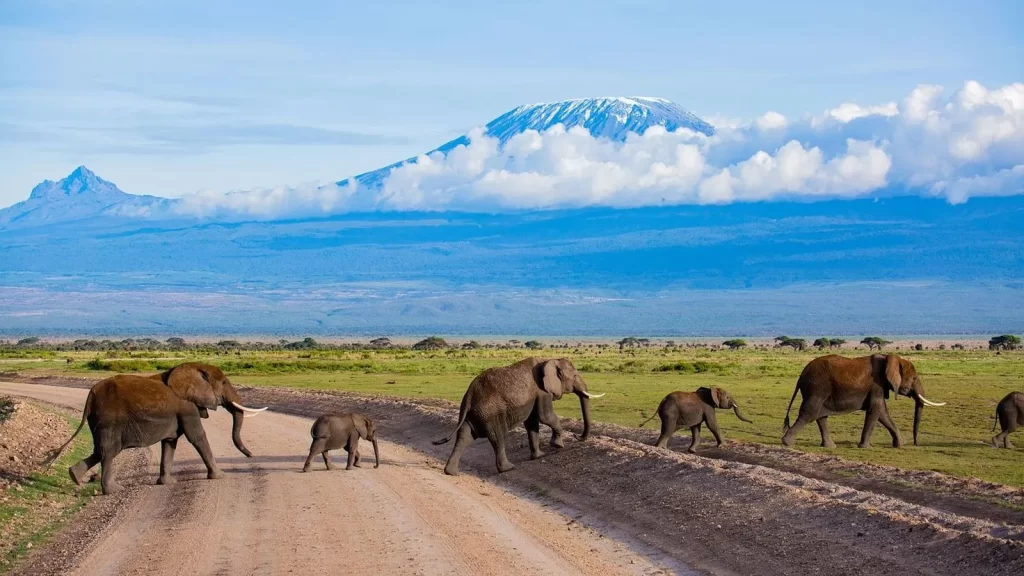
The diverse array of occupants in the park has facilitated access for several animal species. The picturesque vistas of Mount Kilimanjaro are among the other assets the park has leveraged for its popularity. The area is a mere 392 square kilometers, rendering it susceptible to exploitation within a single-day safari.
Amboseli National Park, renowned as “the home of Elephants” due to its substantial elephant populations, is a quintessential safari destination in Kenya. Kenya promotes Amboseli as the premier location to view Mount Kilimanjaro, which is situated on the Tanzanian side. The park lies directly beneath Africa’s tallest mountain, providing a magnificent backdrop to the breathtaking expanse of Amboseli National Park, renowned for its diverse wildlife, including one of the largest elephant populations in Africa. An image of the African Elephant traversing the plains of this exquisite wildness, with the snow-capped Kilimanjaro in the background, is among the popular photographs of an African safari vacation. While most people visit Kenya primarily for Masai Mara, a safari in Kenya is incomplete without a visit to Amboseli.
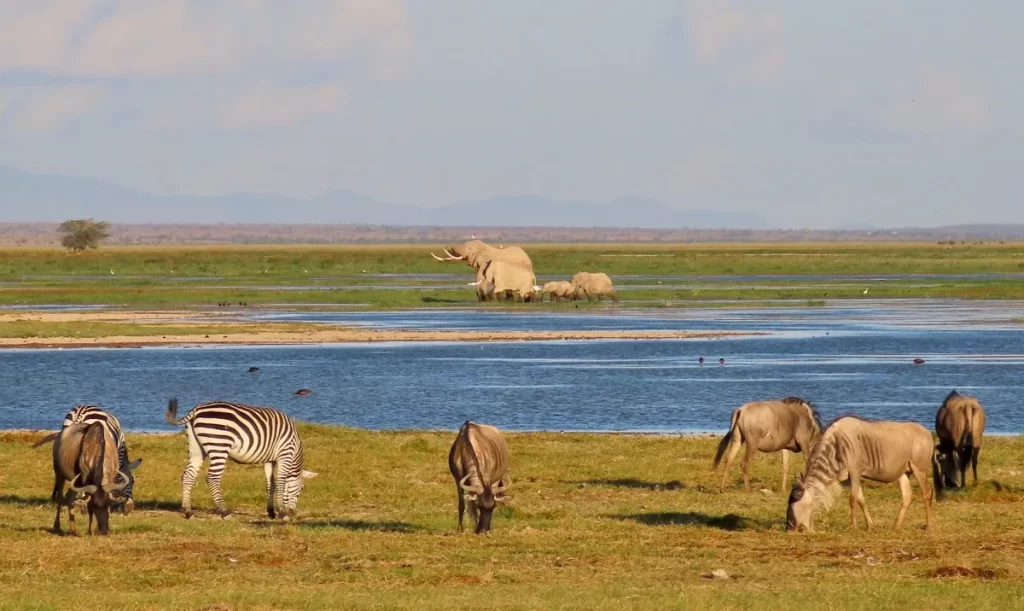
Amboseli National Park, including an area of 390 square kilometers, is situated in southern Kenya, around a five-hour drive from the capital, Nairobi. Amboseli is located on the leeward side of Kilimanjaro Mountain, resulting in arid conditions and a desert-like environment within the park. Amboseli is derived from the Maasai language, signifying “salty dust.” During prolonged dry periods when the leeward side receives no precipitation, the park transforms into an expansive expanse of desiccated grassland, like a soccer field. Mountain Kilimanjaro, however, supplies several subterranean rivers that generate extensive swamps, marshes, and small lakes in the now arid environment of Amboseli during the dry season. In this arid season, the marshes transform into a sanctuary of life, attracting numerous animals for grazing and hydration. For the cats, it became increasingly facile to locate prey congregated around marshlands and swamps.
Upon the arrival of rain, the park assumes a vibrant appearance of verdant greenery. The wildlife extends over all regions of the park. The swamps proliferate and transform into lakes, while the low-lying regions also accumulate water, resulting in the formation of shallow lakes. The verdant foliage, glistening lakes, and the breathtaking vista of Mount Kilimanjaro, whose snow-capped summit now extends nearly halfway down the mountain, present a remarkable spectacle.
Location and accessibility of Amboseli National Park, Kenya
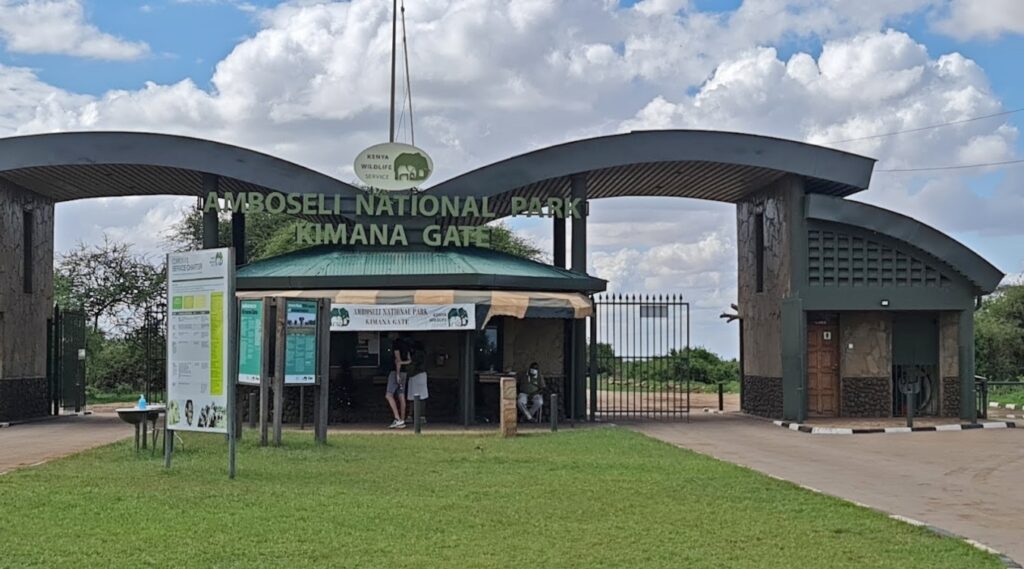
Amboseli National Park is located 365 kilometers, or 226 miles, southeast of Nairobi. The park is accessible within a 3 to 4-hour drive from Nairobi. Amboseli is situated in Kajiado County in southern Kenya. It is located in the northwestern region of Mount Kilimanjaro in Tanzania. The park is accessible via two distinct routes, all coming from Nairobi. It is accessible via the Nairobi-Mombasa road. In the southern coastal region of Mombasa, Tsavo West National Park or Tsavo East National Park is approximately 460 kilometers away via the Kimana Gate.
How to get to Amboseli National Park, Kenya
The park is accessible by road from Nairobi to the north and Mombasa to the south along the coastline region. Individuals originating from Nairobi have two primary ways available for accessing the park. All these paths are in excellent condition, facilitating prompt and easy access to the park. Access to the park is via Nairobi through Namanga on the Nairobi-Arusha route. This approach is the most direct path we typically utilize for day trips to the park, arriving through the Meshanani Gate. The other, shorter route is the Nairobi-Mombasa road via Emali. Access to the park is available from the South via Kimana at the Olkelunyiet Gate.
Wildlife in Amboseli National Park
Amboseli National Park is an unexpected treasure for wildlife enthusiasts, leading many visitors of the more renowned Masai Mara to question whether Amboseli provides superior animal sightings. The arid circumstances that compel animals to congregate around water sources and verdant areas during droughts facilitate the discovery of wildlife and provide excellent opportunities for close-up observations.
The sole absent member of the renowned Big Five animals is the Rhino; however, the remaining members—Elephant, Leopard, Buffalo, and Lion—are present in Amboseli National Park. Amboseli is renowned for its famous elephants and is among the premier locations globally to observe these animals, owing to its substantial population. Amboseli is the territory of hyenas. Abundant prey attracts numerous Spotted Hyenas lounging in the marshes and along the shoreline of wetlands in the afternoon following a good morning hunt that filled their bellies.
Other prevalent fauna you will encounter in Amboseli include wildebeest, zebra, Masai giraffe, Thompson’s gazelle, Grant’s gazelle, reedbuck, and warthogs. The park is home to the distinctive Yellow Baboons, a species distinct from the more commonly encountered olive baboons.
Do you engage in birdwatching? The avian population of Amboseli National Park is abundant. The lakes, open swamps, and marshes offer an exceptional wetland and water birding experience, as numerous species of water birds can be readily observed from the driving paths. The colossal Goliath Heron is visible from several kilometers distant. The lakes are populated with flamingos. Additional habitats, including grasslands, savannahs, woodlands, and forests, contribute to the avian diversity of Amboseli National Park.