 info@gorillatrekkinginafrica.com

15 Foods Visitors Must Try During Your Visit to Congo
15 Foods Visitors Must Try During Your Visit to Congo: The Democratic Republic of Congo ranks among the top five travel destinations in Africa. Prominent tourist locations in the Democratic Republic of Congo include Virunga National Park, renowned for its Mountain Gorillas and Nyiragongo Volcano, as well as Kahuzi-Biega National Park in Bukavu, where visitors can monitor eastern lowland gorillas. During your Congo safari tour, do not neglect to sample some Congolese cuisine.
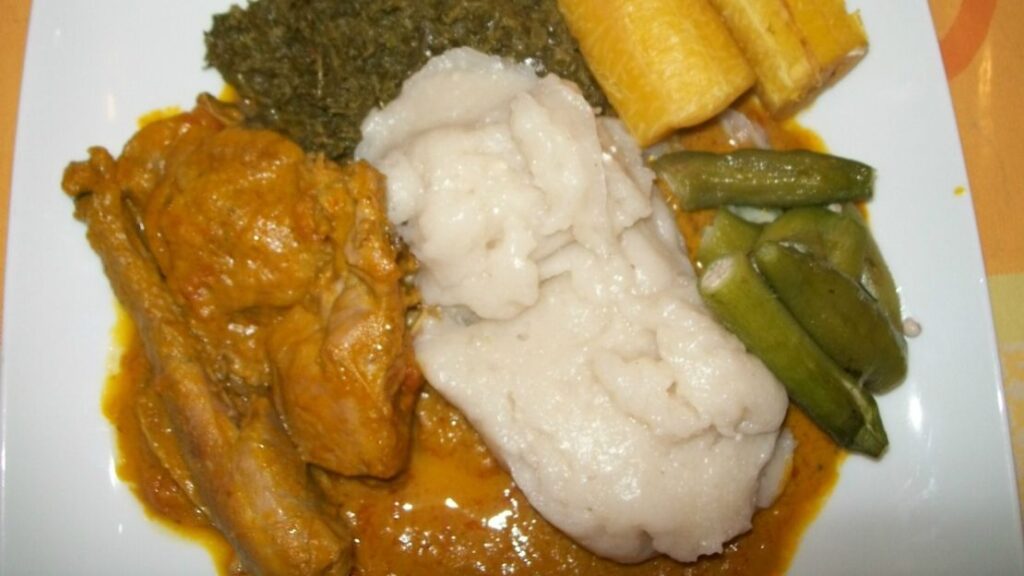
15 Food Delicacies to Experience During Your Visit to Congo.
Culinary habits are often linked to geographic origin; seafood serves as a staple for riverine populations, meat-centric diets prevail among Congolese in tropical savannahs, and vegetarian fare is common among inhabitants in forested places.
Chikwange
Chikwange is hardly prepared domestically. The preparation duration is extensive, potentially requiring up to two weeks. Prior to preparing the cassava, immerse it in water for several days, then allow it to drain for a further two to three days before encasing it in banana leaves and boiling it for one hour. Chikwange complements an array of vegetables and seafood, and is frequently consumed outdoors with quality beer and barbecues in the major cities of the Congo.
Liboke
It is a dish consisting of boiled fish with tomato, salt, and pepper, encased in banana leaves or other wild vegetation that infuses the fish with its aromas. Subsequently, all items are grilled. Other spices, like as garlic and celery, enhance the flavor.
The fish may be replaced with chicken, pork, squash, and various other ingredients. Ultimately, it is a matter of individual preference.
Fufu
Fufu, in conjunction with pondu, represents the quintessential mainstay of Congolese cuisine. Fufu is ubiquitous on Congolese tables, spanning from the northern to the southern regions and from the eastern to the western areas. Fufu exists in two varieties: maize fufu and cassava fufu.
Maize fufu is made with corn flour and water, which is heated and then simmered until the dough solidifies; it is served in spherical portions. Cassava fufu is produced by initially drying and subsequently grinding cassava. Upon obtaining the flour, the process closely resembles that of corn fufu. It is noteworthy that the two flours may be amalgamated.

Ndakala
Ndakala are small desiccated fish referred to as the “1000 Poisons.” They may be accompanied by fufu or Chikwange after being sautéed in oil with a hint of chili. Ndakala can be amalgamated with various vegetables and immersed in tomato sauce to enhance its appeal during Congo Safaris Tours.
Makemba
It is a variety of banana, as indicated by its French nomenclature, but it cannot be consumed raw; it must be fried in oil, boiled in water, or grilled. As previously stated, plantain can be transformed into lituma when cooked. 15 Foods Visitors Must Try During Your Visit to Congo
Fried bananas have eclipsed French fries in popularity on fast food menus in the principal cities of Congo.
Mayebo
Mayebo is a delicacy of Congolese cuisine consisting of fresh or dried mushrooms from various species, which can be served in tomato sauce or palm oil, combined with vegetables, boiled in broth, or incorporated into a stew.
Mbala
Sweet potato is a prevalent dish in the Congo. Locally farmed sweet potatoes comprise the sweet potato (mbala ya sukali) and the unsweetened potato (mbala ya mungwa). It can be prepared in tomato sauce with beef or pig, onions, garlic, and various seasonings, or only boiled in clear water. In urban areas, it is diced into little portions and sautéed similarly to French fries or chips.
Poulet à la Moambé
A chicken stew prepared with slow-cooked chicken, palm butter or Moambé, and spices. The meal is renowned as the national cuisine of both Gabon and Angola. It is also referred to as nyembwe chicken, muamba de galinha, and nyembwe or mwambe chicken. The savory dish is typically accompanied by rice and saka saka, or prepared cassava leaves. This dish is characterized by the rich flavor of palm butter.
Dongo-dongo
A soup primarily composed of okra. The inclusion of fish or meat is not obligatory; yet, there are distinct variations in their application. The heated soup possesses a sauce-like consistency that complements rice or fufu effectively.
Fumbwa
Fumbwa is a prevalent dish in the Democratic Republic of the Congo. These are manually processed leaves that are frequently sun-dried for preservation. It is optimally accompanied by fufu, shellfish, or semolina. Fumbwa is a renowned delicacy in various African locations, including Nigeria, where it is referred to as Ukazi, and Cameroon, where it is called Eru or Okok.
Muamba Nsusu
Muamba Nsusu is a traditional African stew originating from the Congo. The meal comprises chicken, peanut butter, tomato, lemon juice, cumin, spinach, chili peppers, paprika, onions, turmeric, and palm oil. Crushed peanuts and sliced scallions are used as a garnish post-preparation of the dish.
Makayabu
Makayabu consists of salted fish and sweet potatoes, which are the primary ingredients. Additional items needed comprise bell peppers, garlic cloves, bay leaves, cabbages, onions, and salt. White rice is often accompanied by makayabu.
Pondu
Pondu is among the most renowned dishes in the nation. The meal is prepared from cassava leaves that have been simmered in a saucepan, with or without seasonings. Pondu, for instance, is prepared merely with water and a small amount of salt in the nation’s core region. In various sections of the country, oil—especially palm oil—along with spices, onions, eggplants, scallions, and other vegetables are utilized. It may be accompanied by rice, fufu, or plantains, though this is not an exhaustive enumeration. The dinner can also be prepared with meat, seafood, or beans, as well as 15 foods that visitors must sample during their trip to Congo.
Delphinus
This vegetable, possessing a strong aroma akin to mint, is favored in the country’s central region and does not necessitate the incorporation of spices in its preparation. It is sometimes accompanied by chicken and chile.
Tshomba of Kabiola
Tshomba tshia kabiola is a fermented cassava dish made with peanuts, milk, and sugar. The cassava is steeped in hot water for approximately fifteen minutes (taking care not to over-soften), then drained and placed in room temperature water for storage in an airtight container for four days. On the fourth day, the cassava will be shredded and mixed with powdered milk, sugar, and peanuts. Ultimately, incorporate water until the appropriate consistency is attained, and then refrigerate.