 info@gorillatrekkinginafrica.com
Karenge Bush Camp in Akagera National Park
Karenge Bush Camp is an eco-conscious and environmentally responsible camp located in Akagera National Park, Rwanda. The camp is located in the northern section of the national park and is one of the opulent accommodations within the area. The national park is situated in the northeastern region of Rwanda, covering an area of 1,122 square kilometers. It is the largest national park in Rwanda and the sole sanctuary for savannah wildlife in the country. The national park is presently administered by the Akagera Management Company, established in a collaborative collaboration in 2010 between the Rwanda Development Board and African Parks, a non-governmental organization that oversees additional national parks across the African continent.
Karenge Bush Camp in Akagera National Park derives its name from a local Kinyarwanda term meaning ‘little footprint.’ Interestingly, the term ‘Karenge’ denotes the location where the camp was initially founded. The camp reflects the objective of the bush camp to maintain a minimal carbon imprint on the planet. The camp operates seasonally, established biannually for a duration of three months.
Karenge Bush Camp in Akagera National Park initially opened in 2016 from June to August and subsequently in 2017 from December to February. The camp avoids the use of non-renewable construction materials such as cement, ensuring no remnants are left at the conclusion of each season. The camp leaves no evidence of its presence in the location where it was established.
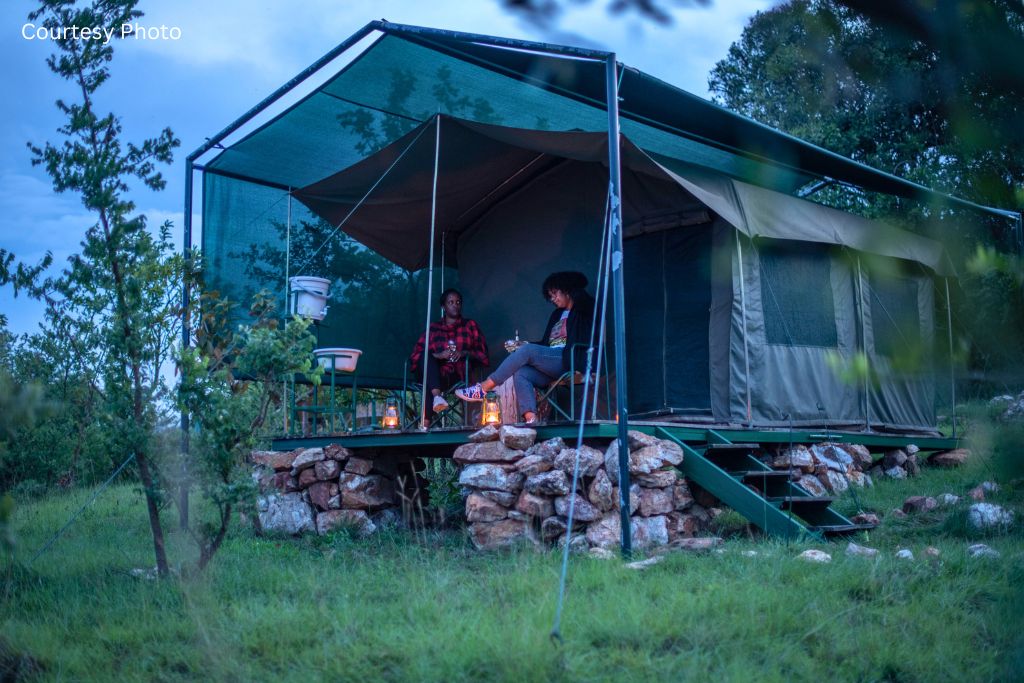
The camp is a basic, tranquil, and environmentally sustainable lodging facility within the national park. The camp is fully staffed, equipped with six tents, and can host a maximum of 12 people. It provides its guests with breathtaking views of wildlife in the national park. Each tent in the camp may house two individuals on comfy camp beds. The tents are elevated on basic platforms, equipped with solar lights and candles for nocturnal illumination. Camp guests receive warm water daily. The camp features en-suite restrooms adjacent to each tent, equipped with bucket showers and toilets.
The camp’s bar is equipped with solar refrigerators, ensuring that you may have a refreshing beverage while resting at the camp. Karenge Bush Camp in Akagera National Park, Rwanda, offers its visitors hot, full board meals. Dine beneath the stars or amidst the picturesque vistas of wildlife traversing the expansive savannah grasslands of Akagera National Park.
The camp does not accept children under the age of 6. Children ages 6 to 15 may accompany their parents at the camp, although they will incur a fee. Individuals aged 16 and older are considered adults and will therefore incur the full pricing charge.
Rates at Karenge Bush Camp in Akagera National Park exclude costs such as transportation, park entry fees, activities, beverages, gratuities, and any other personal charges. All income generated by Karenge Bush Camp is allocated to the conservation and management of Akagera National Park. Significant enhancements have been implemented in the national park, including the formation of an anti-poaching unit, the procurement of a helicopter for aerial surveillance, the installation of a solar-powered electric fence to deter intruders and protect wildlife, and the recruitment of additional park rangers to enforce regulations and oversee activities within the park.
Also in May 2017, 18 black eastern rhinoceroses were relocated from South Africa to Akagera National Park in Rwanda. This translocation, spanning 2,485 kilometers, facilitated the reintroduction of rhinos to the national park after a decade of their absence. This accomplishment is a significant success for conservationists and personnel at Akagera National Park, attributable to the collaborative efforts of the Rwanda Development Board, African Parks, and the Howard G. Buffett Foundation.
Guests at Karenge Bush Camp in Akagera National Park, Rwanda, can engage in various activities provided by the park, including guided game drives, boat cruises, guided nature walks, birdwatching, community visits, walking safaris, fishing, and behind-the-scenes tours, among others. Guests may enhance their experience at Karenge Bush Camp by spending one or two nights in Ruzizi Tented Camp, situated in the southern region of Akagera National Park. The national park is the optimal location for a wildlife safari in Rwanda, offering visitors a significant opportunity to observe the Big Five: lions, Cape buffalo, leopards, savannah elephants, and hippos.
Conclusion: When arranging your visit to Akagera National Park, consider allocating one or two nights at Karenge Bush Camp located in the northern section of the park. This is an excellent choice, particularly for travelers seeking to see the northern region of Akagera National Park.