 info@gorillatrekkinginafrica.com

3 day gorilla trekking and cultural tour in Rwanda
3 day gorilla trekking and cultural tour in Rwanda , Nestled in the heart of East Africa, Rwanda is one of the continent’s most extraordinary destinations — a land of mist-shrouded volcanoes, emerald-green hillsides, and some of the world’s last remaining mountain gorillas. Despite its turbulent past, Rwanda has transformed into a beacon of conservation, cultural pride, and sustainable tourism, earning its place among Africa’s premier travel destinations.
A 3-day gorilla trekking and cultural tour in Rwanda offers travelers an unparalleled combination of wildlife encounters and deep cultural immersion. From the volcanic peaks of Volcanoes National Park, home to half the world’s mountain gorilla population, to the vibrant traditions of the Batwa pygmies and the serene shores of Lake Kivu, this journey is designed to engage all your senses and leave you forever transformed.

This article is your comprehensive guide to planning and experiencing the ultimate 3-day Rwanda itinerary — covering everything from gorilla trekking permits and what to pack, to cultural village visits, practical travel tips, and the best lodges to base your adventure.
Why Choose Rwanda for Gorilla Trekking?
Rwanda is one of only three countries in the world — alongside Uganda and the Democratic Republic of Congo — where mountain gorilla trekking is legally permitted. Here is why Rwanda stands out:
Highest Gorilla Concentration
Volcanoes National Park in northern Rwanda is home to over 10 habituated gorilla families, giving trekkers one of the highest success rates in Africa for gorilla encounters. The Virunga Massif, which the park is part of, shelters roughly half of the world’s 1,063 remaining mountain gorillas.
Superior Infrastructure & Safety
Rwanda boasts some of Africa’s best road networks, well-organized national park management, and exceptional guide training. Kigali International Airport connects the country to major global hubs, making logistics smooth and relatively stress-free compared to other gorilla trekking destinations.
Conservation Leadership
Rwanda’s Rwanda Development Board (RDB) channels a significant portion of gorilla permit fees directly into local community development and park conservation. The country has recorded consistent gorilla population growth, a testament to these sustained efforts.
Rich Cultural Heritage
Beyond gorillas, Rwanda offers vibrant intangible cultural heritage — from Intore dancers and Batwa pygmy forest traditions to basket-weaving cooperatives and genocide memorial sites that speak to the country’s remarkable resilience and reconciliation.
Luxury Meets Wilderness
Rwanda has positioned itself as a high-value, low-volume tourism destination. World-class eco-lodges such as Singita Kwitonda, Bisate Lodge, and Sabyinyo Silverback Lodge offer unparalleled luxury just minutes from gorilla country.
Gorilla Trekking Permits: What You Need to Know
A gorilla trekking permit is mandatory and must be obtained before your trek. Here are the essentials:
| Permit Cost | USD $1,500 per person per trek (as of 2024/2025) |
| Issuing Authority | Rwanda Development Board (RDB) |
| Booking Method | Through RDB directly or via licensed tour operators |
| Advance Booking | 3 to 12 months ahead recommended — permits sell out fast |
| Trek Duration | Typically 2 to 8 hours, including 1 hour with the gorillas |
| Group Size | Maximum 8 trekkers per gorilla family per day |
| Age Requirement | Minimum age 15 years |
A portion of every permit fee funds the community revenue-sharing program, which directs 10% of all park revenue into projects in surrounding villages — schools, health centers, and infrastructure. By purchasing a permit, you are directly supporting gorilla conservation and local livelihoods.
Day 1: Arrival in Kigali & Cultural Immersion
Kigali City • Genocide Memorial • Kimironko Market • Traditional Village
Morning: Arrival & Kigali Orientation
Your Rwanda adventure begins with your arrival at Kigali International Airport. Rwanda’s capital city is consistently ranked among Africa’s cleanest and safest cities — a first impression that immediately signals the country’s exceptional governance and civic pride.
After clearing customs and immigration, your guide will transfer you to your Kigali hotel. Take some time to freshen up before heading out for a morning city orientation walk.
Kigali City Highlights to Explore
- Walk through the Nyamirambo neighborhood — Kigali’s oldest and most vibrant quarter, known for its mosque, buzzing markets, and lively street food scene
- Browse the Caplaki Crafts Village for handmade baskets, wood carvings, and traditional jewelry — ideal for souvenirs
- Visit the Presidential Palace Museum, once home to former President Habyarimana, offering fascinating political history exhibits
- Stroll the clean, tree-lined streets of the CBD and observe Rwanda’s remarkable urban transformation firsthand
Afternoon: Kigali Genocide Memorial
No visit to Rwanda is complete without a solemn and deeply moving visit to the Kigali Genocide Memorial — the final resting place of over 250,000 victims of the 1994 genocide against the Tutsi. This UNESCO-recognized site offers powerful exhibitions tracing the history of the genocide, its global context, and Rwanda’s extraordinary journey of healing, justice, and reconciliation.
The memorial gardens are immaculately maintained and provide a peaceful space for reflection. Guided tours are available and are highly recommended for their depth of historical context. Allow at least 2 hours for this visit. The experience, though heavy, is essential for understanding Rwanda’s present-day identity and remarkable national unity.
Late Afternoon: Kimironko Market & Cultural Workshop
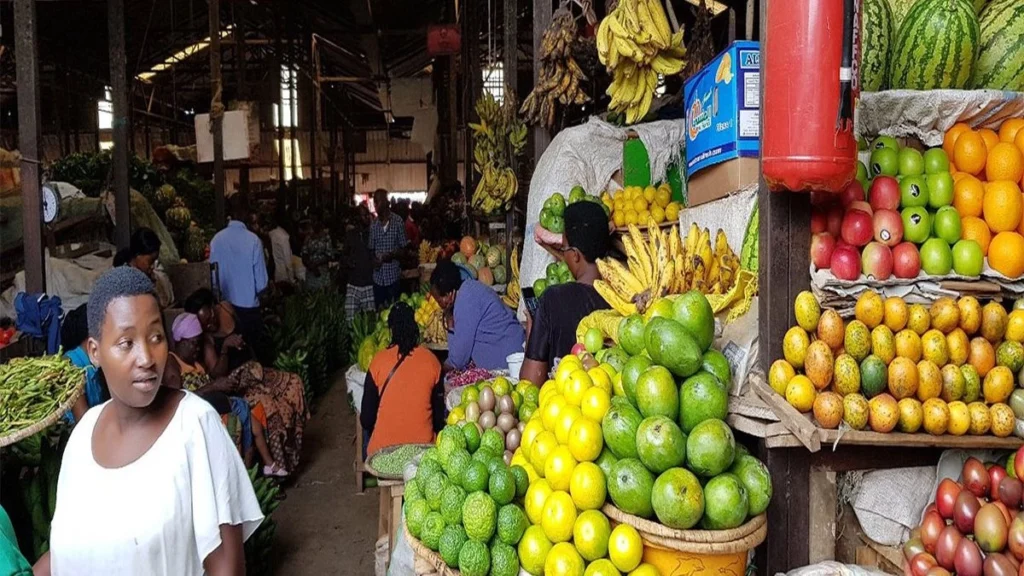
After the memorial, head to Kimironko Market — Kigali’s largest and most colorful open-air market. Wander through stalls overflowing with fresh produce, fabrics, handmade crafts, and local spices. This is the real pulse of Kigali life.
In the early evening, visit a local community cooperative for an immersive basket-weaving workshop. Rwanda’s agaseke (peace baskets) are internationally renowned for their intricate geometric designs and vibrant colors. Local artisans — primarily women — will guide you through the traditional weaving technique. These cooperatives play a vital role in empowering women economically and preserving intangible cultural heritage.
Evening: Welcome Dinner & Intore Dance Performance
End Day 1 at one of Kigali’s top restaurants, where you will enjoy a curated dinner featuring traditional Rwandan cuisine. Expect dishes such as:
- Isombe — cassava leaves cooked in palm oil with eggplant and dried fish
- Ibihaza — pumpkin stew, a beloved staple in Rwandan households
- Akabenz — roasted plantain banana, typically served with grilled meats
- Urwagwa — traditional banana beer, for those wishing to sample an authentic local brew
After dinner, enjoy a vibrant Intore dance performance. Intore — meaning ‘the best of the best’ in Kinyarwanda — is Rwanda’s most celebrated traditional dance form, historically performed by warriors at the royal court. Characterized by energetic footwork, spectacular leaps, and elaborate costumes, the performance is an electrifying introduction to Rwandan cultural pride.
| Day 1 Recommended Hotels — Kigali | Category |
| Kigali Marriott Hotel | Luxury (5-star) |
| Radisson Blu Hotel & Convention Centre | Luxury (5-star) |
| The Retreat by Heaven | Boutique Mid-Range |
| Lemigo Hotel | Mid-Range (4-star) |
Day 2: Transfer to Volcanoes National Park & Batwa Cultural Experience
Kigali → Musanze • Batwa Pygmy Village • Park Briefing • Lodge Dinner
Morning: Scenic Drive to Musanze (Ruhengeri)
Rise early for a spectacular 3-hour scenic drive northwest from Kigali to Musanze — the gateway town to Volcanoes National Park. The journey through Rwanda’s famous ‘Thousand Hills’ landscape is itself a highlight: terraced hillsides of tea plantations, banana groves, and rural villages unfold in every direction, framed by the distant silhouettes of the Virunga volcanoes.
En route, make a stop at one of Rwanda’s famous tea estates — particularly those around the Kinigi area — where you can walk through the lush green rows, learn about the tea production process, and sample freshly brewed Rwandan tea, one of the country’s most important export crops.
Late Morning: Batwa Pygmy Cultural Immersion
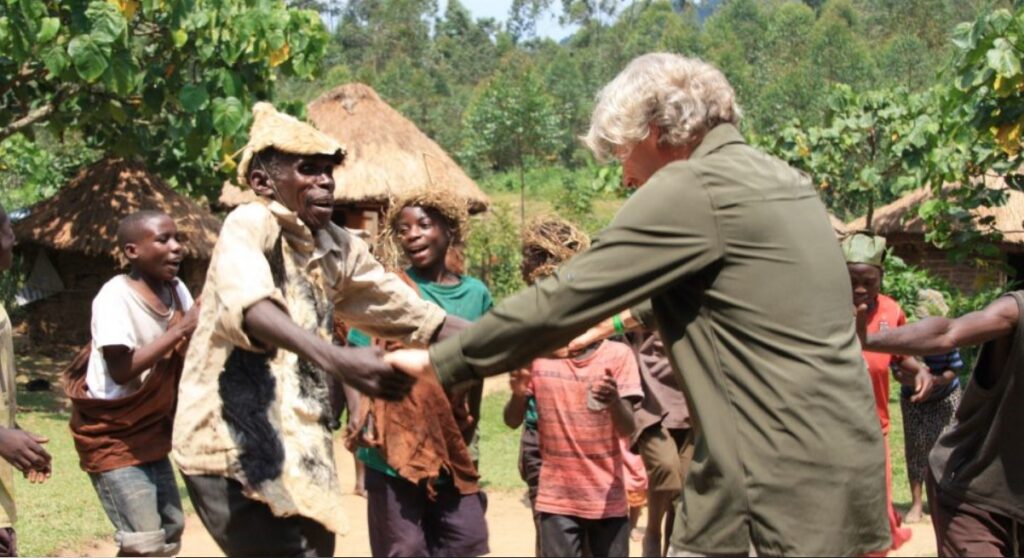
Upon arrival in Musanze, visit a Batwa community village for one of the most authentic and moving cultural experiences in all of East Africa. The Batwa (also known as Twa) are the indigenous forest-dwelling people of the Great Lakes Region and were among Rwanda’s earliest inhabitants.
Historically, the Batwa lived exclusively within the forests of the Virunga volcanoes for thousands of years. When Volcanoes National Park was gazette for conservation, the Batwa were displaced from their ancestral forest home. Today, community organizations work to preserve their unique culture and support their livelihoods through cultural tourism.
Activities During the Batwa Village Visit
- Forest medicine walk — Batwa guides demonstrate how they identified and used forest plants for medicine, food, and spiritual rituals
- Traditional honey harvesting demonstration — witness ancient techniques for locating and harvesting wild honey from forest trees
- Batwa storytelling session — elders share oral histories, creation myths, and forest legends passed down through generations
- Pottery-making workshop — learn how Batwa women craft traditional clay pots using techniques unchanged for millennia
- Traditional Batwa song and dance performance — an intimate and deeply authentic cultural exchange
Participating in a Batwa cultural experience provides direct economic benefit to one of Rwanda’s most marginalized communities. The entrance fees support community health, education, and cultural preservation programs.
Afternoon: Volcanoes National Park Briefing & Lodge Check-In
After lunch at a local Musanze restaurant, transfer to your lodge — ideally located in the Kinigi area, just minutes from the Volcanoes National Park headquarters. The park’s dramatic backdrop of five towering volcanoes (Karisimbi, Bisoke, Sabyinyo, Gahinga, and Muhabura) provides an utterly magnificent setting.
At 3:00 PM, attend the mandatory pre-trek orientation briefing held at the RDB park headquarters in Kinigi. Senior park rangers and your designated gorilla guide will cover:
- Rules and regulations for gorilla trekking — maintaining 7-meter distance from gorillas, no flash photography, no eating near gorillas
- Health protocols — trekkers with colds, flu, or contagious illnesses may be turned away to protect gorilla health
- Trekking group assignments — you will be assigned to a specific gorilla family based on your fitness level and preference
- What to expect on the trail — terrain, duration estimates, flora and fauna you may encounter
- Porter services — highly recommended and provide vital employment for local community members
Evening: Volcano-View Dinner & Stargazing
As dusk settles over the Virunga volcanoes and the surrounding forest begins its nocturnal symphony, settle in at your lodge for a superb dinner. Most high-end lodges in the Kinigi area offer stunning outdoor terraces with unobstructed views of the volcanic peaks — a breathtaking backdrop for your final evening meal before the main event.
After dinner, the skies above Volcanoes National Park — far from city light pollution — are extraordinarily clear. Consider a brief stargazing session with your guide, who can identify constellations significant to traditional Rwandan culture.
Retire early. Tomorrow is the day you have been waiting for.
| Lodge Name | Experience Level | Price Range / Night |
| Singita Kwitonda Lodge | Ultra-Luxury | USD $2,000+ |
| Bisate Lodge | Luxury Eco-Lodge | USD $1,200–$1,800 |
| Sabyinyo Silverback Lodge | Luxury Community | USD $800–$1,200 |
| Mountain Gorilla View Lodge | Mid-Range | USD $400–$700 |
| Gorillas Nest Lodge | Budget-Luxury | USD $250–$400 |
Day 3: Gorilla Trekking in Volcanoes National Park
The Main Event — Mountain Gorilla Encounter of a Lifetime
Pre-Dawn: Preparation & Transfer to Park HQ
Your alarm sounds before 5:30 AM. Despite the early hour, you will feel a surge of adrenaline and anticipation unlike anything else. After a light breakfast, dress in your trekking gear (see packing list below) and transfer to the Volcanoes National Park headquarters in Kinigi, arriving by 7:00 AM.
The headquarters buzzes with quiet excitement as groups of trekkers from around the world assemble. Rangers in olive-green uniforms coordinate the day’s operations, porters offer their services, and conservation researchers share the latest gorilla family news. The atmosphere is electric.
7:00 AM: Final Briefing & Group Departure
Ranger briefings are short and practical — a final reminder of the rules, an update on where your assigned gorilla family was last sighted, and confirmation of your trekking team. Each group of 8 trekkers is accompanied by a senior ranger guide, additional armed ranger escorts (for security and wildlife management), and trackers who have been in the field since dawn locating the gorillas.
Your trek begins. Depending on where the gorillas were last located, treks can range from 45 minutes to 6+ hours of hiking through dense bamboo forest, stinging nettles, and steep volcanic slopes. The vegetation is thick, the air cool and mist-laden, and the forest sounds immersive.

The Gorilla Encounter
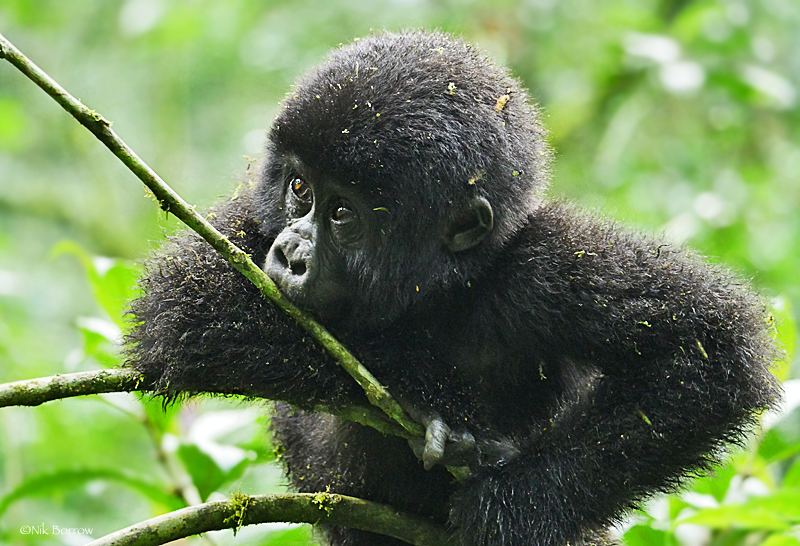
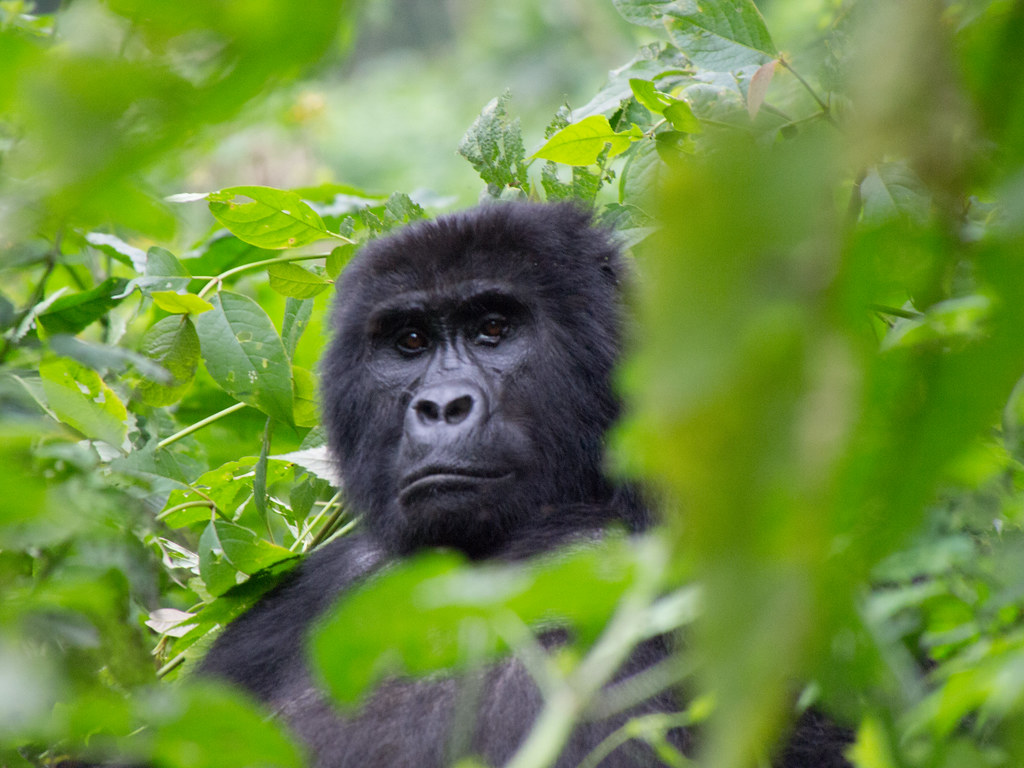
The moment your tracker signals — a hushed, urgent whisper and a pointed finger into the undergrowth — time seems to stop. Emerging from the bamboo, often just meters away, is a mountain gorilla. What follows is arguably the most profound wildlife encounter on Earth.
For exactly one hour — the strictly enforced limit to minimize stress on the animals — you observe the gorilla family in their natural habitat. What you may witness:
- A massive silverback male (up to 400 lbs) asserting dominance with chest-beats or relaxed reclining — a paradox of power and calm
- Playful juveniles tumbling through the undergrowth, chasing each other through bamboo stalks
- Mothers nursing infants, their dark eyes meeting yours with unmistakable intelligence
- Family feeding sessions — gorillas consume up to 40 lbs of vegetation daily, methodically peeling bamboo shoots and stripping leaves
- Complex social interactions — grooming rituals, hierarchical displays, and gentle family bonds
The one-hour limit passes in what feels like minutes. As your ranger guide signals the end of the encounter and you begin the trek back, most visitors report feeling a powerful mix of awe, gratitude, and a deep sense of responsibility toward these magnificent creatures and their fragile habitat.
Afternoon: Golden Monkey Trek (Optional Add-On)
For travelers with energy and appetite for more wildlife after their gorilla trek, a Golden Monkey experience within Volcanoes National Park is an exceptional add-on. The endangered golden monkey (Cercopithecus kandti) is found only in the Albertine Rift and is characterized by a striking golden-orange coat and intensely social, acrobatic behavior.
Golden monkey treks are typically shorter (1–2 hours of hiking) and offer a completely different but equally captivating primate encounter. Permits are USD $100 per person and can be booked through the RDB.
Late Afternoon: Twin Lakes & Dian Fossey Tribute
On your final afternoon in gorilla country, visit the scenic Twin Lakes (Lac Burera and Lac Ruhondo) — two stunningly beautiful crater lakes separated by a narrow ridge, offering panoramic views of the Virunga volcanoes and Rwanda’s rolling hills. Canoe excursions and lakeside walks are available.
Nearby, pay tribute at the Ellen DeGeneres Campus of the Dian Fossey Gorilla Fund — a state-of-the-art research and conservation facility established in 2022 in honor of the legendary primatologist who dedicated (and ultimately gave) her life to protecting mountain gorillas. The campus features interactive exhibits on gorilla science, conservation genetics, and community outreach programs.
Evening: Farewell Dinner & Optional Night Drive Back to Kigali
Your final evening in Rwanda calls for celebration. Gather at your lodge for a memorable farewell dinner under the volcanic stars, sharing stories from the day’s trek with fellow travelers. Most lodges offer communal dining experiences that naturally foster conversation and connection among guests.
If your international flight departs the following morning, evening transfer back to Kigali (approximately 2.5 to 3 hours) is recommended. Alternatively, extend your stay one additional night in Musanze for a more relaxed departure.
Essential Packing List for Gorilla Trekking
Packing correctly is critical for a comfortable and successful gorilla trek. The volcanic forest terrain is challenging, and conditions can change rapidly.
| Clothing & Footwear | Equipment & Accessories |
| • Sturdy waterproof hiking boots (ankle support essential)
• Long-sleeved shirts (2–3, preferably moisture-wicking) • Long hiking pants (tucked into socks to prevent ant bites) • Light rain jacket / waterproof poncho • Warm fleece or light down jacket (mornings are cold) • Thick hiking socks (2–3 pairs) • Gardening gloves (for pushing through nettles) |
• Small daypack (20–30 liters)
• 2-liter water supply minimum • High-energy snacks (trail mix, energy bars) • Camera with extra batteries & memory cards • Insect repellent (DEET-based) • Sunscreen and lip balm • Walking / trekking stick (available to hire at park HQ) |
Important: Leave bright-colored clothing at the lodge. Neutral greens, browns, and khakis blend into the forest environment and are less likely to startle the gorillas.
Best Time to Visit Rwanda for Gorilla Trekking
Gorilla trekking is available year-round in Rwanda, but the experience and trail conditions vary significantly by season:
| Season | Months | Trekking Conditions | Recommendation |
| Dry Season (Peak) | Jun–Sep | Excellent — firm trails, clear skies | ★★★★★ Best |
| Short Dry Season | Dec–Feb | Very Good — less crowded | ★★★★ Recommended |
| Long Rains | Mar–May | Challenging — muddy, leeches | ★★★ For seasoned trekkers |
| Short Rains | Oct–Nov | Moderate — occasional showers | ★★★ Acceptable |
Practical Travel Information
Visa & Entry Requirements
Most nationalities can obtain a Rwanda visa on arrival or apply online through the Irembo e-visa portal (irembo.gov.rw). East African Community citizens (Uganda, Kenya, Tanzania, Burundi, South Sudan, DRC) can enter visa-free. Always confirm current requirements with the Rwanda High Commission or embassy in your home country.
Health & Vaccinations
- Yellow fever vaccination certificate required for travelers coming from endemic countries
- Malaria prophylaxis recommended — consult your travel health doctor 4–6 weeks before departure
- Routine vaccinations (hepatitis A & B, typhoid, tetanus) strongly advised
- Rwanda is relatively low-risk for malaria compared to other African destinations but risk exists, particularly in lower elevation areas
Currency & Payments
Rwanda’s currency is the Rwandan Franc (RWF). USD is widely accepted at lodges and tour operators. Credit cards (Visa/Mastercard) are accepted at most hotels and upscale restaurants in Kigali. Carry cash in smaller denominations for markets, community visits, and tips.
Getting Around
Most reputable tour operators include private 4WD safari vehicle transport throughout the itinerary. The Kigali to Musanze road (approximately 3 hours) is well-paved and scenic. Public mototaxis and minibuses (matatus) are available but not recommended for travelers with luggage or tight schedules.
Tipping Guidelines
- Gorilla guide: USD $20–30 per person
- Porter: USD $10–15 per day
- Lodge staff: USD $5–10 per night, left in tip envelope at checkout
- Cultural experience facilitators: USD $5–10 per group
Connectivity
Rwanda has excellent mobile coverage (MTN Rwanda and Airtel Rwanda) across major towns and the Musanze corridor. 4G LTE is available in Kigali and most tourist areas. International roaming is available but expensive — a local SIM card is recommended for stays of 3+ days.
Rwanda’s Gorilla Conservation Success Story
Rwanda’s mountain gorilla conservation is one of the most celebrated wildlife success stories of the 21st century. When Dian Fossey began her research in the Virunga volcanoes in 1967, the mountain gorilla population had plummeted to an estimated 240 individuals. Today, thanks to sustained international conservation efforts, anti-poaching programs, veterinary interventions, and crucially, community-based tourism, the global mountain gorilla population has grown to over 1,063 individuals — the only great ape species whose numbers are currently increasing.
Rwanda’s Gorilla Doctors program provides regular veterinary care to habituated gorilla families, treating injuries, snare wounds, and respiratory infections that might otherwise prove fatal. The program’s work is made possible in part by gorilla trekking permit revenue.
By choosing a gorilla trekking experience in Rwanda, you join a global community of responsible travelers whose visits directly fund the conservation of one of Earth’s most iconic and endangered species. Every permit purchased, every lodge booked, and every local guide employed represents a vote for the continued survival of the mountain gorilla.
Conclusion: A Journey That Changes You
A 3-day gorilla trekking and cultural tour in Rwanda is not simply a holiday — it is a transformative human experience. From the humbling intimacy of a mountain gorilla encounter to the profound resilience of a nation rebuilding itself with extraordinary grace, Rwanda leaves an imprint on every traveler it touches.
The Land of a Thousand Hills is a destination that rewards those who come with curiosity, respect, and open hearts. Whether you are a seasoned safari veteran or a first-time Africa traveler, Rwanda will surprise you, move you, and call you back.
Book early. Protect the gorillas. Celebrate humanity. Rwanda awaits.