 info@gorillatrekkinginafrica.com
 +256 787505601
3 Days Masai Mara wildlife Safari
3 Days Masai Mara wildlife Safari, Experience the remarkable wildlife interactions available in Masai Mara during our 3 Days Masai Mara wildlife Safari. This safari is specifically tailored for guests seeking to enjoy the finest aspects of Masai Mara in the briefest duration feasible. You will experience unparalleled wildlife activities tailored to your tastes.
The pinnacle of this 3 Days Masai Mara wildlife Safari that traverse the Mara Plains. You will have the chance to observe elusive elephant herds and hear the roars of lions. Select either a 4×4 open-roof Land Cruiser or an open-roof 4×4 safari van according to your preference and financial considerations. Partake in a compulsory organized bush breakfast experience and immerse yourself in the wild splendor of Masai Mara.
Summary of 3 Days Masai Mara wildlife Safari
- Day 1: Transfer to Masai Mara National Reserve – Evening Safari
- Day 2: Comprehensive Masai Mara Game Observation – Optional Visit to Maasai Community
- Day 3: Morning Safari – Masai Mara to Nairobi
Reaching the Destination
This journey commences and concludes in Nairobi.
Arrange your own overseas flights – Travel to/from Jomo Kenyatta International Airport/Nairobi International Airport
A transfer to and from the airport can also be arranged.
Supplementary lodging in Nairobi before to and following the tour can be organized for an additional fee.
The Masai Mara is flanked by the magnificent Esoit Oloololo (Siria) Escarpment, nourished by the Mara River and inhabited by an extraordinary diversity of species. The sandy-eyed lions are frequently observed in substantial pride groupings, surveying the Masai Mara plains. Nonetheless, cheetahs and leopards are less conspicuous yet remain very prevalent. Elephants, buffaloes, zebras, and various other grazers can be observed in substantial numbers.
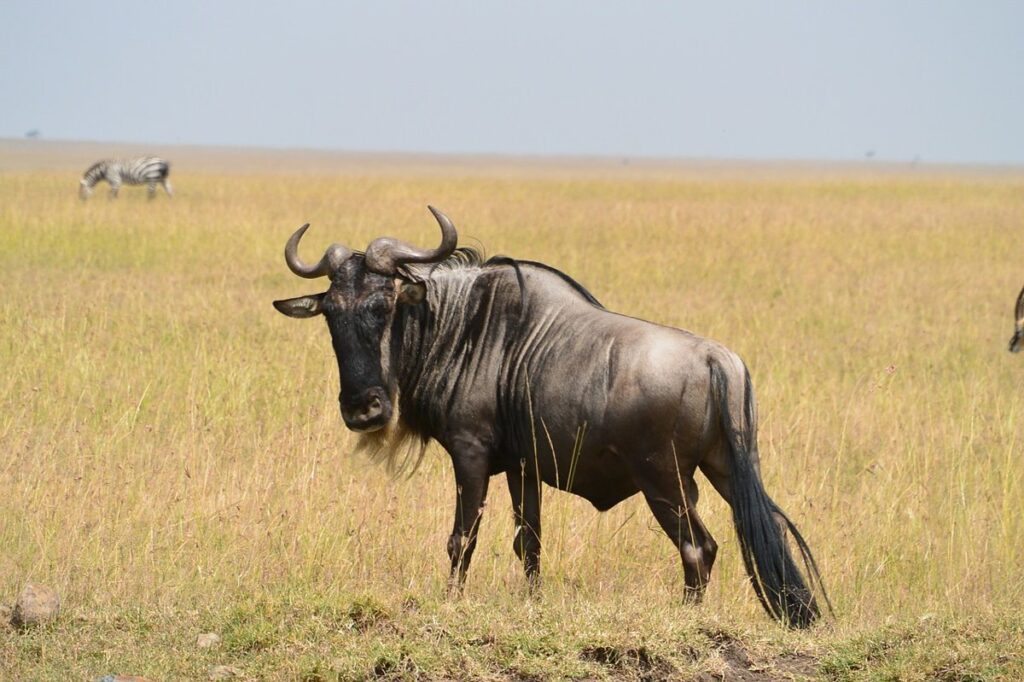
The Magnificent Wildebeest The migration of millions of wildebeest, zebras, topi, and gazelles from Serengeti National Park to Masai Mara across the Mara River is a remarkable spectacle. A visit to Masai Mara between July and October is an optimal opportunity to observe this exhilarating migration.
This 3 Days Masai Mara wildlife Safari provides a wildlife experience and an opportunity to explore the Maasai tribal community within the park. You will learn about the Maasai culture, customs, lifestyle, and their traditional dance practices.
Enhance your safari experience with a balloon safari for an additional fee of $450 per person. The Masai Mara can be reached from Nairobi either road or air, requiring a 4-hour drive on a predominantly paved road or a 1-hour trip on a domestic chartered aircraft. Experience the finest of Masai Mara in under three days through our guided safari.

Detailed itinerary of Days Masai Mara wildlife Safari
Day 1: Transfer to Masai Mara National Reserve
This 3 Days Masai Mara wildlife Safari commences in Nairobi, the capital city of Kenya. A professional guide will get you at 7:00 AM from your accommodation for transfer to Masai Mara National Reserve. Alternatively, based on your travel itinerary, pickup can occur at Jomo Kenyatta International Airport; however, you must schedule a flight that arrives in Nairobi during the early morning hours. The Masai Mara National Reserve is a six-hour journey from Nairobi. You will receive a briefing before to your 3-day guided safari in Africa’s premier game reserve, the Masai Mara, before commencing your tour. Experience a drive through picturesque vistas of the Nairobi suburbs, exquisite savannah grasslands, and the expansive plains of the Rift Valley. You will pause at the Great Rift Valley overlook for photographs before proceeding to the park. Upon your arrival to the Park, you will check in to your hotel just in time for lunch. Following the refreshment, you will embark on an evening game drive, anticipating sightings of several animal species, including: elephants, hippopotamuses, lions, leopards, cheetahs, giraffes, and many others.
The lodging alternatives for this safari are contingent upon your preferred package type. We are pleased to propose premier lodge or camp options upon request.
Day 2: Full Masai Mara Wildlife Observation – Optional Visit to Maasai Community
The subsequent 6 to 10 hours will be dedicated to wildlife observation in Kenya’s premier Masai Mara National Reserve. You will participate in two game drives in the Mara: a morning drive and an afternoon drive, complemented by an organized bush breakfast, in pursuit of the Big Five and various other wildlife species, including Masai giraffes, baboons, warthogs, wildebeests, buffaloes, zebras, jackals, spotted hyenas, topis, impalas, hartebeests, bat-eared foxes, as well as crocodiles and hippopotamuses inhabiting the Mara and Talek Rivers.
If your intended visit occurs between July and September, prepare to observe the exhilarating Great Wildebeest Migration in the Mara.
The annual migration of nearly 4 million grazers from Serengeti National Park in Tanzania to Masai Mara National Reserve is the primary reason many visitors choose to visit Masai Mara during this period.
Note: An optional cultural excursion to the Maasai community within the park is available, providing an opportunity to learn about Maasai culture, customs, lifestyles, and traditional dancing practices.
Following the exceptional full-day game viewing experience, we will return to the lodge/camp for dinner and an overnight stay.
Day 3: Masai Mara National Reserve to Nairobi
We relish our final breakfast at the lodging before we prepare to leave for our last morning game drive in the Mara to observe the resident species one last time. Depart the park and return to Nairobi, incorporating a picnic lunch break. Proceed to the airport for your return flight or contemplate an extension to the beaches of the Kenyan Coast.
Safari inclusions
- Airport pick-ups and drop-offs
- A private, well-versed tour guide, Kenyan and multi-lingual
- Round-trip transport to all attractions and destinations as per the itinerary (4×4 Jeep)
- Budget (economy), comfort, superior comfort, or luxury hotels, lodges, or tented camps
- Meals on safari (half board or full board depending on the budget)
- Masai Mara game reserve entrance fees
- Bottled drinking water in the safari vehicle
- Game viewing drives
Safari exclusions
- Pre-travel expenses (e.g. Passports and visas)
- Travel insurance
- Expenses such as baggage fee, laundry charges, and luxury drinks such as champagne etc.
- Tips and gratuities
- Items and services of a personal nature
Best time to visit Masai Mara National Reserve
The best time to visit Masai Mara National Reserve is when the wildlife population is abundant and readily observable. Kenya safaris rank among the finest on the African continent. In Kenya, the Masai Mara National Reserve is a premier tourism destination, renowned for its unique environment, which encompasses a variety of wildlife species and breathtaking vistas.
The Masai Mara National Reserve is situated in southwestern Kenya, encompassing 1,510 square kilometers within the Great Rift Valley, a geological fault line that extends from Ethiopia’s Red Sea through Kenya, Tanzania, Malawi, and into Mozambique, and it serves as an extension of Tanzania’s Serengeti National Park in the Mara region. The Masai Mara National Reserve features four types of terrain, including the Ngama Hills to the east, characterized by dense foliage preferred by Black rhinos, as well as sandy soils. The western boundary is defined by the Siria Escarpment, which rises to create a stunning plateau. The alternative type is the Mara Triangle, adjacent to the Mara River, characterized by verdant grasslands and woods that sustain a diverse array of species, including wildebeests. The predominant region is referred to as the central plains, characterized by dispersed shrubs and stones over undulating grasslands preferred by the local fauna.
Wildlife and attractions found in Masai Mara National Reserve
The prominent wildlife species encompass the big five game: African lions, African elephants, African Cape buffaloes, leopards, cheetahs, black rhinos, roan antelopes, Thomson gazelles, impalas, hyenas, and waterbucks. The Masai Mara National Reserve is home to over 470 avian species, establishing it as a premier destination for birdwatching in Kenya. Notable species include vultures, African pygmy falcons, black-bellied hartbeests, turacos, secretary birds, ostriches, grey crowned cranes, guinea fowls, and Pel’s fishing owls, among others.
The Masai Mara safari includes numerous sights, notably the Great Migration of almost two million wildebeest migrating from the adjacent Serengeti National Park in Tanzania. This remarkable migration typically occurs annually from July to September, during which approximately 1.5 million wildebeest, zebras, and antelopes congregate in the yellow savannah in pursuit of sustenance and water.
Furthermore, visitors to Masai Mara National Reserve must partake in night drives, which provide insight into the nocturnal activities of the wildlife in the reserve. Additionally, partake in activities such as wildlife drives, birdwatching, hot air balloon flights, bush meals for breakfast, lunch, and supper, as well as visits to Maasai cultural villages, among others.
Exploring Masai Mara National Reserve
The Masai Mara National Reserve exhibits a humid environment and maintains an average temperature relative to other regions in Kenya. The Masai Mara National Reserve receives rainfall from March to May and has short rains from November to December. From July to October, the Masai Mara National area experiences arid conditions and has lush vegetation, rendering it an opportune period for visitors to explore the area. High temperatures are observed from December to January, marking the peak season of Masai Mara National Reserve, while cool temperatures prevail from June to July.
During the migration season, a diverse array of species inhabits the Masai Mara National Reserve, including large felines such as lions, cheetahs, and leopards that prey upon other animals. The wildebeest’s life cycle promotes the expansion of other species, as its continuous search for water and food provides predators with opportunities to prey on them, resulting in healthier progeny. The travelers have the opportunity to capture exceptional photographs, rendering the entire safari a captivating and daring experience that should not be missed in a lifetime.
Accessing Masai Mara National Reserve
Masai Mara National Reserve is located approximately 241 kilometers southeast of Nairobi City, accessible by either road or air transport. Traveling by vehicle from Nairobi city to Masai Mara National Reserve requires approximately five hours. Transportation options include bus, taxi, or private vehicle. It is advisable for visitors to utilize 4WD vehicles to traverse the muddy paths leading to Masai Mara National Reserve. Visitors that like air travel may utilize chartered flights operating from Jomo Kenyatta International Airport or Wilson Airport in Nairobi.